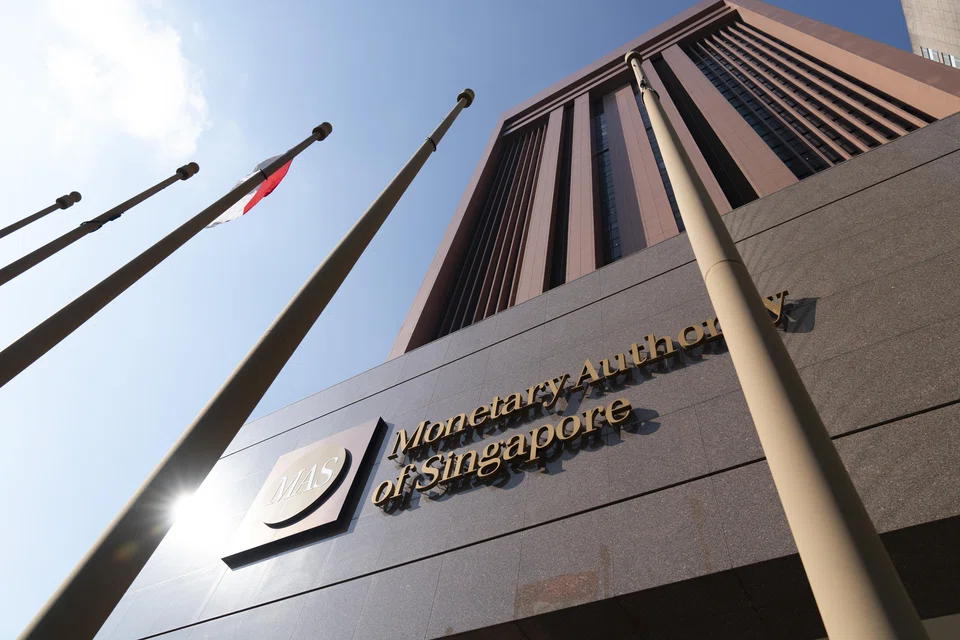
MAS could tighten monetary policy in April after ‘sticky’ inflation data in December: economists

WHILE Singapore’s inflation appears to have peaked in the second half of 2022, some economists are still expecting the central bank to remain hawkish at the next monetary policy review, owing to the “stickiness” in Singapore’s core inflation.
Headline inflation dipped slightly to 6.5 per cent year on year in December, from 6.7 per cent in the previous month, as price increases for private transport moderated, data from the Monetary Authority of Singapore (MAS) and Ministry of Trade and Industry (MTI) showed on Wednesday (Jan 25).
But core inflation, which excludes accommodation and private transport, remained at 5.1 per cent year on year in December for the third straight month after peaking in the third quarter.
Analysts polled by Bloomberg had expected both core and headline inflation to edge down 0.1 percentage point from the previous month.
OCBC chief economist Selena Ling believes this suggests core inflation will remain “challenging” in 2023 due partly to domestic price pressures – including the 1-percentage-point hike in the goods and services tax (GST) earlier this month – as well as other wage inflation, food inflation and other pass-through costs from firms to consumers.
“While many other economies may see a faster normalisation of inflationary pressures due to relatively stable energy prices and high base effects from last year, Singapore is likely to experience higher-than-normal headline and core inflation in 2023, as the inflation drivers have rotated from external to domestic price drivers,” she said.
December’s numbers bring 2022 full-year headline inflation to 6.1 per cent and core inflation to 4.1 per cent year on year, just 0.1 percentage point higher than the official forecast.
MAS and MTI have kept their outlook statement largely identical to previous months, with the consumer price index (CPI) set to stay elevated in the first half of this year before “slowing more discernibly” in H2. Their headline inflation forecast remains at 5.5 to 6.5 per cent, while projecting 3.5 to 4.5 per cent for core inflation.
Since October 2021, the central bank has made five rounds of monetary policy tightening, including two off-cycle moves to rein in soaring inflation, but economists believe another off-cycle tightening seems unlikely for now.
For one thing, the recent softening of rental inflation and higher supply of Certificates of Entitlement from February to April are likely to pose some downside risks to the official headline forecast, said Mohamed Faiz Nagutha, Asia and Asean economist at the Bank of America (BofA) Securities.
Citi economists added that off-cycle moves have historically been preceded by upside surprises of at least 40 to 50 basis points in the preceding quarter.
“If MAS does not tighten in late January, odds of an off-cycle tightening thereafter would be lower, as it will likely wait for more data heading into April to ascertain the path of inflation and GST pass-through,” said Kit Wei Zheng and Jester Koh from Citi.
Still, the persistently high core inflation – which is well above the symbolic 2 per cent level – could prompt further tightening at the next scheduled monetary policy meeting in April, economists said.
Said BofA’s Nagutha: “With China’s reopening providing support for Singapore’s exports and little downside risks on the domestic front, we expect MAS to adjust higher the slope of the policy band ‘slightly’ by 50 basis points in the scheduled April meeting.”
Maybank economists Chua Hak Bin and Lee Ju Ye believe China’s reopening could complicate Singapore’s inflation outlook, driving energy and other commodity prices higher.
“The reopening may also fan China’s inflation, mirroring the experience of other countries including the US, Europe, Australia and even Japan, due to structural shifts in the labour market as workers may be slow to return,” said the Maybank team.
“This may show up in higher imported inflation for Singapore, given the weight of China-related imports. China’s reopening and revenge travel will also power travel and hospitality costs higher.”
RHB senior economist Barnabas Gan noted upside risks stemming from uncertainties in global geopolitical tensions. Pandemic-related risks remain, and demand-pull inflation, alongside robust wage growth and the GST hike, could raise inflation pressures this year.
Gan believes headline inflation could decelerate to 3 per cent by Q4 and core inflation to 2 per cent, assuming MAS tightens its policy settings in April. As such, his full-year forecast is 3 per cent for headline inflation and 2.8 per cent for core inflation.
Most other economists have kept their 2023 forecasts closer to the official outlook, expecting core inflation to average 4 to 4.2 per cent.
For headline inflation, BofA and Barclays are expecting 5 per cent, Citi is pencilling 5.6 per cent, and OCBC and Maybank are predicting 6 per cent.
TRENDING NOW
Grab CEO’s wife Chloe Tong on life with Anthony Tan and finding her purpose
What role can Japan play in Asean’s future?
He built the Vingroup empire. Now South-east Asia’s richest man is handing some key roles to his sons
Asean’s challenge is to become resilient against global geopolitics: former Indonesia trade minister