MAS expected to stand pat in April review despite surprise bump in February’s core inflation
Chinese New Year spending and higher travel costs drove price-growth rebound, say economists

PRIVATE-SECTOR economists expect the Monetary Authority of Singapore (MAS) to leave its policy parameters unchanged at the next meeting in April, even as Singapore’s core inflation rose a surprising 3.6 per cent in February.
The latest core inflation reading, which excludes accommodation and private transport, was higher than the 3.1 per cent recorded in January, data from MAS and the Ministry of Trade and Industry (MTI) showed on Monday (Mar 25). It was also above the 3.4 per cent median forecast by private-sector economists polled by Bloomberg.
Headline inflation rose to 3.4 per cent year on year, higher than the 2.9 per cent recorded the previous month and exceeding economists’ median estimate of 3.2 per cent.
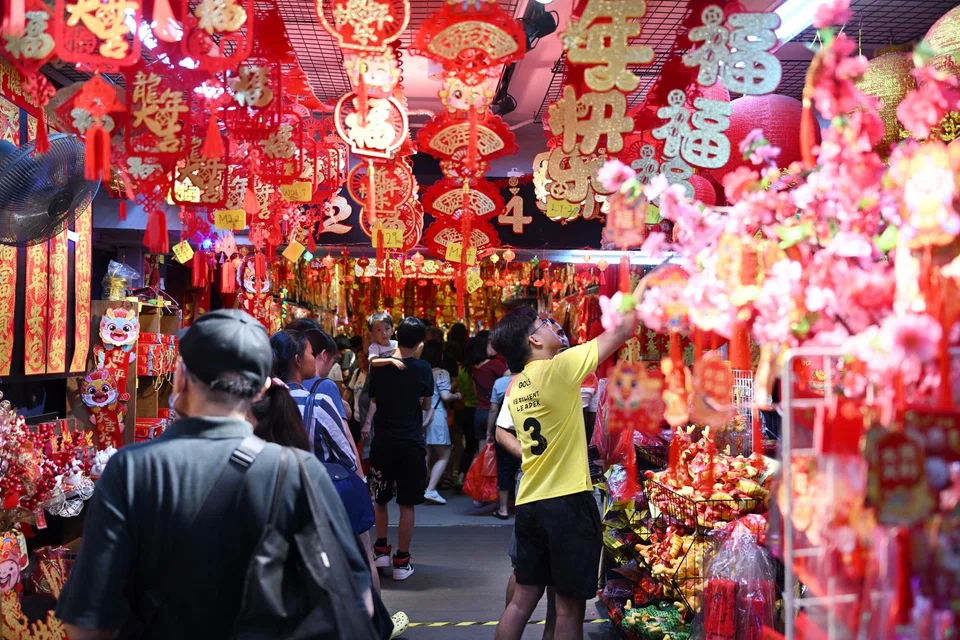
February’s inflation rebound was “well anticipated” given the seasonal effects associated with Chinese New Year celebrations, said OCBC chief economist Selena Ling. “It was no surprise that prices of food, air tickets and holiday expenses, among others, would have ticked higher.”
Maybank economists Chua Hak Bin and Brian Lee noted that travel services and food were the main drivers of the uptick in core inflation.
Services inflation jumped to 4.2 per cent in February, from 3.3 per cent the month prior, due to higher airfares and a steeper increase in holiday expenses – likely due to travel during the festive period, they said.
Meanwhile, food inflation increased to 3.8 per cent, compared to 3.3 per cent before, mainly on a broad-based rise in the prices of non-cooked food.
On a month-on-month basis, headline inflation rose by 1 per cent in February, while core inflation was up by 0.5 per cent.
“While some of the Chinese New Year-related temporal effects will fade, nevertheless, the key determinants going forward are still the state of the domestic labour market and services inflation,” said Ling.
Both OCBC and Maybank noted that inflation may not subside significantly – and may even rise further – in March due to increased international visitor arrivals for Taylor Swift’s six concerts in Singapore.
The “Taylor Swift effect” may show up in hospitality and entertainment-related inflation, such as the retail, food and beverage, transport and recreation categories, they noted.
MAS to hold policy settings
Yet, with Singapore’s growth expected to recover this year, policymakers are unlikely to see any urgency in easing monetary policy settings amid “such smouldering inflation pressures”, said Barclays economist Brian Tan.
“Policymakers also do not seem convinced that the balance of risks has fully shifted from inflation to economic growth, as evidenced by Budget 2024’s wariness towards providing so much fiscal policy support that it overheats the economy,” he added.
In addition, MAS and MTI kept to the full-year forecast of between 2.5 and 3.5 per cent for both headline and core inflation, “suggesting no urgency to pull the recalibration trigger”, noted OCBC’s Ling.
Excluding the transitory effects of the goods and services tax hike to 9 per cent, headline and core inflation are expected to come in at between 1.5 and 2.5 per cent.
Core inflation should also resume a gradual moderating trend over the rest of the year, as import-cost pressures continue to decline and tightness in the labour domestic market eases, said the two authorities in their inflation outlook.
But economists remained split on the central bank’s moves for the rest of the year. Maybank’s Dr Chua and Lee believe MAS will likely ease monetary policy settings only during October’s policy meeting, by reducing the slope of the Singapore dollar nominal effective exchange rate.
In contrast, Barclays and RHB expect MAS to keep policy parameters unchanged in 2024, with the risks tilted towards further tightening in the event of higher inflationary pressures.
“We believe the current policy parameters are deemed appropriate for cushioning imported inflation and ensuring price stability over the medium term,” said RHB analysts Barnabas Gan and Laalitha Raveenthar in a research note.
Said Barclays’ Tan: “The argument that monetary policy settings will be eased just because the United States Federal Reserve will cut its policy rate is overly simplistic, in our view. There have been episodes where the MAS deviated from the Fed.”
Key consumer price index categories
Aside from food and services, accommodation inflation also picked up in February, nudging up to 3.9 per cent, from 2.1 per cent before. This was because additional Service and Conservancy Charges rebates, which were disbursed in January, were not given out in February, said MAS and MTI.
The rest of the categories posted lower year-on-year inflation than in January.
In particular, private transport inflation fell to 1.4 per cent year on year, from 2.9 per cent before. This was due to a slower rate of increase in car prices, which in turn reflected lower Certificate of Entitlement premiums.
TRENDING NOW
Deal between tycoon friends sparks scrutiny of Philippine power sector
Canada is upping oil flows to Asia, but South-east Asia’s refineries aren’t ready to handle them yet
Grab CEO’s wife Chloe Tong on life with Anthony Tan and finding her purpose
China got cool for foreigners. But can they find a job there?