

Microsoft makes push for AI adoption in Singapore in areas from firefighting to healthcare
A generative AI tool called Note Buddy is showing promise among doctors and allied health professionals in SingHealth institutions

SINCE September, doctors at SingHealth institutions have been spending more time with patients and less on administrative tasks, thanks to a generative artificial intelligence (AI) tool called Note Buddy.
The tool, which summarises patient records and transcribes conversations in real-time, was developed in collaboration with Microsoft under its AI Pinnacle Programme.
The programme, launched in March, aims to drive AI adoption in Singapore by creating customised, industry-specific solutions for large organisations.
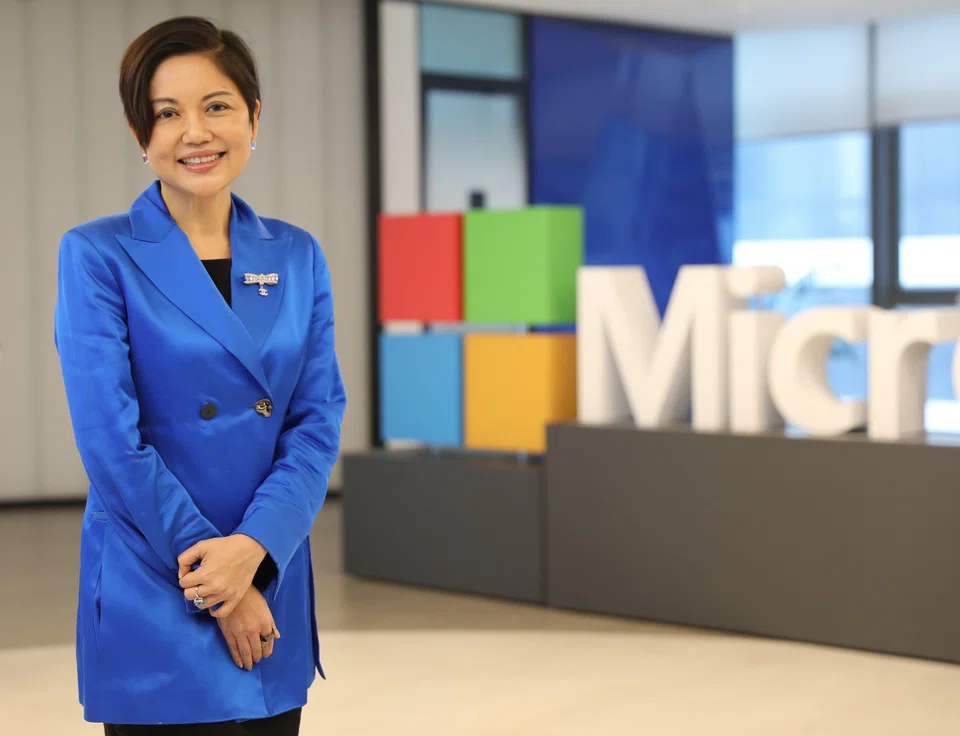
“We looked at partnering with customers who are looking at an AI-first culture,” Microsoft Singapore managing director Lee Hui Li told The Business Times in a recent interview.
SingHealth’s partnership with Microsoft began over a year ago, following a meeting between its senior leaders and Microsoft’s AI researchers at a conference. The US tech giant next flew in a team of developers to look into ways to apply generative AI in healthcare, said Benedict Tan, SingHealth’s group chief digital strategy officer and chief data officer.
A workshop was run for SingHealth staff – doctors, nurses, allied health professionals, administrators and others.
Note Buddy is deployed and accessed by SingHealth staff through a common generative AI platform developed by Synapxe, Singapore’s national healthcare IT provider.
The tool is still being rolled out in phases, but has already received positive feedback from staff and patients.
Tan said: “The patients themselves said: ‘For the first time, the doctor is not looking at the computer, but looking at me.’ Basically, we’re looking at deepening the connection with patients.”
The AI Pinnacle Programme initially partnered with five organisations: Certis, HTX, Mediacorp, Seatrium and Synapxe. It has since been expanded to include organisations such as the Ministry of Law and the Singapore Civil Defence Force (SCDF).
At SCDF, AI tools have been adopted to streamline tasks such as rostering and catering, reducing firefighters’ administrative workload.
Seatrium has worked with Microsoft to develop “intelligent engineering assistants” to harness its engineering expertise for better outcomes, said Lim Shih Hsien, executive vice-president of cyber IT and operational technology at Seatrium.
“By embracing AI through this collaboration, we are positioning ourselves to not only meet the challenges of the present, but also taking a proactive stance in shaping the future of our industry,” he added.
“Not a sales programme”
When asked about Microsoft’s goals for the AI Pinnacle Programme – particularly financial targets – Lee said these were not the focus of the initiative.
“We don’t do this for a financial reason,” she stressed. “It’s not a sales programme.”
She added that the initiative is not limited to Microsoft’s own tools and services, and that third-party firms are also involved. Microsoft collaborates with existing IT vendors managing proprietary, sector-specific software, and engages consultancies specialising in change management to support its clients.
The consultancies are brought in because some of the end-users of the tools developed under the initiative could be “a little bit resistant” to adopting them.
Lee said: “Any adoption of new technology always has challenges. Because there might be users who are a little bit resistant, even if you implement the technology, people might not want to adopt it.”
TRENDING NOW
Motoring tycoon Peter Kwee is back in court: Here are his previous legal battles

Demand, tech capabilities position Apac and AI as Skyscanner’s next growth frontiers: CEO Bryan Batista

Beyond the greenback, Vietnam’s big borrowers turn to Asian-currency bonds
Nvidia’s outlook cut to stable by Moody’s on governance concerns

