

MoneyHero CEO on transparency, AI and the company’s turnaround strategy
After taking the helm amid leadership exits, Rohith Murthy is refocusing the Nasdaq-listed fintech on higher-margin insurance, wealth products and artificial intelligence-driven efficiency
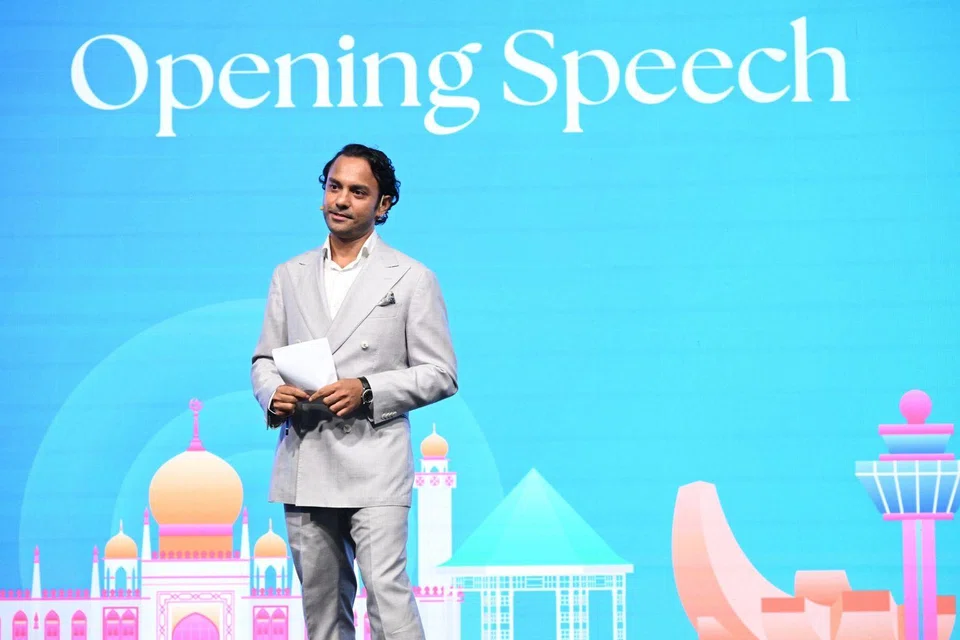
THIS Nasdaq‑listed fintech is entering a new chapter. After laying out a “new playbook” in 2025, chief executive officer (CEO) Rohith Murthy is now steering the MoneyHero Group towards a disciplined turnaround by improving margins, strategically optimising operational costs, and expanding higher-quality revenue streams.
The group’s Q3 2025 results underscore this momentum: Revenue rose 17 per cent quarter‑on‑quarter to US$21.1 million (S$28.5 million), while operating costs fell 13 per cent year‑on‑year. Insurance and Wealth – higher‑margin, recurring businesses – contributed nearly a quarter of group revenue, strengthening the quality of earnings.
At the same time, MoneyHero is investing in Project Odyssey, a sweeping artificial intelligence (AI)‑led transformation designed to boost conversion, reduce costs to serve, and elevate customer journeys, while reskilling and redeploying its people.
In Singapore, the group has gone live on its AI customer service agent to improve response times and allow human agents to focus on higher-value, complex cases, reducing routine human intervention by approximately 50 per cent. With AI rollouts planned across Asia, Murthy believes the group is on the cusp of profitability as he continues on bigger plans to position MoneyHero as Asia’s leading personal finance ecosystem.
Q: MoneyHero’s Q3 results show revenue growth and margin improvement, but the group is still operating at a net loss. Is it fair to say it is on a disciplined path towards profitability?
A: I took over as CEO in early 2024, a few months after we listed on Nasdaq. The listing itself went well, but at that time the business was operating under significant stress: high cash burn, substantial turnover in the leadership team, and the added scrutiny that comes with being a public company. The first thing I had to do was reset the rules of the business. Not the optics, the economics. That meant being very clear internally and externally that MoneyHero can and must be a profitable business.
2025 was the year when our strategic reset stopped being a narrative and became a measurable reality. We have rebuilt this company from the ground up: restructuring our cost base, expanding margins materially, and restoring the foundations for higher-margin revenue streams growth. Underlying gross profit and demand strengthened materially in 2025, reflecting healthier revenue quality rather than volume-driven growth, as compared to reported net revenue, which reflects incentive accounting. This has generated powerful and accelerating momentum toward Adjusted EBITDA breakeven and established a clear trajectory to achieve sustained Adjusted EBITDA profitability for 2026.
There were three big changes. First, operating costs. Like many companies post-Covid, we were carrying too much fixed cost. We reorganised, simplified, and learned to operate lean again.
Second, revenue quality. Historically, we did very well in credit cards and some personal loans, particularly in Hong Kong. That’s still a core engine for us. But if you look at global peers like MoneySuperMarket in the UK or Policybazaar in India, insurance and wealth are central to their long-term profitability. We made that pivot deliberately in early 2025.
Today, Insurance and Wealth contribute about a quarter of group revenue. These are higher-margin, recurring businesses, and that materially improves the quality of earnings.
Third, discipline. We sharpened our focus on quality growth – stepping away from the growth that diluted returns. As a result, our numbers now more accurately reflect a more sustainable and profitable business.
What matters to me is not just that we become profitable for a quarter, but that we can generate cash consistently. That’s the real inflection point. And once you cross it, you can start to scale with confidence.
Q: Insurance and Wealth now make up 23 per cent of revenue. What is fueling demand and how do you plan to accelerate it?
A: The thing about insurance is that it is not a happy purchase. It requires a high degree of trust and education, and these are markets that remain relatively underpenetrated. Consumers often feel overwhelmed and uncertain about whether they are making the right choice. The advantage we have is that our brands, such as SingSaver and MoneyHero, have been around for over a decade. Over that time, we have already earned consumer trust in banking products. People know they can come to us to compare options and understand trade-offs so they can make better decisions.
We went through a very similar journey in 2015 with credit cards. At that time, the idea that you could compare cards online and receive meaningful rewards or incentives was not obvious. There was a significant amount of education required to build familiarity and trust. Today, people take that experience for granted. Insurance is now on the same journey, and we see content and education as critical in helping consumers make better decisions.
That said, education alone is not enough. Experience matters just as much. Insurance technology is complex, and in 2025, we made a very clear decision that we are not going to build everything ourselves. Instead, we adopted a buy and partner approach, working with platforms such as InsureMO and bolttech. The outcome of this strategy is that today, buying travel insurance can be done in just a few clicks online. We are now extending that same frictionless experience to more complex products such as car, home, and helper insurance.
As the experience improves, conversion improves. And when conversion improves, margins improve. That is how we think about scaling insurance responsibly and building a sustainable, higher-quality business over time.
Q: Project Odyssey is your artificial intelligence (AI) transformation. How does it reshape customer journeys and the group’s operational efficiency?
A: I am a technologist by background, and I have been fortunate to have been through the Internet era, the mobile era, and the cloud era. I have never been as excited about a technological shift as I am about AI. When we started SingSaver in 2015, our breakthrough was relatively simple because we digitised information.
Back in the day, if you wanted a financial product, you had to leave a lead, wait for a call, and fill out a PDF. Now we are talking about AI being applied, which is massively powerful, because now you can take every aspect of your business and build it from the ground up very differently. AI, however, is a much bigger step.
Today, we can produce content much faster with AI. We no longer need larger teams to do repetitive writing and research. Customer support becomes smarter, faster and more predictive. And most importantly, we can scale revenue without scaling costs. That is where true operating leverage comes from.
In Singapore, we’ve gone live with an AI customer service agent. It has reduced inbound human intervention by about 50 per cent, improved response times for customers and is saving us significant costs annually. That is not just cost saving. That is operating leverage, with margins following through to EBITDA as the business scales.
The other aspect of AI is obviously customer-facing. The models are improving as we speak. We launched a beta a few months back, where, through an AI-powered bot on WhatsApp, you can get real-time pricing when you switch your car insurance. In some cases, this delivers a better experience than navigating a traditional website and user interface. We will be looking at real use cases where we feel that user experience (UX) can be a lot better than somebody going on to our website and using our UX and UI (user interface) there.
We are the market leader in all four markets where MoneyHero Group operates. As of 30 September 2025, we are also sitting on capital of about US$27.9 million in cash and cash equivalents. This puts us in a strong position to consider inorganic opportunities, whether through mergers, acquisitions, or broader consolidation, to accelerate growth in the years ahead.
The biggest transformation that AI brings about is cultural. When I launched Project Odyssey, I was very clear that this is not a technology to replace headcount. It is about giving every team an additional team member. It is when you’re in a team meeting or working on a project, there is now another team member who can take away some of the low-value tasks, or maybe some of the cognitive work that is taking away your time. This technology can do things faster and better, simply because it’s trained on a lot more data. A lot more research work can be done overnight because this technology can work in the background.
Now, you are even getting into agentic AI, where you can start automating workflows. Culturally, it is very important that as an organisation, we treat this technology as a massive enabler and amplifier of what we do, not a threat. By deliberately offloading tasks that AI handles more efficiently at scale, we free people to focus on creative and strategic work.
We give everyone access to enterprise AI tools. The internal message is very simple: if we do not embrace this shift quickly and thoughtfully, someone else will and they may disrupt us.
Q: What practical advice would you give founders on scaling responsibly while chasing growth?
A: First, it’s very important to have a clear situational awareness of where you are as a business. Founders are optimistic and stubborn by nature, and that is often why they succeed. But the environment changes, especially in periods of economic and technological disruption we are in, you have to be transparent about what’s working or what’s not.
I’ve been a founder twice, but this is the first time I am the CEO, let alone of a listed company. And I had to unlearn a few things. The single biggest question I had to answer was: What is the one problem that will kill the company if I don’t solve it? For us, that problem was cash burn. To turn the business around, I made hard decisions to stop doing certain things and exit one of the markets in early 2024.
Once you are clear in your own head about that right to win, it becomes easier to focus your vision, your strategy, and your capital on a single overriding objective. This discipline matters even more when technology is reshaping industries and compressing timelines.
The second major thing is people. When I took over as CEO of MoneyHero, we had a very thin leadership team bench. I had to build a leadership team from people who were strong performers but untested in bigger roles. None of them asked for promotions. I asked them to step up.
You have to be patient, but also very clear. You need to show people how you think, hold them accountable, and give them the confidence to make decisions. At times, that means being hands on and direct about what needs to be done. At other times, it means trusting people and giving them the space to grow into their roles. Trust is built over time, and it works both ways.
Looking back, what mattered most was transparency. You have to be honest about what is working and what’s not, first with yourself, then with your team, and finally with the market. That is how you earn trust. And trust is what allows you to scale a business without losing control as complexity grows.
Disclaimer
The document includes “forward-looking statements” within the meaning of the United States federal securities law and also contains certain financial forecasts and projections. All Statements other than statements of historical fact contained in this communication, including, but not limited to, statements as to MoneyHero Group’s growth strategies, future results of operations and financial position, market size, industry trends and growth opportunities, are forward-looking statements. Undue reliance should be placed upon the forward-looking statements. The views and opinions expressed are those of the interviewee personally and do not necessarily reflect the official position or views of MoneyHero Group. They are provided for informational purposes only and should not be taken as an endorsement or formal statement by MoneyHero Group.

Share with us your feedback on BT's products and services
TRENDING NOW

Grab CEO’s wife Chloe Tong on life with Anthony Tan and finding her purpose

Hwa Seng Builder, two China companies win S$1.2 billion Tuas Road Viaduct phase two contracts

Deal between tycoon friends sparks scrutiny of Philippine power sector

Canada is upping oil flows to Asia, but South-east Asia’s refineries aren’t ready to handle them yet

