

More Singapore telehealth players offer weight-loss drugs, despite risk of misuse by younger people
While prescriptions are required for such drugs, telehealth consultations are vulnerable to false patient declarations


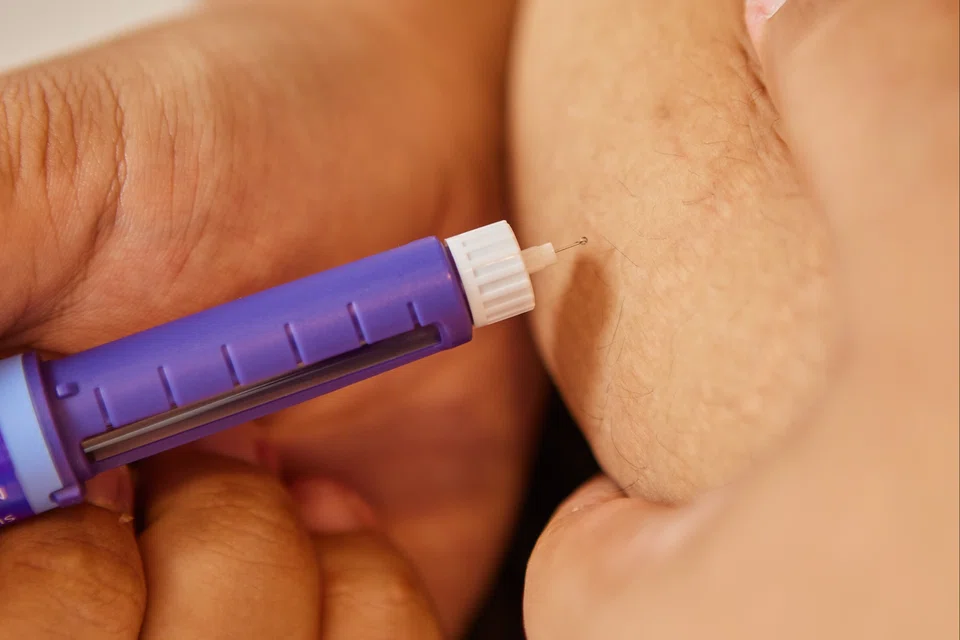
WITH more telemedicine providers in Singapore offering prescription weight-loss drugs, the convenience of these platforms has raised concerns about potential misuse, especially by younger people seeking to lose weight quickly.
Glucagon-like peptide 1 agonists, or GLP-1s, are a class of drugs used to treat type 2 diabetes. But they have gained attention for their effectiveness in aiding weight loss. One such drug, Ozempic, was popularised by celebrities such as Elon Musk.
With demand continuing to grow, some analysts believe the global market for these drugs could reach US$100 billion by 2030.
In Singapore, demand may not be as strong – yet risks remain.
Eight GLP-1 drugs, including Ozempic, are approved for use in Singapore: two for weight loss and the rest for diabetes treatment.
One of the two weight-loss drugs is Wegovy, which is manufactured by Novo Nordisk, the Danish pharmaceutical giant behind Ozempic. While it has been approved, it is not available in clinics yet.
Asked when Wegovy might be made available in Singapore, Novo Nordisk’s country manager for Singapore and Brunei, Praful Chakkarwar, replied: “We are unable to comment on the availability of prescription-only medicines in Singapore.
“However, Novo Nordisk continues to be committed in the long term to bringing innovative solutions to people with chronic diseases like diabetes and obesity.”
Business opportunity
Besides physical clinics, some telemedicine providers also offer GLP-1s as part of weight-loss management services. These include telehealth startups that specialise in drugs for reproductive health, hair loss and sexual performance but expanded to GLP-1s.
These niche providers said they chose to offer GLP-1s because they saw weight-loss management as a natural extension of their offerings.
Ease Healthcare co-founder Rio Hoe said his company was founded to tackle “an area of healthcare that was oftentimes underserved, and where there were a lot of taboos” – sexual health.
As metabolic health and obesity is another area with a heavy stigma, it “aligned very well” with the company’s mission. Ease set up a new weight management brand, Elevate, in January.
Other sexual health telemedicine providers – Ora Group, which operates andSons and Ova, and Ordinary Folk, which operates platforms Zoey and Noah – in the last year started offering weight-management services on their existing platforms.
“Many individuals struggle with sustainable weight management due to busy lifestyles or the stigma associated with in-person consultations,” said Ora Group vice-president of marketing Tom Reynolds.
“(With telehealth), we saw an opportunity to leverage our platform to deliver a much-needed service in an effective, discreet and scalable manner.”
Diabetes and weight management provider Novi Health has seen occasional “surges” in enquiries, often sparked by media coverage or when celebrities discuss GLP-1s, said co-founder and CEO Sue-Anne Toh.
Other telehealth providers are considering entering the market. Shravan Verma, CEO of Speedoc, said: “As we see more interest, we’re open to exploring GLP-1s for our patients with medically-diagnosed diabetes and for overweight patients in the future.”
Constrained market
But while the global market for GLP-1 drugs is thriving – driven by high obesity rates – the market in Singapore remains significantly smaller, even on a per capita basis, said industry players.
The 2021/2022 National Population Health Survey indicated that 13.1 per cent of men and 10.2 per cent of women in Singapore are obese – far lower than in countries such as the US.
Another constraint is supply, said Megan Cordwell, senior pharmaceuticals and healthcare analyst at research firm BMI. “Our view for GLP-1s globally is that demand will continue to rise, but uptake will continue to be restricted by ongoing supply lags. This will also be the case in Singapore.”
She added: “We expect that the supply of GLP-1 agonists will remain constrained until at least 2026, despite significant investments from manufacturers throughout 2023 and 2024.”
Telemedicine providers in Singapore see weight-loss services as a growing but still relatively small part of their overall business, though most declined to share specific figures.
Ordinary Folk launched Saxenda in Singapore in December 2023. Its weight management business now accounts for a third of all new customers, said CEO Sean Low.
But male and female-centric health services remain the company’s core focus, said Low.
Potential for abuse
In Singapore, GLP-1s are only available through licensed doctors and clinics, with prescriptions made after evaluation of a patient’s health profile.
Saxenda is approved for individuals with a body mass index (BMI) above 30, as well as those with a BMI over 27.5 who have chronic conditions such as high blood pressure or high cholesterol.
However, telemedicine has made it easier to get prescriptions by misrepresenting one’s BMI, as users merely self-report their height and weight in teleconsultations.
Providers have seen patients – particularly younger ones – submitting false information with this intent.
Such requests are rejected. Reported rejection rates for GLP-1s range from 20 per cent to 40 per cent across telemedicine players, with most rejections involving younger patients who do not meet the BMI requirements.
These patients tend to be younger women, said Ordinary Folk’s Low. “Maybe they have some form of body dysmorphia – or sometimes they struggle with body image,” he added.
To ensure the accuracy of a patient’s reported BMI, telemedicine doctors verify that the figure matches the patient’s appearance, said Low.
If needed, doctors may request that patients film themselves on a weighing scale during the video consultation, to verify their weight.
Telemedicine providers with a physical presence, through clinics, take a different approach.
“We encourage first-time prescriptions and purchases of medication to be done during an in-clinic visit,” said Andrew Fang, director of medical affairs at Doctor Anywhere. “This allows for detailed counselling on the proper use of the medication, ensuring patients are fully informed and prepared to use it safely.”
Yet the temptation to falsely report BMI remains, particularly among younger patients driven by societal pressures to lose weight quickly, industry players said.
Elevate rejects the majority of GLP-1 requests that it receives, said Hoe. “We have a very strong commitment towards ensuring that the patient is deemed to be suitable for the medication by a qualified doctor.”
The potential health risks make it crucial that GLP-1 medications are not abused, industry players said.
Misuse or over-prescription could lead to serious side effects, including inappropriate loss of muscle or gastrointestinal problems, noted Novi Health’s Dr Toh, who is also a practising physician.
An improper assessment of an individual’s pre-exisiting health conditions, such as a personal or family history of a specific type of thyroid cancer, could also lead to serious complications.
GLP-1 medications should be part of a broader, medically supervised treatment plan that includes lifestyle changes, rather than being viewed as a quick fix, Dr Toh added.
TRENDING NOW

ComfortDelGro appoints two new independent directors

Once staunchly pro-China, Malaysian Chinese businesses are now distancing themselves from Beijing

NoonTalk needs continued financial support from CEO Dasmond Koh, auditors warn

DP Architects sets the benchmark for sustainability disclosure and design

