Most Singaporeans think firms should prioritise keeping costs low over cutting emissions: study
Only around 40 per cent think that large businesses place adequate emphasis on climate action, the report says

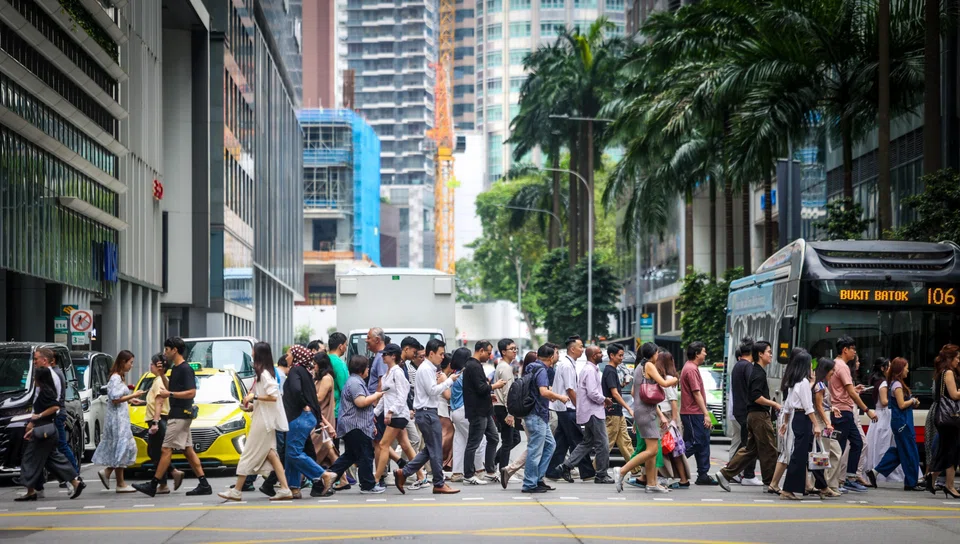
[SINGAPORE] More than half (52 per cent) of Singaporeans believe that businesses should keep costs low for consumers rather than cut back on carbon emissions, a study by Milan-based communications and advocacy firm SEC Newgate found.
This comes even though 73 per cent of respondents said that it is important for their country to act decisively on climate change, according to the SEC Newgate 2025 Impact Monitor, which surveyed more than 1,000 Singaporeans.
“While Singaporeans strongly support decisive climate action and local impact, they are also acutely aware of costs,” noted Terence Foo, managing partner of SEC Newgate Singapore.
“Businesses that can deliver environmental and social impact without passing on disproportionate costs to consumers, whether through smarter innovation, operational efficiency, or more thoughtful engagement with stakeholders, will emerge as winners,” Foo said.
The study also found that most Singaporeans are interested in environmental, social and governance (ESG) issues, although interest has waned slightly from last year. Sixty-three per cent of respondents indicated interest in ESG issues, down 1 per cent from 2024.
Notably, 72 per cent of Singaporeans indicated positive sentiments towards the energy transition, 1 per cent more than in 2024.
More than three-quarters (77 per cent) said that it is “highly important” for Singapore to transition towards renewable and clean energy resources.
Over two-thirds (68 per cent) said that they would feel more positive towards a business if they knew it uses renewable energy, while 66 per cent said they would feel more positive towards businesses that demonstrate commitment to environmental sustainability.
The survey also found strong public support for socially conscious business behaviours, with 72 per cent of respondents believing that businesses should prioritise buying raw materials from suppliers with a reputation of being responsible.



60 per cent also think that businesses should use artificial intelligence only if it does not make their employees redundant.
Business responsibility rankings by industry
Healthcare was ranked by respondents as the top-performing industry in terms of conducting business responsibly.
This was followed by the education and training sector, and the supermarkets and grocery stores industry.
Meanwhile, the alcohol, mining and resources, as well as fashion industries, were ranked by respondents as some of the worst-performing sectors in terms of conducting business responsibly.
Large businesses perceived as not doing enough
Less than half (around 40 per cent) of Singaporeans think that large businesses place adequate emphasis on climate action, the report said.
Notably, 41 per cent of respondents felt that large businesses do not speak publicly about environmental issues enough.
Two in five respondents believed that these businesses do not make enough effort to reduce carbon emissions, and around one-third (35 per cent) think that such firms do not sufficiently manage the environmental impact of their operations.
Decoding Asia newsletter: your guide to navigating Asia in a new global order. Sign up here to get Decoding Asia newsletter. Delivered to your inbox. Free.
Copyright SPH Media. All rights reserved.