

National Productivity Fund disbursed over S$1b for 47 projects in the last five years
 Add BT as a preferred source
DeeperDive is a beta AI feature. Refer to full articles for the facts.
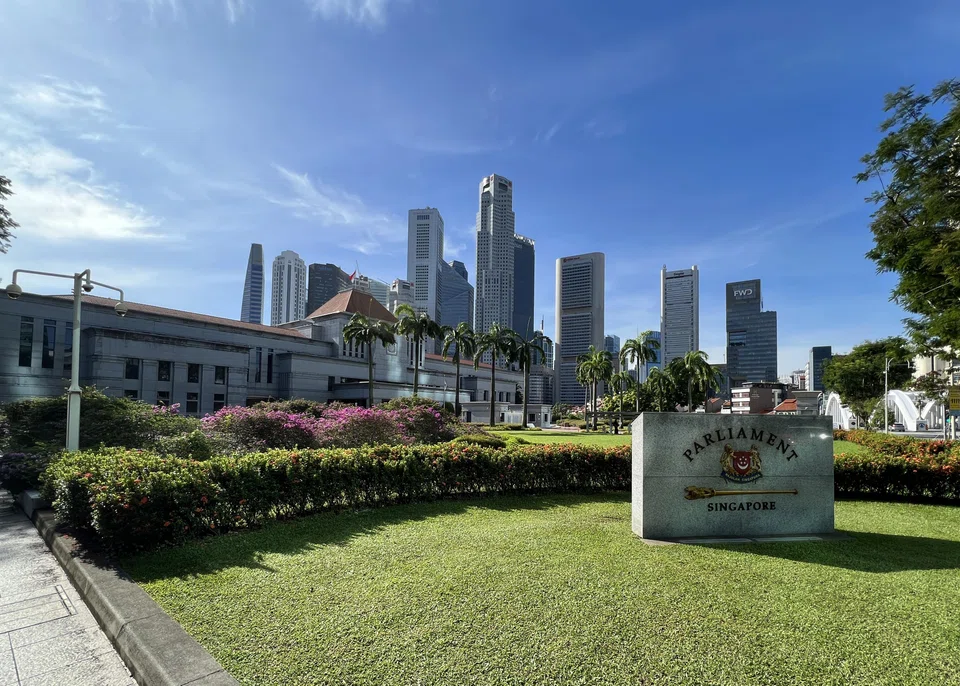
OVER the last five years, Singapore’s National Productivity Fund (NPF) has disbursed more than S$1 billion across 47 government projects related to productivity improvements and continuing education and training (CET), said Minister of State for Trade and Industry Low Yen Ling in Parliament on Thursday (Mar 2).
About half was spent on productivity projects and the other half on CET programmes, she said in response to Workers’ Party Member of Parliament Leon Perera, who had asked about NPF’s pattern of funding.
Larger NPF-funded projects include sector-specific schemes like the Construction Productivity and Capability Fund, and schemes that support enterprise and workforce transformation like the SkillsFuture Enterprise Credit scheme, she said. The NPF also supports the work of the 23 industry transformation maps.
Low clarified that the NPF is available to government ministries and agencies, which tap it for projects that will benefit trade associations and chambers (TACs) and industry sectors: “So actually, in a way, the TACs and companies are tapping on the fund as well.”
Asked by Perera if organisations could approach the NPF for funding, Low replied that companies can approach sector agencies or TACs which might be involved in productivity schemes.
The fund was established in 2010. In Budget 2023, a S$4 billion top-up was provided, and investment promotion was included as a supportable activity.

Navigate Asia in
a new global order
Get the insights delivered to your inbox.
Perera also asked if the NPF uses research to benchmark Singapore’s productivity against other countries, when deciding how much to fund each sector. To that, Low replied that sector agencies consider industry feedback, local and global best practices, and relevant benchmarking studies.
For instance, productivity benchmarking studies were commissioned on industry performance and efficiency in areas such as labour and space, here and overseas, when looking at how to improve productivity in the retail and food services sectors.
Decoding Asia newsletter: your guide to navigating Asia in a new global order. Sign up here to get Decoding Asia newsletter. Delivered to your inbox. Free.
Copyright SPH Media. All rights reserved.
TRENDING NOW

Air India asks Tata, Singapore Airlines for funds after US$2.4 billion loss
‘Boring’ is the new black: The stars are aligning for a Singapore stock market revival

From 1MDB to ‘corporate mafia’: Is Malaysia facing a new governance test?

South-east Asian markets account for 8.8% of global capital inflows from 2021 to 2024: report

