No cap on autonomous vehicles given growing transport needs: Jeffrey Siow
There is no immediate impact on drivers’ jobs given the small number of AVs now, the minister adds

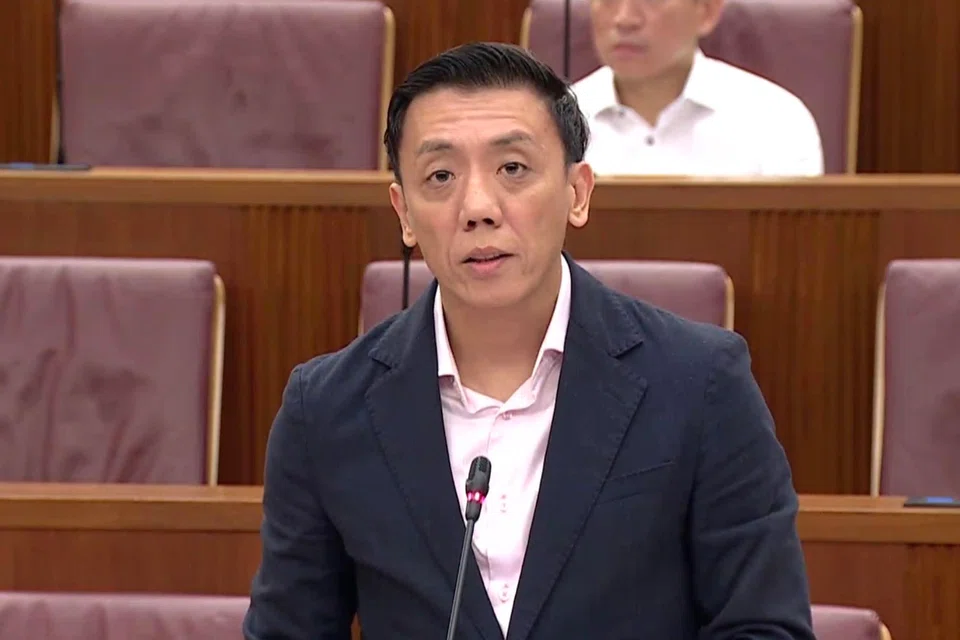
[SINGAPORE] Singapore will not impose a cap on the number of autonomous vehicles (AVs) as its transport needs are still growing, said Minister for Transport Jeffrey Siow.
There is also no immediate impact on drivers’ jobs and livelihoods, given that the number of AVs is a very small percentage of the total number of active taxi and private-hire car drivers, said Siow, who is also second minister for finance.
“While it is not possible to predict how many autonomous vehicles will be in Singapore in five years, it is almost certain that the majority of point-to-point transport will be provided by human drivers,” he said in a parliamentary response to questions on AV deployment on Wednesday (Oct 7).
This comes as Singapore begins deploying AVs for ride-hailing services, with American provider Waymo set to test its self-driving cars in Singapore in 2027 and be open for bookings in 2028.
Siow said Singapore is facing challenges such as an ageing workforce and more taxi drivers retiring in the coming years.
When ride-hailing apps and private-hire car drivers first came into the market and were seen as a competition to taxi drivers, Singapore also did not cap the number of private-hire car drivers, he added.
Nevertheless, Siow said that the government “fully recognises and understands” that some taxi and private-hire car drivers are concerned.
Singapore is therefore rolling out support and job transition packages, in partnership with industry and union partners, to support drivers who wish to explore opportunities in the AV sector or elsewhere.
This includes 350 placements across two career conversion programmes (CCPs): the new CCP for Autonomous Vehicle Specialists; and the new P2P Driver to Bus Captain pathway under the CCP for Public Transport Professionals.


Under these programmes, the government provides up to 90 per cent salary support to participating employers.
“The government is fully prepared to scale up CCP capacity if demand is higher than expected,” Siow said.
By the end 2028, Singapore may see several hundred autonomous passenger vehicles, compared with the current fleet of 72,000 active taxis and private-hire cars, he added.
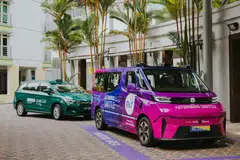
Punggol currently has 15 driverless vehicles, with Grab planning to increase its fleet to 50 in the next six months.
Beyond the next two years, the pace of AV deployment depends on technological readiness, safety validation, operator growth, the level of public confidence and acceptance, and the effect on existing drivers, Siow said.
All AVs operating on public roads must be shown to be able to operate safely and reliably within their intended operating conditions before they are allowed to carry passengers with a safety operator on board, he noted.
The minister added that operators are required to report incidents involving third parties or property damage, while the Ministry of Transport and Land Transport Authority will look into regularly publishing more data related to their operations.
Decoding Asia newsletter: your guide to navigating Asia in a new global order. Sign up here to get Decoding Asia newsletter. Delivered to your inbox. Free.
Copyright SPH Media. All rights reserved.