

No degree? No problem: New initiative could see more aspiring accountants shun university route
The S$6 million push by the Institute of Singapore Chartered Accountants aims to widen the talent pool


MORE polytechnic students in Singapore may opt to become accountants immediately after graduation, instead of getting a university degree first – and are unlikely to face lower pay, slower promotions, or career ceilings in doing so, industry players told The Business Times.
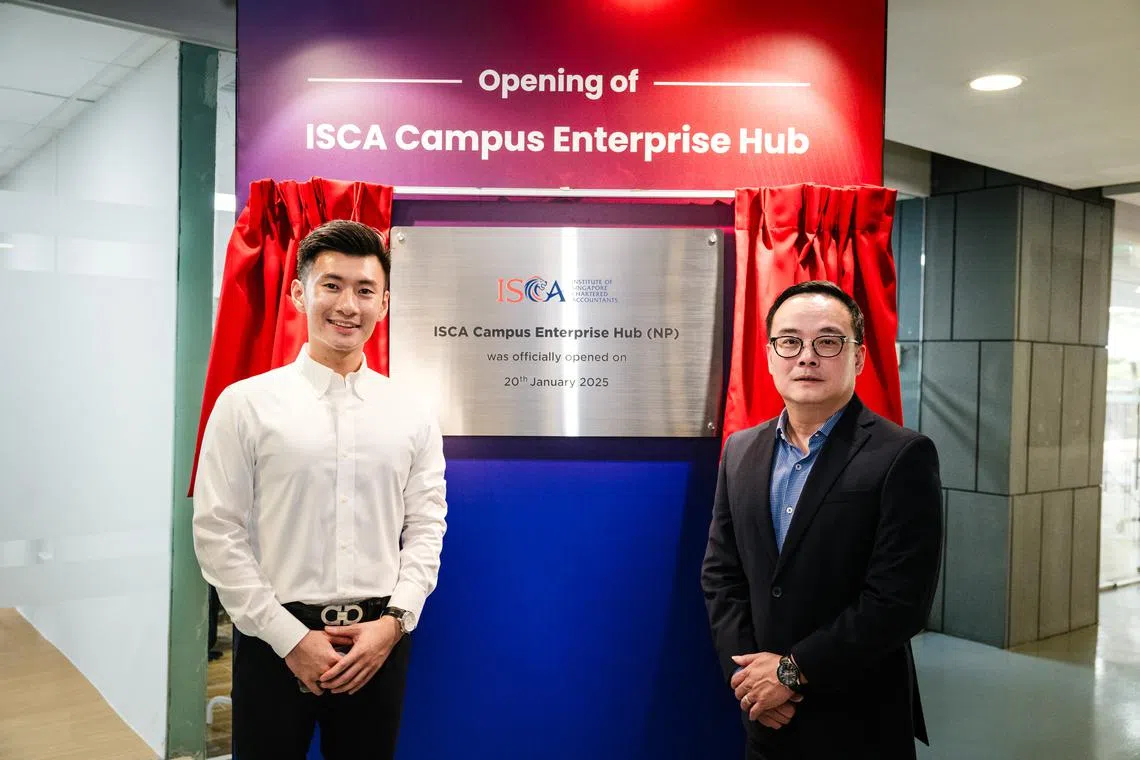
This shift comes with the launch of the Polytechnic Pathway Programme (PPP) on Jan 20, which aims to broaden the Republic’s accounting sector talent pool.
The PPP, a S$6 million initiative by the Institute of Singapore Chartered Accountants (Isca), will subsidise polytechnic graduates’ examination fees and other costs for the foundational portion of the Singapore Chartered Accountant Qualification (SCAQ), for up to two years after graduation.
Polytechnic graduates from any discipline are eligible. Isca – the administrator of the SCAQ – also offers learning support under the programme, including free revision classes and access to study spaces at its Cecil Street premises.
The SCAQ is the only way to obtain the Chartered Accountant (Singapore) qualification. It has two stages: a foundational portion with six modules and a professional portion with five modules. Candidates must complete both portions and accrue three years of relevant work experience to qualify.
Over the next three to four years, EY plans to hire at least 300 SCAQ candidates under the PPP, assurance partner Sam Lo told BT at the programme’s launch at Ngee Ann Polytechnic (NP).
These hires could start with internships or temporary roles while completing the SCAQ’s foundational portion, then transition to full-time positions during the professional portion, he explained.
Asked if such candidates would face career or salary disadvantages due to their lack of a degree, Lo replied that they would not, adding: “In fact, we have partners who have progressed all the way to a partnership without having (a degree).”
The other Big Four firms in Singapore – Deloitte, KPMG and PwC – also welcomed the PPP, but did not give estimates of hiring numbers under the programme.
“We look forward to bringing in more polytechnic graduates to augment our pool of accountancy talent,” said Yang Chi Chih, audit leader at Deloitte Singapore.
KPMG in Singapore similarly plans to offer a mix of internships and full-time roles to SCAQ candidates under the PPP, audit partner Shelley Chan said.
As for whether hires without degrees might face disadvantages, Chan noted that the firm uses a “merit-focused approach” to talent management. “While degrees have value, they are only one element of a comprehensive assessment process.”
PwC hopes to increase its intake of polytechnic graduates “as much as possible”, given the sector’s manpower challenges, noted human capital leader Chua Chin San. “The progression of polytechnic graduates will be commensurate with their peers at the same career level,” Chua added.
The PPP could encourage more polytechnic graduates to skip university like some of their predecessors.
EY audit manager Jonathan Siam joined the firm in 2018 after graduating from NP’s Diploma in Accountancy programme. He estimated that he is at least two years ahead of his peers at NP who went to university before becoming accountants.
Having earned his professional qualification in 2020, Siam noted no differences in remuneration or promotions compared with his university-educated peers.
PwC partner in private equity and real assets Yuneswaran Keraishnasamy also chose not to pursue a degree after graduating from Singapore Polytechnic’s Diploma in Accountancy programme in 2005. He joined PwC that year as an assistant associate and steadily climbed the ranks, including a two-year secondment to New York in 2014. He became a partner in 2021.
Early interest from students
Current NP students Lim Hui Zhen and Aaron Hemmings intend to tap the PPP after graduation.
Lim, 17, is a first-year student in NP’s Diploma in Accountancy programme, while Hemmings, 21, is in his second year of the same course.
Both have decided to skip university and go straight into practice after graduating.
For Hemmings, saving time is an important factor. “Otherwise, I would be almost 30 (including National Service) by the time I graduated from university and went to work as an accountant,” he said.
TRENDING NOW

Once staunchly pro-China, Malaysian Chinese businesses are now distancing themselves from Beijing

Britain’s mansion tax shows the difficulty of targeting wealth

Three hats, one goal: How Ng Kian Swan runs sustainability at NUHS

COE review: The gap between luxury and mass-market cars isn’t the only one worth bridging

