

No heir apparent: Isca president Teo Ser Luck says successor must earn the role, not be groomed
Election process is designed to be a ‘more democratic’ system where members ‘have a voice’, he adds

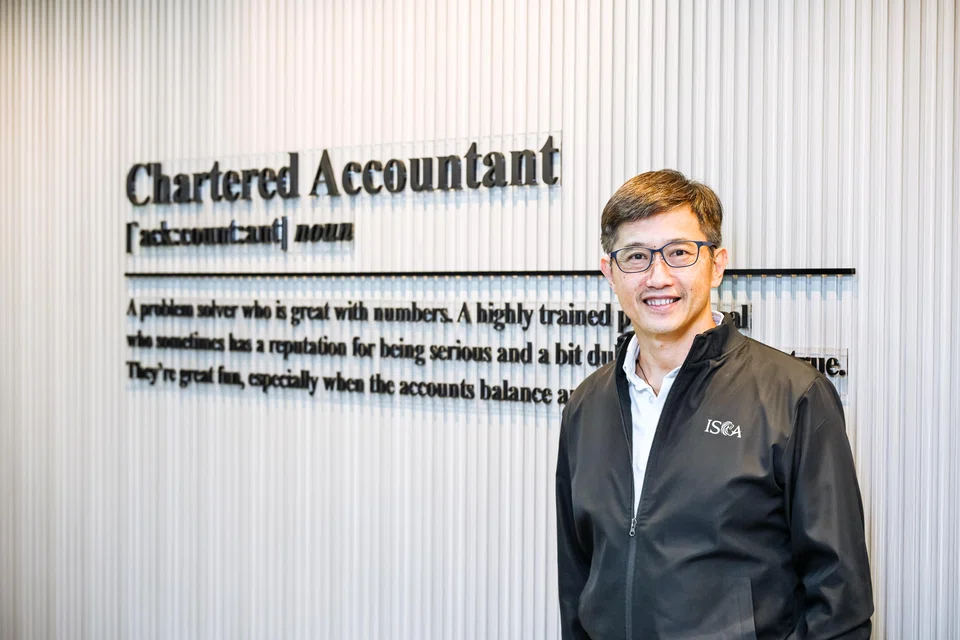
[SINGAPORE] As the Institute of Singapore Chartered Accountants (Isca) prepares for its annual council elections, its outgoing president Teo Ser Luck has made one thing clear: there is no groomed successor waiting in the wings.
Teo, who has been president of Singapore’s national accounting body since April 2022, is in the final stretch of his four-year tenure and will step down in April due to term limits.
Succession planning is therefore top of mind for the former mayor and minister of state, who left politics in 2020. However, he told The Business Times in a recent interview that a successor has deliberately not been groomed for Isca’s top job.
“If they make a difference and the impact is felt, I believe that they will be recognised,” said Teo, referring to possible candidates for the upcoming elections, who he said are likely to be those already participating in and leading ongoing projects and initiatives.
But unlike in other organisations where a successor is identified early and groomed for the role, Isca’s next president must be elected to the Isca Council on their own merits, he stressed.
The Isca Council is the institute’s apex decision-making body.
If the number of nominated candidates exceeds the available vacancies, voting for the annual elections to the council will take place from Apr 2 to 20. Nominations are open until Thursday (Mar 12).
The office-bearers – president, vice-president, honorary secretary and honorary treasurer – are then elected by and from among the council members. The newly elected council will take office following the election.
In recent years, between nine and 11 candidates have contested the eight available council seats each year.
Teo said the election process is designed to be a “more democratic” system where members “have a voice”.
“Am I going to encourage, influence and all that? I’m not going to do that, because I don’t want to set up a process where it just depends on the influence of anyone,” he said.
“I want to set up a process where it’s more sustainable – and good for Isca in the longer term (and), hopefully, we can attract more talent into the pool.”
Building momentum
As his term draws to a close, Teo said he hopes the next leadership team will continue building momentum in three areas: Isca’s internationalisation efforts, greater adoption of digitalisation and artificial intelligence in the profession, and talent management – including recruiting new entrants and retaining existing professionals.
However, he noted that the newly elected council will ultimately decide whether “this is still the direction to take”.
“It won’t be me – I’ve done my part,” he said.
As at January, Isca’s membership stood at 44,800, up more than a third from 33,274 at the end of 2021.
Interest in the profession has also increased. The number of candidates in the Singapore Chartered Accountant Qualification (SCAQ) programme – the sole pathway to attaining the Chartered Accountant (Singapore) qualification – stood at 5,858 as at Dec 31, 2025, more than double the 2,461 recorded at end-2021.
Isca took over administration of the SCAQ from the Accounting and Corporate Regulatory Authority in January 2024.
Growth in both membership and SCAQ candidates partly reflects structural changes introduced to make the profession more attractive to new entrants, through the work of the Accountancy Workforce Review Committee, said Teo.
The committee, set up in October 2022, issued its recommendations in May 2024.
The report outlined strategies to make the industry more appealing to both polytechnic and university graduates, as well as mid-career professionals, amid declining interest in accountancy studies and barriers for entrants without a related background.
Since the report’s launch, several recommendations – including raising starting salaries and expanding entry pathways – have been implemented. An implementation committee was subsequently formed in November 2024 to roll out additional measures.
Teo said he will “still be around” if the accounting body requires support, particularly for longer-term projects and partnerships he introduced.
“I’ll still be around to help them when they need me, (unless) they say: ‘No, we don’t need you anymore, we need someone else to come in.’ That’s okay too, I’m very happy to move on.”






