Economists mixed on H1 2025 monetary policy easing, after Singapore holds steady as expected in October
For 2025, MAS expects both core and headline inflation at 1.5 to 2.5 per cent

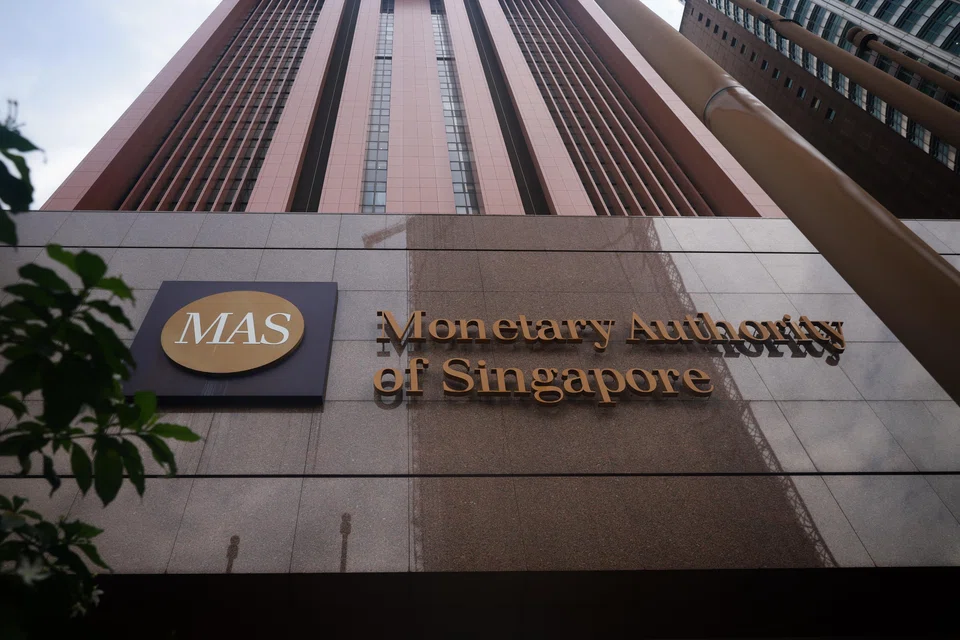
ECONOMISTS are now more mixed on when Singapore’s monetary policy will be eased, after the central bank maintained its monetary policy settings for the sixth straight meeting, in line with market expectations.
The Monetary Authority of Singapore (MAS) also narrowed its 2024 full-year core inflation forecast and gave its 2025 inflation forecasts on Monday (Oct 14).
MAS said it will maintain the prevailing rate of appreciation of the Singapore dollar nominal effective exchange rate (S$NEER) policy band, with no change to its width and the level at which it is centred.
“Singapore’s growth momentum has picked up and the negative output gap is projected to close in H2 2024,” it said. “Barring a weakening in global final demand, the economy should continue to expand at a steady pace and keep close to its potential path in 2025.”
Meanwhile, MAS core inflation has stepped down but is anticipated to decline further to around 2 per cent by the end of 2024.
Against this backdrop, current monetary policy settings are for now still consistent with medium-term price stability, it added.
Of the 16 analysts polled by Bloomberg, all but three expected MAS not to take action at the latest review.
MAS currently projects core inflation for the 2025 full year to average around the mid-point of the forecast range of 1.5 to 2.5 per cent, amid underlying cost pressures. It had projected core inflation to come in at “around 2 per cent” in 2025 in the July policy review.
Headline inflation for next year is also expected to average 1.5 to 2.5 per cent.
“The risks to Singapore’s inflation outlook are more balanced compared to three months ago,” it said.
As for inflation this year, MAS expects core inflation to average between 2.5 and 3 per cent as a whole, down from 4.2 per cent in 2023. This marks a narrowing from its previous forecast range of 2.5 to 3.5 per cent.
It believes that headline inflation should come in around 2.5 per cent this year, compared to 4.8 per cent in 2023. In the July decision, it had lowered its full-year forecast for headline inflation to a range of 2 to 3 per cent.
Growth and inflation outlook
MAS now expects 2024 full-year gross domestic product growth to come in around the upper end of the 2 to 3 per cent forecast range.
In its growth outlook, MAS noted a “broadly resilient” global growth backdrop, with major trading partners expected to “stay on a steady expansion path in the quarters ahead”.
It attributed growth in the remainder of 2024 to the ongoing electronics and trade cycle upswings, as well as easing of global financial conditions.
MAS added that the domestic economy is currently forecast to expand at “close to its potential rate” next year, though “significant uncertainty” remains, reflecting continued external environment risks.
On inflation, the monetary authority said core inflation momentum is expected to remain contained in Q4, implying a further slowing in its on-year rate over the next few months.
OCBC chief economist Selena Ling said that there is “greater comfort that the core disinflation process is continuing apace”, as expressed in the “more benign” 2025 core inflation prediction, compared with 2024.
MAS expects imported costs to be broadly stable next year, reflecting an anticipated unwinding of oil production cuts and favourable weather conditions for food supply. Meanwhile, on the domestic front, unit labour costs are projected to rise more gradually, alongside moderating nominal wage growth as well as a recovery in productivity.
The last monetary policy change – the last of five consecutive tightening moves – was in October 2022, when the mid-point of the S$NEER policy band was re-centred higher to the prevailing level then, with no change to the band’s slope or width.
More cautious
While Ling said MAS “sounds more sanguine on near-term growth”, she and other economists noted its flagging of significant uncertainty around the economic outlook, including geopolitical developments and trade tensions.
Maybank economists Chua Hak Bin and Brian Lee said that MAS “turned more cautious on the growth outlook”; HSBC’s Yun Liu and Joey Chew said the qualitative language on growth signalled rising concerns; and Bank of America (BOA) economists Ang Kai Wei and Rahul Bajoria noted that MAS “sounded more tentative on current settings”.
Some highlighted that it said monetary policy settings are still consistent with medium-term price stability “for now”, a caveat, as opposed to “current monetary policy settings remain appropriate” stated in July.
“This signalled less commitment from the MAS to the current monetary policy,” said HSBC’s duo.
They added that MAS omitted a line – “The prevailing rate of appreciation of the policy band will keep a restraining effect on imported inflation as well as domestic cost pressures, and ensure medium-term price stability.” – compared with the previous statement, reinforcing their view.
The BOA team added that MAS’ more tentative stance could be due to how the US elections might alter its risk scenarios.
“For instance, any broadening of US tariffs may lead to negative terms of trade for Singapore, and thus possibly slower medium-term growth (which may offset any inflationary impact in the near term).”
Easing next year?
The BOA duo continues to expect an extended pause in January, in the absence of shocks. They believe that MAS will only ease policy if core inflation is seen tracking below 1.5 per cent in 2025 and 2026.
This could happen if there are clear signs of a global growth slowdown; global commodity prices are seen stepping down; or core disinflation momentum picks up in the fourth quarter of 2024, they said.
RHB economists Barnabas Gan and Laalitha Raveenthar also expect MAS to keep its policy parameters unchanged, at least into the first half of 2025, believing that current S$NEER policy parameters are appropriate for maintaining Singapore’s price pressures.
Key risks to their view are geopolitical tensions leading to unanticipated supply chain constraints; potential rise in protectionist policies which may curtail free trade; and China risks, especially should recent policies fail to arrest the declines in property prices.
In contrast, the Maybank team’s base case remains for MAS to ease monetary policy via a slight reduction of the S$NEER slope in January 2025, when core inflation dips below 2 per cent.
“With its forward-looking nature, MAS will be watchful of external risks and may look to pivot to a policy stance more supportive of growth,” they said. “Nonetheless, we do not rule out that MAS may opt for an April 2025 easing instead, especially if growth remains strong.”
Similarly, UOB associate economist Jester Koh’s base case now calls for a slight reduction to the S$NEER slope, in January or April next year, with no adjustments in 2025 thereafter.
“With the output gap likely closing (or even turning positive) in H2 2024, in tandem with strengthening economic activity, demand-side inflationary risks persist,” he said. “Thus, MAS may adopt a more cautious approach to policy normalisation only when year-on-year core inflation is very close to desired levels and possibly when GST-effects have completely washed out.”