

Profit with purpose: Kim Choo Kueh Chang’s pivot from public listing to protecting heritage
It hopes to keep spirit of the family’s traditions alive while trying new things
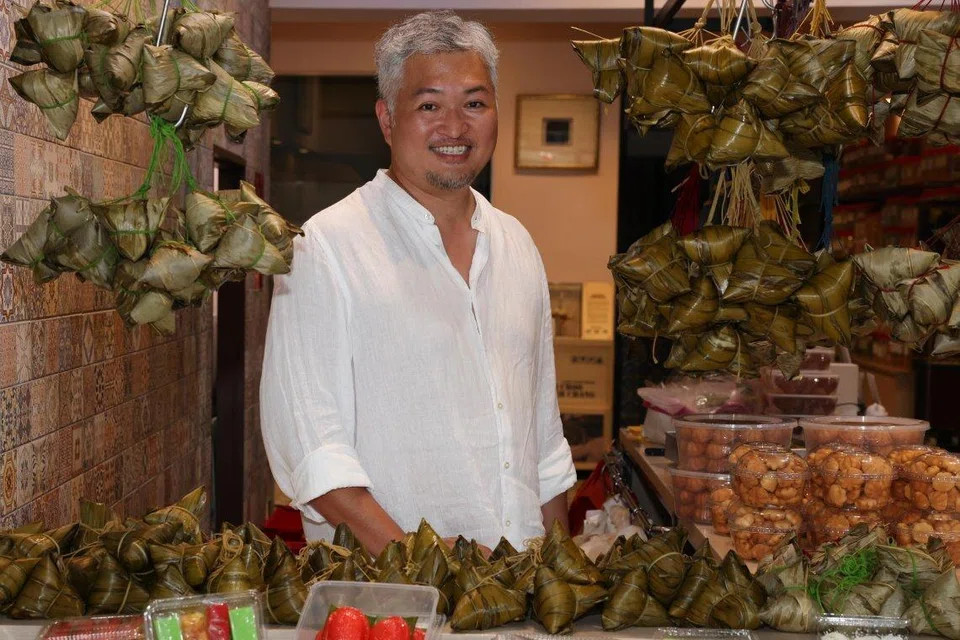
[SINGAPORE] Years ago, tourists could stop at Kim Choo Kueh Chang’s Changi Airport restaurant for a taste of Peranakan food. Locals could pop by its kiosks at Ion Orchard or Century Square to pick up a bundle of Nonya rice dumplings.
Today, only two branches of the brand remain standing, at Joo Chiat Place and East Coast Road. Earlier plans to sell or list the business have also been shelved.
But if you ask Edmond Wong, third-generation owner of the family business, this scaling back is not a sign of failure, but a testament to the family’s efforts to “safeguard what is really important”.
Despite the downsizing, Kim Choo’s revenues continue to climb every year. But Wong, who is also director of business development and corporate social responsibility, is not concerned about “vanity” metrics. Instead, he aims to “sustain a good business”, which he believes means protecting heritage and sustaining a community.
And the reconfiguration does not mean that Kim Choo is abandoning expansion. Said Wong: “Our growth strategy right now is not growth for growth’s sake, but we grow with a good purpose.”
Living history
Wong’s grandmother, the eponymous Lee Kim Choo, founded the food establishment under a banyan tree in the aftermath of World War II, before securing a bank loan and setting up in a shophouse.
His parents eventually inherited it, introducing new products – such as chicken, vegetarian and bite-sized renditions of its rice dumplings – and expanding the business.
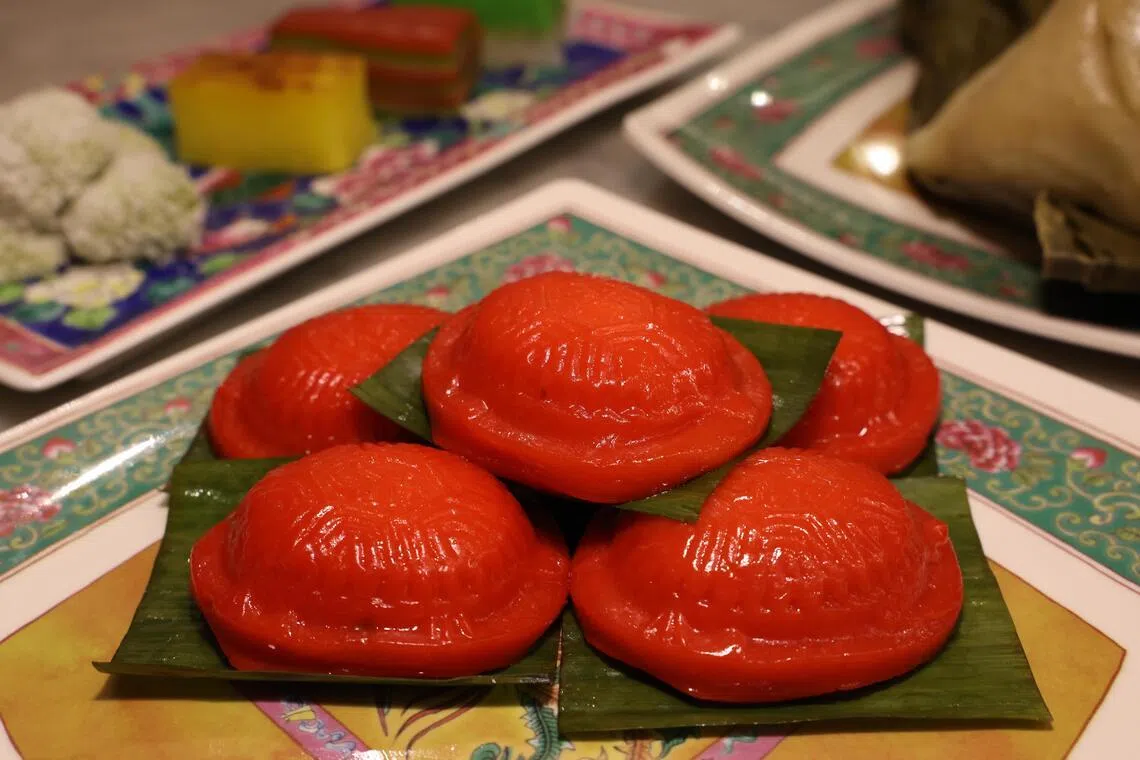
Wong, formerly a programmer, joined Kim Choo in 2009, because the company was facing a manpower crunch. The government had implemented significant manpower restrictions to manage Singapore’s dependence on foreign labour.
His brothers, previously an accountant and a teacher, similarly returned to bolster the family business. They returned with ideas on what could be done differently, and were given the space to experiment.
“My parents were very willing to let us fail. So I think that’s why we were willing to come back.”
Over the years, they have made several changes to try to keep the business alive.
And indeed, some have not survived. Kim Choo attempted to start a business for halal rice dumplings with a halal kitchen, which suffered from manpower shortages. It also started restaurants and mall kiosks, which later closed due to mounting worries over strained resources and operational costs, such as manpower and rent.
But other moves have been more enduring.
Recalling a story from his childhood where two brothers – one who could not see, and one who could not walk – worked together to escape a fire, Wong was inspired to hire persons with disabilities to work for the business.
Remembering that his grandmother “adopted people off the streets to work for her”, he believed that she would also support his idea.
Kim Choo now hires about 15 persons with disabilities across its factories and outlets. Many do well in food preparation, carrying out repetitive, precise tasks such as trimming mushroom stems and weighing out portions of meat.
Instead of handling delivery in-house, Kim Choo now outsources the final step in sending its kuehs and rice dumplings to customers, to free up hands for food production.
The brothers also brought automation into the production process.
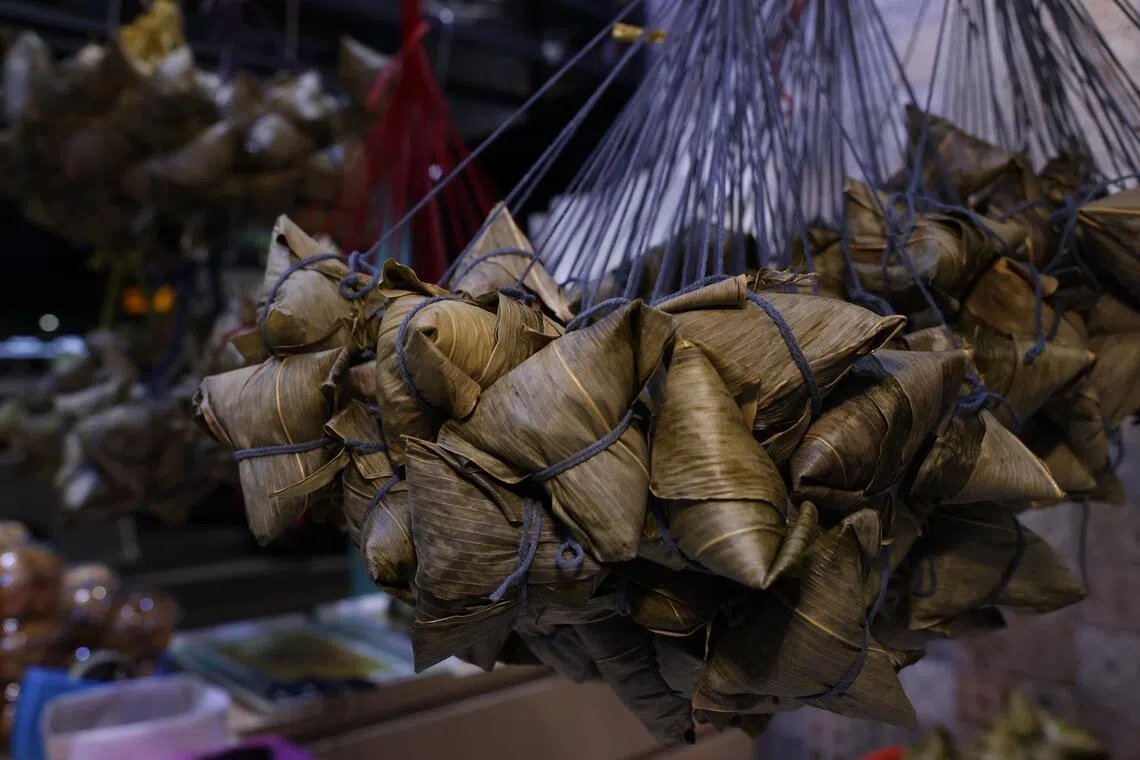
To maintain the quality of its products, some steps must still be done manually, Wong said. For example, rice dumplings need to be wrapped by hand, as pandan leaves come in different shapes and sizes.
But others can be shortened, he added.
His grandmother and parents used to wash and soak glutinous rice by hand – a process that could take four to six hours, as rice in Singapore is imported and older crops need more time to absorb water before cooking.
This long preparation time meant that the business could not easily adjust production volumes.
After taking up government grants and exploring existing technologies in mainland China, Japan and Taiwan, Kim Choo developed proprietary technology for preparation processes.
It can now “condition” rice in under 10 minutes – and more consistently, too, said Wong, admitting that he would sometimes bite into uncooked rice in his grandmother’s dumplings.
The business produces about 2,000 rice dumplings a day, and 50 packs of each type of kueh – a controlled quantity, as no preservatives are used.
Wong also sees Kim Choo as a heritage brand, beyond being stand-alone F&B stalls. Formerly a “festivities product” consumed primarily during Chinese New Year and the Dragon Boat Festival, it is now a place that grandparents bring their grandchildren, and locals share with their foreign friends.
It is an original equipment manufacturer for several partners, including hotels.
Kim Choo’s East Coast location functions as one of the Singapore Tourism Board’s Singapore Visitor Centres, and the company runs tours and offers workshops.
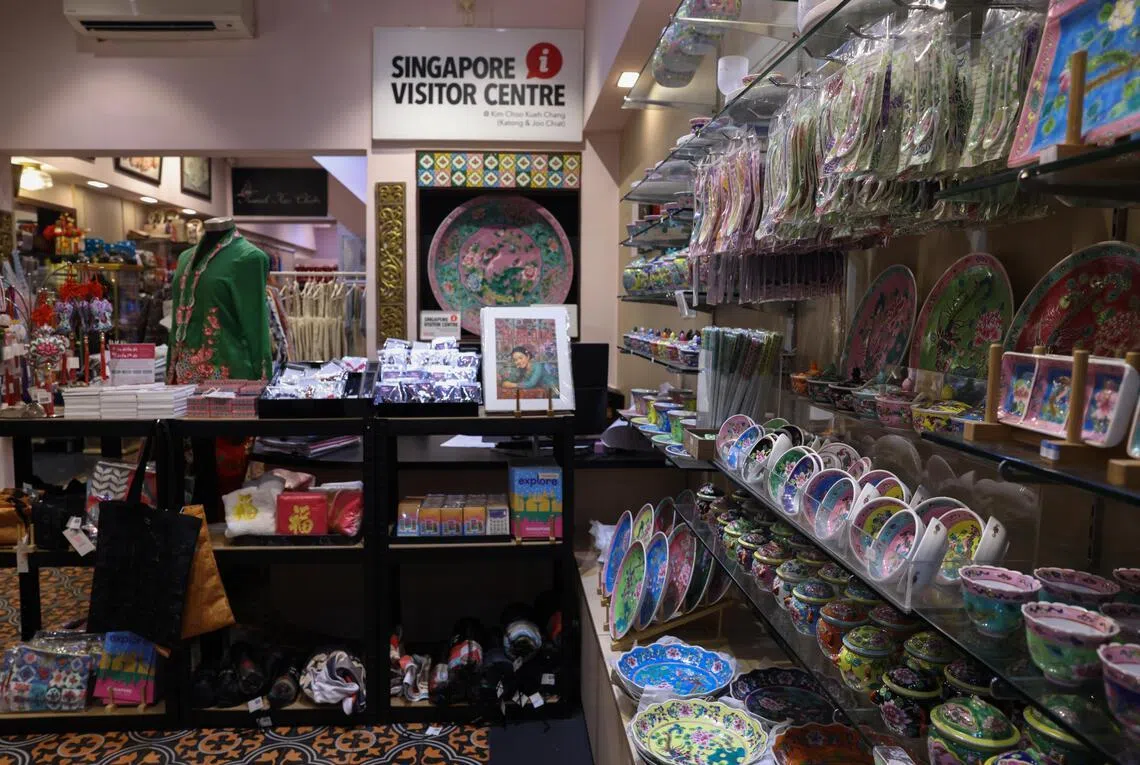
Rumah Kim Choo, a Peranakan apparel boutique run by Wong’s brother, has stretched the business’ reach into the fashion space, and has been showcased in fashion shows around the world.
These incremental efforts to expand and diversify have paid off. In the early 2010s, revenue grew 15 per cent, then 20 per cent year on year, before stabilising at about 30 per cent.
“We haven’t seen a plateau until only very recently,” Wong said. Revenue growth slowed to about 10 per cent in the latest financial year, which he attributed to the rise of imitation brands in the market.
Strategic surrender
In the process of scaling the business, the family behind it began to consider a public listing.
It would be able to raise funds, and thus increase its factory space, hiring and capacity, Wong recalled thinking. In an imaginary ideal scenario, any unused space could also be leased out, he added.
Internationalisation was a part of this listing journey, and Kim Choo began to explore the idea of producing sauces – which face fewer restrictions than meat products – for export.
A Chinese business expressed its interest to buy a 60 per cent stake in Kim Choo and list it overseas, which the family rejected after months of consideration. While the valuation was interesting, Wong was worried that it would “change the entire system” of the business.
He also began to feel the numbers take over. Wong worried about profit margins being squeezed, even as revenues increased.
Bigger is not always better. Growing a top line with a purpose is “just for vanity”, he said.
“(This focus on vision and growth intensified) until a point whereby I said: ‘Why am I doing all these things? I don’t even have time for my own family,’” Wong remembered.
After taking his concerns to his family, they agreed that rather than racing to fulfil targets, they would set their listing ambitions aside.
But Wong said the business is not stagnating. Instead, it is choosing how to grow purposefully.
While the brand is rooted in traditional flavours, it is innovating products to engage younger audiences. Kim Choo recently launched a truffle rice dumpling, and a chocolate dumpling is in the works.
With the announcement of the Johor-Singapore Special Economic Zone, the business is also exploring the potential of setting up a production facility for sauces in Malaysia.
This would overcome the issue of space constraints in Singapore and also ease the process of receiving halal status, Wong said.
While food is now still the main driver of the company, making up 80 per cent of the business, he envisions Rumah Kim Choo growing to take a bigger share.
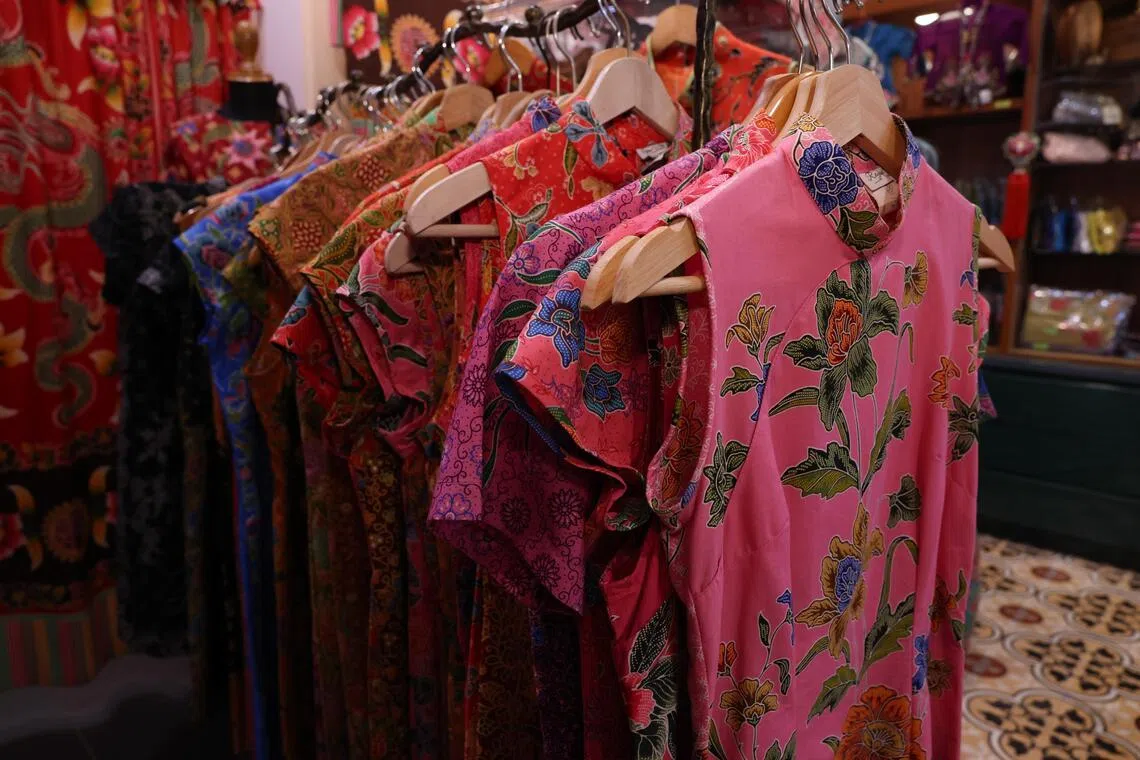
“Perhaps you could find boutiques elsewhere,” he said, speculating that the brand could even be spun off to run independently.
On Kim Choo’s tourism arm, he noted a “growth in demand for experiences”.
“I think expanding the top line is going to be very crucial for us, because without that we cannot do all these things,” Wong said.
But he summed it up: “If we expand without the slightest thought about how we first started our business, I think (we will) definitely... lose our soul, and Kim Choo will be different.”
Decoding Asia newsletter: your guide to navigating Asia in a new global order. Sign up here to get Decoding Asia newsletter. Delivered to your inbox. Free.
Copyright SPH Media. All rights reserved.
TRENDING NOW

Once staunchly pro-China, Malaysian Chinese businesses are now distancing themselves from Beijing

Looking beyond looming CEO succession, should UOB potentially pursue a transformative merger?

Could stablecoins be the future of money?

Grab CEO’s wife Chloe Tong on life with Anthony Tan and finding her purpose

