Prominent economist Lim Chong Yah dies, aged 91
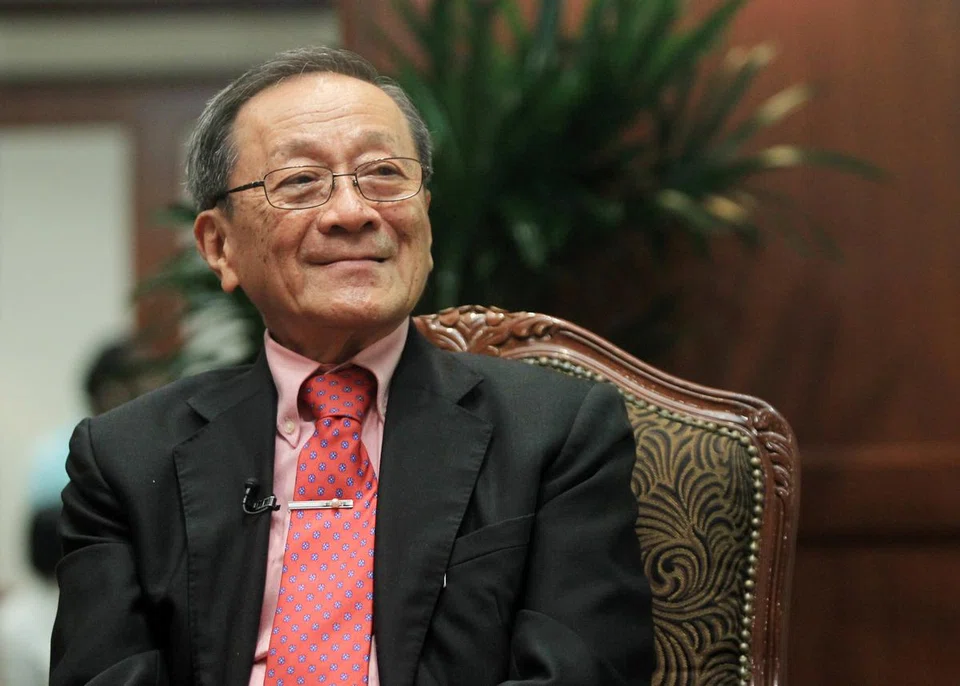
PROFESSOR Lim Chong Yah, an eminent economist who led a body forging wage consensus for Singaporean workers for nearly three decades – died on Saturday morning. He was 91.
The son of a shopkeeper, Prof Lim was born in Malacca. His mother died when he was eight.
He was awarded a scholarship to study economics at the University of Malaya, which was then located in Singapore, and later joined the Singapore administrative service.
He served as chairman of the National Wages Council for 29 years, and also held the title of Emeritus Professor – the highest academic accolade – at both the National University of Singapore (NUS) and Nanyang Technological University (NTU).
In 2005, he was appointed the Albert Winsemius Chair Professor of Economics at NTU. This professorship is given to renowned scholars.
He leaves two daughters and two sons. His eldest child is lawyer Lee Suet Fern, who is married to Lee Hsien Yang – the younger son of first prime minister Lee Kuan Yew, and the brother of Prime Minister Lee Hsien Loong.
One of his sons, Dr Lim Suet Wun, is former chief executive of the National Healthcare Group.
As founding chairman of the National Wages Council – which issues guidelines on wage-related matters each year, based on a tripartite consensus – from 1972 to 2001, Prof Lim contributed to the economic development of Singapore.
He was also founding chairman of the Skills Development Fund Advisory Council. The fund was set up to train workers for the demands of Singapore’s restructured economy, which involved easing out labour-intensive and low-paying jobs, and attracting jobs with a higher economic value.


Prof Lim also served as president of the Economic Society of Singapore from 1973 to 1991, and was a member of the Presidential Council for Minority Rights.
Two of his books on economics have been used in Singapore as A-level texts.
Those who had interacted and worked with Prof Lim expressed their condolences.
Professor Euston Quah, Albert Winsemius Chair Professor of Economics and director of NTU’s Economic Growth Centre, as well as president of the Economic Society of Singapore, said he first met Prof Lim in 1984, when he was interviewed for a position at NUS.
“At the time, I was already planning to return to Canada, but it was Prof Lim who encouraged me to come to Singapore instead,” said Prof Quah.
“I have been very fortunate throughout much of my academic career to have the trust, the wisdom, and the invaluable advice of Prof Lim. He has been instrumental in his role in nation building, and his great belief that economics must be useful and relevant to society.
“I will miss him greatly as a mentor, a colleague, and a dear friend.”
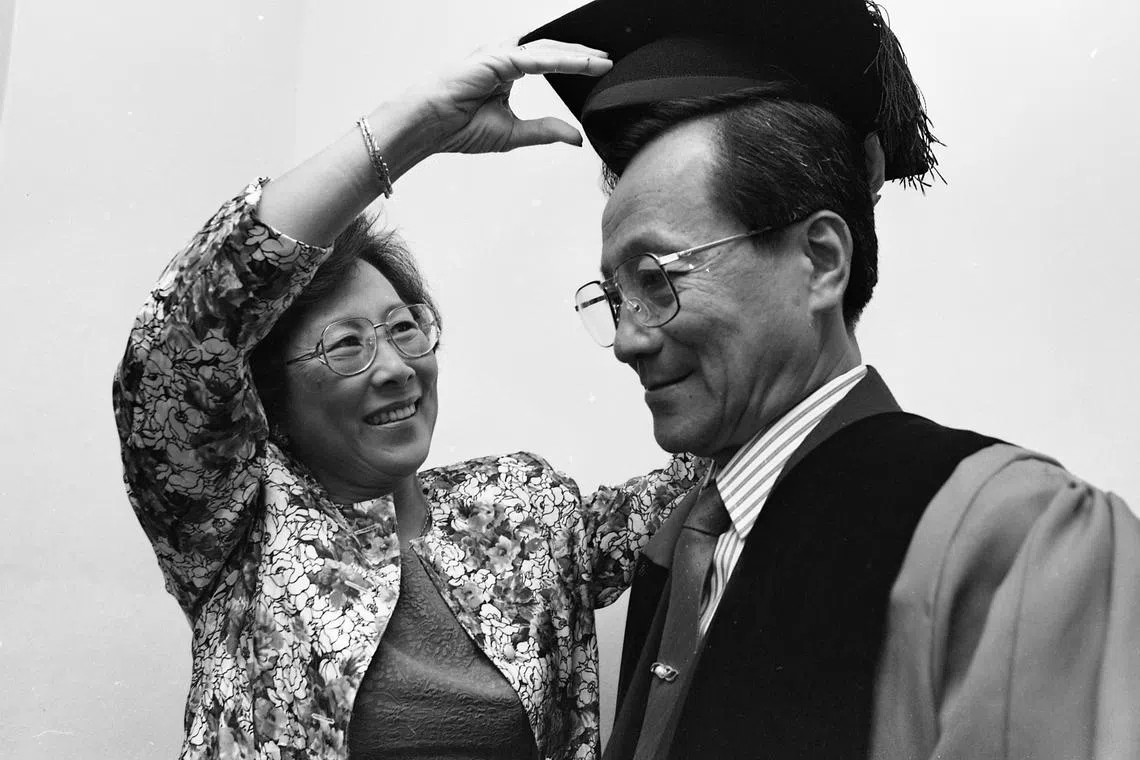
Professor Joseph Liow, dean of the College of Humanities, Arts and Social Sciences and Tan Kah Kee Chair in Comparative and International Politics at NTU, said: “I had the pleasure of having lunch quite frequently with him over the past few years. It was akin to sitting at the feet of a very respected teacher.
“Prof Lim was a true Singapore son, and rightfully proud of his small part in the Singapore story. He still had a very sharp mind right to the end, and his powers of analysis were as solid as ever. I will miss those lunches very much.”
Professor Tommy Koh, Ambassador-at-Large at Singapore’s Ministry of Foreign Affairs, called Prof Lim an “old friend” and an “economist with conscience”.
“First, he was a very good economist and excellent teacher. Second, he made an important contribution to Singapore as the founding chairman of the National Wages Council, for over 29 years. NWC is a key institution of Singapore,” said Prof Koh.
He had written a commentary in The Straits Times in defence of Prof Lim in 2012, after the latter proposed that the NWC call for a temporary moratorium on salaries of top executives earning more than $1 million a year.
Prof Lim had also proposed that should the wages of the lowest-paid resident workers remain stubbornly very low, serious consideration should be given to introducing a compulsory minimum wage scheme.
A few years later, he called on the NWC to consider requiring companies to increase their Central Provident Fund (CPF) payouts to low-wage workers.
This, he argued, could be used to raise the workers’ pay across the board, rather than through a national minimum wage.
Added Prof Koh: “He was a perfect gentleman and was kind and gracious to everyone, high or low. I join his family and students at both NUS and NTU in mourning his passing.”
In a Facebook post on Saturday, Manpower Minister Tan See Leng wrote that Prof Lim’s contributions to Singapore went far beyond the economic realm.
“As the pioneering chairman, he led the NWC for almost 30 years and laid the foundation for harmonious tripartite relations on which our progressive and prosperous economy is built,” Dr Tan said.
“His concern for the livelihoods and welfare of our lower-wage workers was unceasing.” THE STRAITS TIMES
Decoding Asia newsletter: your guide to navigating Asia in a new global order. Sign up here to get Decoding Asia newsletter. Delivered to your inbox. Free.
Share with us your feedback on BT's products and services