

In recent elections, incumbents in Canada, Australia and Singapore had a Trump card
In contrast to 2024’s anti-incumbent trend, global voters now seem to be rallying behind stability

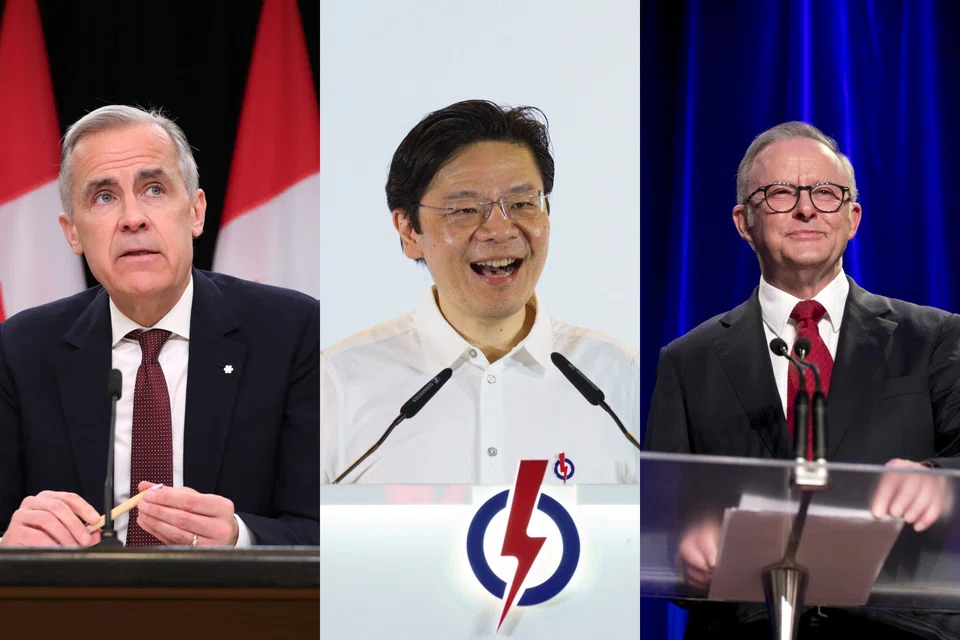
[SINGAPORE] US President Donald Trump’s tariff policies have polarised America, but in other countries, they may have done something quite different: rallied voters behind their incumbent governments.
Last year, more than half the world’s population went to the polls in more than 60 countries – and most sitting governments were ousted or weakened, in what some pundits dubbed the “incumbency curse”.
The UK’s Labour Party crushed the Conservatives in a landslide win last July, ending 14 years of Tory rule. Trump rode the anti-incumbent wave to victory last November, defeating former US vice-president Kamala Harris.
But this year, Trump himself may have turned the tide. On Apr 2, he announced sweeping “Liberation Day” tariffs – a baseline 10 per cent duty on all US imports, effective Apr 9, with higher rates for certain countries.
China was hit hardest, with tariffs as high as 145 per cent. Additional tariffs on other nations are on a 90-day pause, but the world remains braced for an escalating trade conflict.
Then came a week of elections between Apr 28 and May 3.
In Canada, Australia and Singapore, more than 36 million voters went to the polls – and in all three, the incumbent governments not only survived but thrived, gaining vote share in a stark reversal of last year’s trends.
Canada’s Liberal Party, led by Prime Minister Mark Carney, added 17 seats in the House of Commons and improved its national vote share by 11.1 percentage points, in the country’s Apr 28 snap poll.
In Australia’s May 3 election, Prime Minister Anthony Albanese’s Labor Party picked up eight more seats in the House of Representatives and a 2.2-point bump in national support, with final tallies still pending.
In Singapore, there was never any doubt that the People’s Action Party (PAP) would remain in power after the May 3 polls. Still, it notched a 4.33-point rise to 65.57 per cent of the popular vote, winning 87 of 97 seats.
The results were all the more remarkable given the political landscape just months earlier.
In February, Dr Carney’s Liberals trailed their Conservative rivals by as much as 25 points in opinion polls, with pollsters predicting a near-certain Conservative win if an election had been held then.
In Australia, opinion polling in March – before Trump’s tariffs were unveiled – had the two major parties locked in a statistical dead-heat.
In Singapore’s case, while the PAP was not at risk of being dislodged, all eyes were on whether it might lose more seats in Parliament, and whether Prime Minister Lawrence Wong would receive a strong mandate in his first general election at the helm.
Even here, momentum likely shifted. In a YouGov poll conducted between Mar 25 and Apr 1, just 40 per cent of respondents voiced support for the party, with another 42 per cent either undecided or unwilling to reveal their choice.
Tellingly, PM Wong also bucked historical trends for a general election with a change of leadership.
His predecessors Lee Hsien Loong and Goh Chok Tong both saw the PAP’s vote share dip when they led the party in general elections for the first time: Goh by 2.2 points in 1991, and Lee by 8.69 points in 2006.
The Trump effect
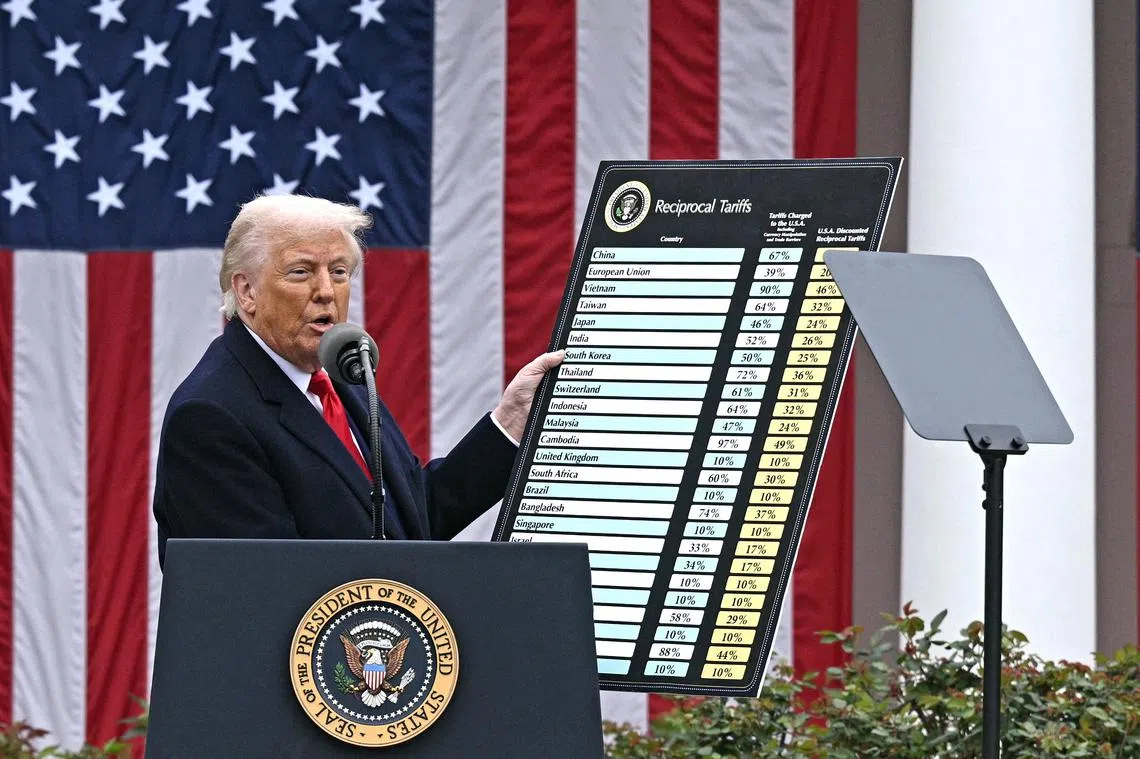
So what changed for 2025’s incumbents? The most obvious answer: Donald Trump.
His tariffs have rattled global markets and sparked fears of a looming trade war. In this climate, analysts in all three countries observed that voters likely gravitated towards the familiar – what some have called a “flight to safety” or a push for “political continuity”.
Opposition leaders Pierre Poilievre in Canada and Peter Dutton in Australia, both right-wing politicians, were also often dubbed “Canada’s Trump” and “Temu Trump” by critics.
That perceived association may have become a liability, amid pushback to Trump’s policies and fears of Trumpism seeping into domestic politics.
In Singapore, the spectre of Trump’s tariff policies – and the global uncertainty they unleashed – not only loomed large, but was repeatedly invoked in the campaign.
PM Wong and his fellow PAP leaders framed the election as an “existential” choice over who should steer the country through “turbulent” times.
The message was consistent throughout the nine-day campaign: a “clear mandate” would give PM Wong and his team the authority to act “decisively” on domestic and international issues, and strengthen their hand in global negotiations – including with leaders such as Trump himself, mentioned by name in a PAP rally.
What next?
Other countries are heading to the polls soon. The Philippines will hold mid-term House and Senate elections on May 12, while Portugal will see snap parliamentary polls on May 18 – its third in less than four years.
South Koreans, meanwhile, will elect a new president on Jun 3, after the impeachment and subsequent removal of Yoon Suk-yeol in April.
Whether Trump’s global ripple effect will continue to favour incumbents remains to be seen.
But if the past week is any guide, the “incumbency curse” may be lifting – thanks in part, ironically, to the very man who toppled an incumbent at home.
TRENDING NOW

Once staunchly pro-China, Malaysian Chinese businesses are now distancing themselves from Beijing
Stocks to watch: HPL, Aims Apac Reit, Zico, Advanced Systems Automation, ComfortDelGro
‘How many will survive?’: Bubble fears arise as China’s humanoid robotics face reality check
Smaller board lots can’t fix a market run by three banks

