

As retail leasing guidelines become law, tenants want more data from landlords

Paige Lim
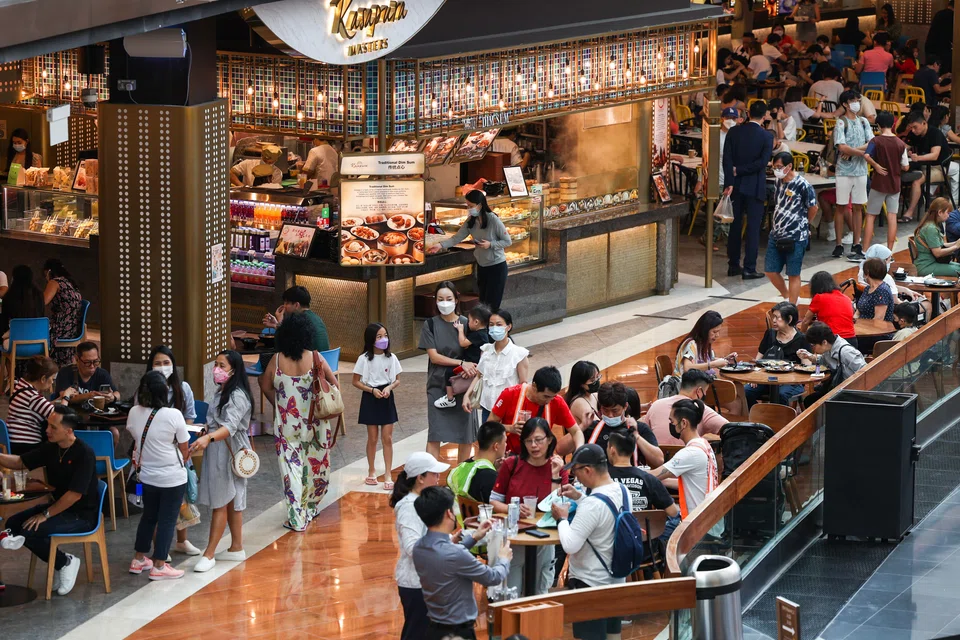
EVEN as guidelines for retail leasing are set to become law, tenants want to go beyond the proposed legislation and request more data from landlords. More data will give them a leg up in rental negotiations, tenants said.
Tenant group Singapore Tenants United for Fairness (SGTuff) proposed that landlords be required to provide data on the footfall and average rental per square foot (psf) in their retail premises.
This data should be collected “by mall and by floor”, updated monthly, and publicly published, similar to residential transactions, said SGTuff chairman Terence Yow.
“Inertia, status quo and entrenched habits are the biggest barriers to the sharing of such data,” said Yow, who is also managing director of shoe retailer Enviably Me.
SGTuff made this call on Jul 4, after the Lease Agreements for Retail Premises Bill was introduced in Parliament to mandate compliance with the key principles of an existing code of conduct.
The Bill does not include the code’s data transparency guidelines, under which landlords “must share sales data metrics by trade category (total monthly sales and total floor area)” before a lease is signed.
This applies to landlords which collect tenant sales data as part of the gross turnover rent structure. Such data must be shared twice a year with existing tenants.
The code’s guidelines are “a positive step forward on reciprocal sharing of data”, said Yow. “But the tenant’s lease negotiation ability, armed with only by-category sales per square data, is still much weaker than the landlord who has daily, monthly sales data of each individual tenant.”
Current data too broad
Retailers told The Business Times that only a handful of landlords share sales data – and the metric shared is too broad to be useful, as it is based on a mall’s aggregate sales in a trade category and not broken down by floor.
A mall’s food and beverage (F&B) category could range from “fine-dining restaurants, to quick-service restaurants, small kiosks, and bubble tea shops” – each of which could see markedly different sales, said Moe Ibrahim, chief executive of F&B brand group Deelish.
“If you’re taking every single type of food establishment in a mall and just averaging their revenues across the total square footage, what does that data tell you? It doesn’t say anything,” he said.
Instead, fine-grained footfall and rental data can help tenants assess if they are paying fair rents, and give them more negotiating power, said retailers.
If footfall and rents have fallen, a tenant can argue against a rent hike, while knowing “that it is unlikely for another tenant to want to take that space”, said Yow.
In contrast, most lease agreements prevent tenants from disclosing their rents, said Paul Khor, founder of lifestyle brand Actually and outdoor retailer Outside.
Elson Lee, director of traditional Chinese medicine and wellness chain Refresh Group, said data is critical for new entrants who might otherwise accept an above-market rent for a place in their preferred mall.
For existing tenants, data could prompt a relook of business models, especially if peers can afford high rents, he added: “Since the rental market is like that, I need to either work harder, or exit from the mall.”
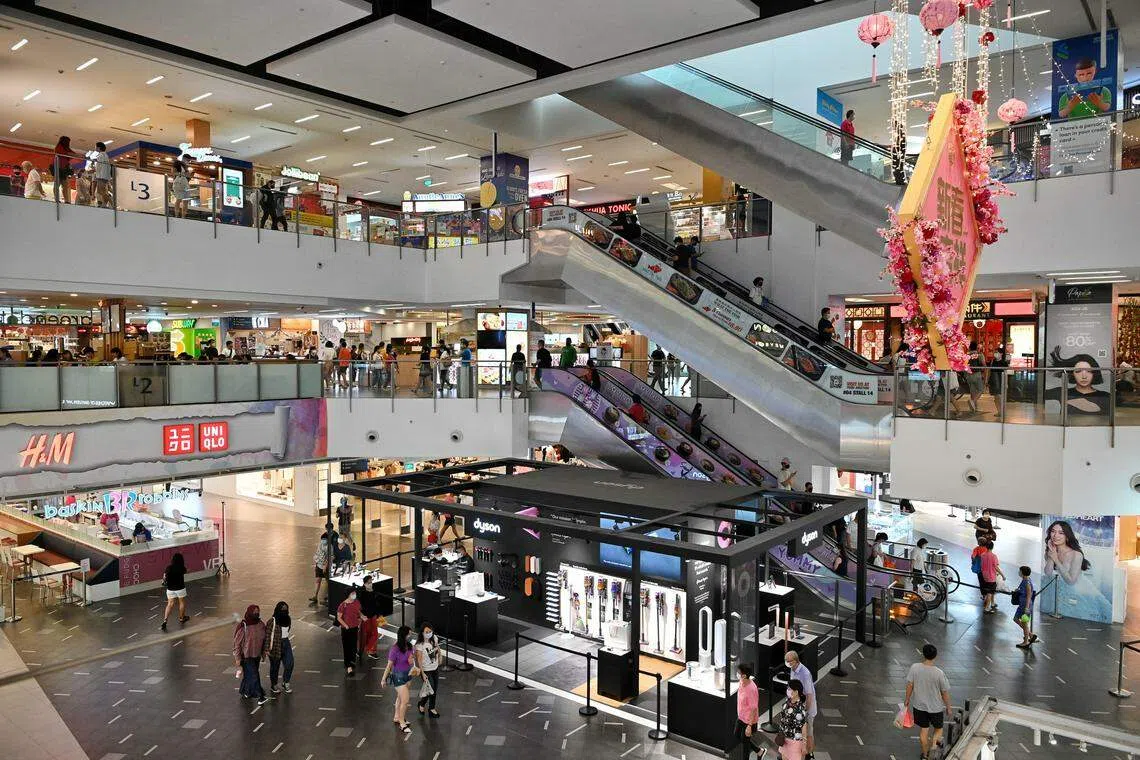
Most real estate investment trusts publish quarterly data on changes in traffic, rental reversion rates and tenant sales, but on an overall retail portfolio level.
Sing Tien Foo, the Provost’s Chair professor of real estate at the National University of Singapore Business School, noted that landlords are “hesitant” to share data, especially gross occupancy cost ratios: “They may be afraid that other competitors may poach their better-performing tenants away, if the information is made known.”
“However, if the market is open and data is transparent, both landlords and tenants should be able to align their interests to keep rental competitive and fair, and thus avoid mispricing – that is, overcharging some tenants and undercharging other tenants or those in other trades.”
Collecting granular footfall data – via sensors or Wi-Fi network users – could benefit both sides, Prof Sing added. Tenants can better position their strategy to capture shoppers, while landlords can plan their tenant mix more effectively.
Noting that tenant sales data can help in benchmarking performance, a City Developments Limited spokesperson said: “In this spirit, we have provided our tenants with pertinent data and information that support decision-making, including data that is not required under the code of conduct.” This includes data such as shopper traffic.
Limitations to data collection
Yet even with data, rents may not always be comparable, said analysts.
Tricia Song, CBRE’s head of research for South-east Asia, noted that unlike residential properties where rents “largely depend on location and the direction they face”, retail rents depend on other factors such as footfall and shopper profile.
“Unlike other segments of real estate, retail rents are the least homogeneous,” said Sulian Tan-Wijaya, executive director of research and lifestyle at Savills Singapore. Brands and units are unique, and it is “quite rare” even for neighbouring units to have the same rent.
“It could also create confusion and potentially unhappiness for some tenants, who may wonder why their rent is higher than another tenant, without taking into account all the factors,” she added.
As for footfall, collecting fine-grained data is challenging. Landlords may have different methodologies, and the cost and effort of collecting such data might not be worth it “as footfall may not translate into sales”, said Song.
Then there are strata-titled malls, where it is even harder for landlords to provide data – and arguably not necessary.
Rental transactions of strata units are “very transparent” and can be accessed on real estate portal SRX with a subscription, said Henry Mok, founder of small landlord group SOS Small Owners Society.
Joan Chen, CBRE’s head of retail, noted that smaller landlords of strata malls and shophouses could face constraints in collecting data due to fragmented ownership.
Mok noted that unlike institutional landlords which charge gross turnover rent – and thus need sales numbers – smaller landlords charge fixed rent and do not collect sales data from tenants.
“For strata malls, we don’t ask tenants for the number of customers they see, as long as they pay the rent. Our tenants also know we don’t have such data,” said Mok, who chairs the Management Corporation Strata Title for Bugis Cube.
TRENDING NOW
DBS remains analysts’ pick ahead of Q3 earnings after Singapore banks’ share slump

Singapore identifies 7 firms responsible for haze fires, notices issued urging action: Grace Fu

Good Class Bungalow market activity picks up pace on ‘realistic’ pricing

High Court rules against Julius Baer’s Singapore trust arm in US$50 million family trust dispute

