

Ride-hail drivers may remain in short supply even as Singapore’s demand keeps rising
Being a ride-hail driver has grown less attractive as earnings stagnate while costs rise

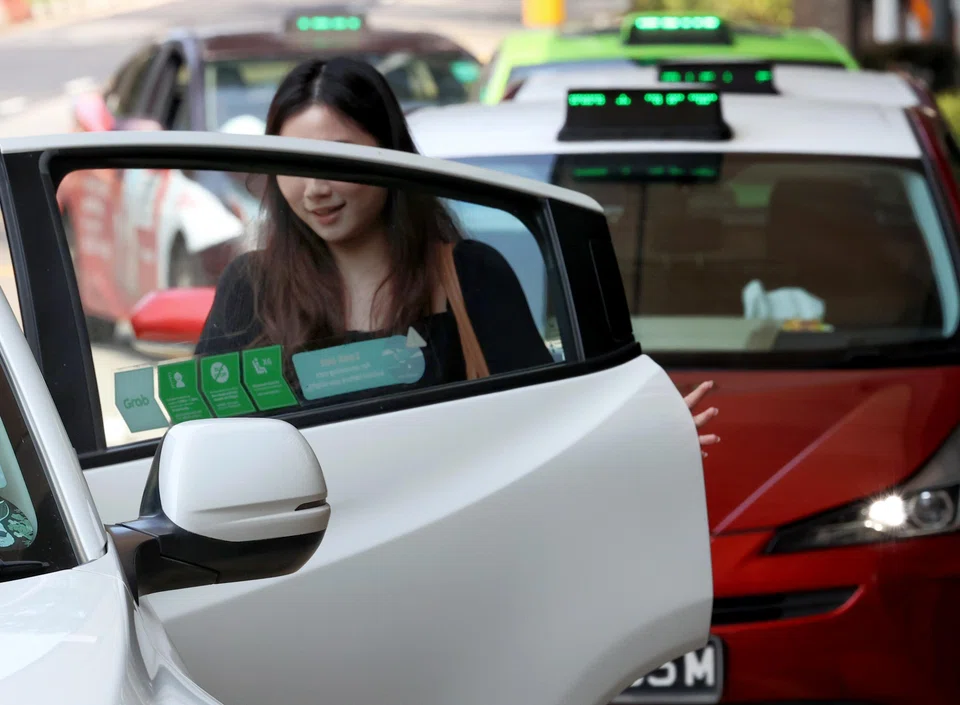
[SINGAPORE] The shortage of ride-hail drivers in Singapore may continue this year, as their takings stall while rental and fuel costs rise.
This is even as ride-hailing demand keeps increasing, fuelled by a positive economic outlook and more tourism.
Ride-hailing platform operators Grab, Gojek, Tada, as well as the taxi and private-hire car subsidiary of transport group ComfortDelGro told The Business Times that they expect the sector to grow in 2025.
Maybe driver
Singapore’s private-hire car (PHC) population reached an all-time high of 90,383 in December, Land Transport Authority (LTA) data indicated.
Yet there are just 54,881 holders of PHC driver vocational licences – a recovery from the low of 47,471 in August 2022, but still down from the high of 56,121 in January 2021.
The actual supply of rides is difficult to measure, as drivers are free to choose the hours they drive.
A Grab spokesperson said that overall supply has improved in 2024, but there is still a shortage of active drivers during peak hours or major events such as concerts.
Some drivers may have chosen to exit the platform “due to various reasons”, said the spokesperson, without elaborating.
Walter Theseira, associate professor of economics at the Singapore University of Social Sciences, said that shortage of rides has been an issue ever since Singapore’s economic recovery from Covid-19.
“I think the simple reason is that the earnings from PHC driving are not very good compared to alternatives in the labour market,” he said.
After a pandemic-era fall, PHC drivers saw their median gross monthly income rise to S$2,500 in 2022 – but it has stagnated at that level since. Given inflation, this means their median income has fallen in real terms.
In contrast, taxi drivers’ median income rose to S$1,800 in 2024 from S$1,500 before, while that of delivery workers rose to S$2,400, from S$2,000.
Prof Theseira noted that the “sobering” earnings figures clearly lag those of fresh graduates, for instance. Median salaries were S$4,313 for fresh university grads in 2023 and S$2,900 for fresh polytechnic graduates in 2024.
“We are at a point where earnings from driving for a living clearly aren’t that attractive, so it’s not surprising at all that Singaporeans with alternatives don’t want to drive (PHCs),” he said.
Earn and burn
Four ride-hail drivers to whom BT spoke said that profits from driving have fallen, as platform incentives are lower but rental and fuel costs have increased.
A 41-year-old full-time Grab driver, JT, said that with the dwindling of incentives, his overall earnings have fallen.
“Incentives were really good in earlier years,” he said. “For example in 2018, when Gojek entered the Singapore market, incentives were around 20 per cent of our earnings.”
Incentives now account for “very little” of his earnings. Not only are incentives less generous than before, the incentive targets – such as minimum number of rides fulfilled – have increased. He estimated that his earnings fell around 15 per cent in 2024.
Two other drivers have had to work longer hours to make up for the fall in earnings as well as rising rental and fuel costs.
Sazly, a 50-year-old PHC driver who uses the platforms Grab and Tada, said: “Post-Covid, when earnings were higher due to a shortage of drivers, we drove around eight to 10 hours a day for around S$300. But the same amount would require around 12 hours of driving now.”
Ride-hailing platform operators told BT that they have been making efforts to ensure drivers are better compensated.
However, Tada’s spokesperson noted that actual earnings can vary widely due to factors such as number of hours driven, when they operate and the types of trips accepted.
The company is focused on maintaining a “stable supply” of drivers, with a zero-commission model – meaning it does not take a percentage of the ride’s cost, but charges a fixed platform fee – so drivers keep a greater share of their earnings, added the spokesperson. Tada also provides incentives when drivers complete more trips during peak periods.
Gojek described drivers as the core of its business, adding: “Ensuring their earnings remain competitive and sustainable is our top priority.”
Its driver benefits programme GoalBetter includes fuel and rental discounts, which mean “attractive earnings that regularly exceed the industry average for full-time drivers”.
Asked about its response to the driver shortage, Grab said that it has tailored incentives during special events and festivities, to encourage drivers to be available. The app’s Ride Guide feature also guides drivers to high-demand areas to maximise their chances of bookings.
Ticket to ride
Meanwhile, ride hail operators expect demand to continue increasing in 2025.
Singapore’s average daily ridership per month for ride-hailing – served by both taxis and PHCs – has steadily increased after the pandemic.
Tada anticipates steady growth in ride-hailing, driven by hybrid work, Singapore’s robust economic climate, and a continued rise in international travel. It also expects an increase in weekend rides for leisure travel, family outings and social gatherings.
Tommy Tan, chief executive officer of ComfortDelGro Taxi – the point-to-point transport subsidiary of ComfortDelGro – said that demand for rides “remained robust” throughout 2024, and he expects this to persist into 2025.
ComfortDelGro Taxi operates a fleet of around 8,500 taxis. It also has a fleet of PHCs for rent, and offers rides through its platform CDG Zig.
Gojek also saw a “healthy increase” in ride requests during 2024, and expects continued growth in demand in 2025, said Gojek Singapore general manager Lien Choong Luen.
Last year’s growth reflects the “new norm” post-pandemic with more workers returning to office, tourist arrivals, and additional demand driven by major events such as concerts and school holidays, he said.
Indeed, Lien expects tourism to be a major contributor to 2025’s growth. Gojek’s integration into Chinese superapp WeChat will help it tap the Chinese tourist market, he added. The feature is expected to debut in the coming weeks and allows users of WeChat from China to find rides in Singapore.
The Tada spokesperson agreed that tourism plays a “vital role” in the point-to-point sector, as travellers prioritise convenience and accessibility.
The Singapore Tourism Board anticipates a record-breaking number of international visitors in 2025, ranging between 17 million and 18.5 million, compared to 16.5 million in 2024.
The projected tourist spending is estimated to reach between S$29 billion and S$30.5 billion – marking an all-time high – compared to an estimate of S$27.5 billion to S$29 billion in 2024, and up from S$27.2 billion in 2023.






