

RTS Link unlikely to topple Singapore retail despite JB’s appeal: OCBC
A narrowing price gap between malls in the two cities is among factors keeping the city-state going

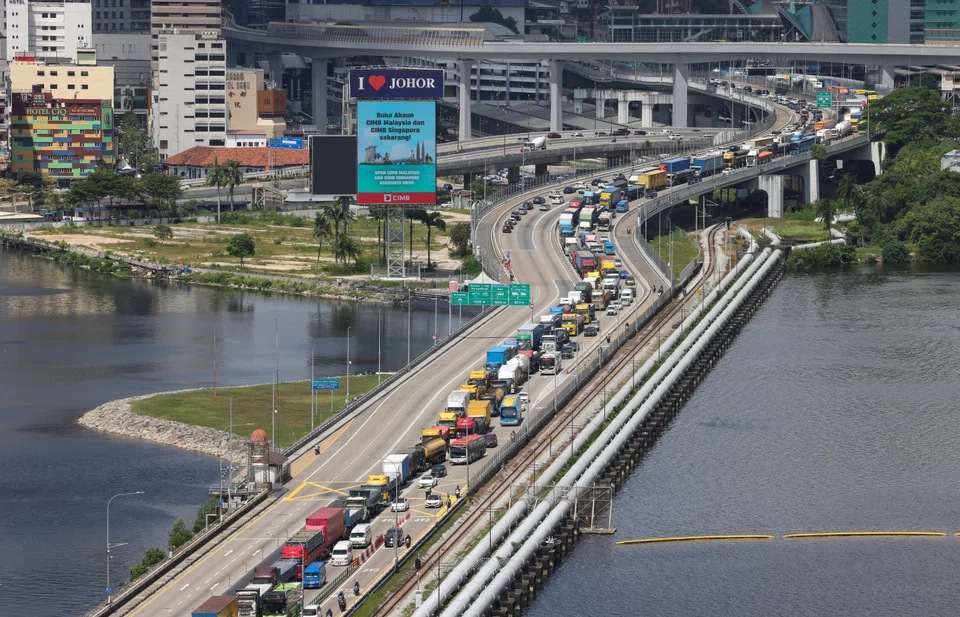
[SINGAPORE] The upcoming Johor Bahru-Singapore Rapid Transit System (RTS) Link is “not expected to topple” the Republic’s retail sector, even as spending by Singaporeans in JB rises, said OCBC Group Research on Thursday (Apr 9).
A narrowing price gap between malls in the two cities, plus strong tourist spending in the city-state, are among the factors keeping the retail sector stable in Singapore, analysts led by chief economist Selena Ling said in a research note.
However, the ongoing conflict in the Middle East could pose near-term downside risks to Singapore’s retail outlook, they said.
Strong consumer activity
The analysts noted that Singaporeans had “strong consumer activity” in JB. OCBC’s credit card spending data showed that almost one in five overseas dollars spent by the lender’s credit card holders in Malaysia goes to merchants in JB.
“Food and drinks, groceries and retail are the largest categories fuelling the growth of Singaporean spending in Johor,” the analysts noted.
They added that there were about three million Singaporean visitors to JB in the first two months of 2026, up 1.3 per cent from the same period a year ago. Singaporeans also accounted for about 76 per cent of foreign tourist arrivals in Johor in January and February 2026.
The RTS Link, which is expected to begin operations on Jan 1, 2027, could add a “new dimension” to spending patterns in JB towards the end of 2026, said the analysts.
As JB becomes even more accessible to Singaporeans, merchants in the Malaysian city will have a “stable pool of affluent customers that will provide them with sustained demand for their businesses”.
“The streamlining of customs procedures and enhancements to connectivity will likely make JB even more accessible and appealing to Singapore consumers seeking to shop and explore the city,” the analysts said.
SEE ALSO



Singaporean retailers may therefore “need to enhance their competitiveness ahead of the RTS Link launch”, they added.
Price haven no more
Despite the potential implications for Singapore’s retail landscape, the analysts said that the opening of the RTS Link is “not expected to topple” Singapore’s retail scene.
This is unlike Hong Kong, where improved border crossings with Shenzhen in mainland China have driven a “structural decline” in the former city’s retail sector.
For one, the narrowing price gap between Singapore and Malaysia may reduce the incentive for Singaporeans to shop in Malaysia, the analysts pointed out.
They noted that the ringgit has strengthened by more than 10 per cent against the Singapore dollar in the last two years.
“In addition, rising local prices (have) been attributed by the media to ‘Singapore pricing’, with reports of JB residents feeling priced out,” they added.
“As a result, there is potential for incremental inflows from Singapore to overwhelm local retail capacity and infrastructure, leading to crowding and exacerbating inflationary pressure.”
Such rising prices and eventual capacity limitations “could constrain JB’s ability to scale as a substitute shopping destination”, the analysts said.
While Singaporeans are spending more overseas, the impact on Singapore’s retail scene has been mitigated by increased tourist spending in the Republic.
The analysts noted that tourism spending in Singapore hit a record S$23.9 billion in September 2025, up 6.5 per cent year on year.
They pointed to the city-state’s focus on “quality tourism”, with the Tourism 2040 road map targeting S$47 billion to S$50 billion in receipts by 2040.
Impact of Middle East conflict
Still, the Middle East conflict could pose a challenge to the retail sector, said the analysts, though they noted that its eventual impact would depend on the length and intensity of the war.
“The current ceasefire – while a positive development – may be fragile, in our view,” they said. “Even if there are clearer signs of a concrete de-escalation, there may be a lag time for things to normalise.”
The analysts said that the retail sub-sector may see landlords facing higher utility costs, though with a slight time lag as tariffs are adjusted, mitigated by potential cost pass-through to tenants.
“Ongoing asset enhancement initiatives may run a higher risk of cost overruns and timeline delays, given higher construction material costs and supply-chain disruptions,” they added.
Tenants may also face margin pressure and higher occupancy costs if they are unable to pass on the higher cost of goods sold and related shipping and insurance costs to customers.
Singapore real estate investment trusts, meanwhile, may face higher-for-longer borrowing costs if higher inflation pushes back rate cut expectations.
“This places pressure on the rental reversion outlook, distributable incomes and hence overall asset valuations,” said the analysts.
They added that the extent of the impact will be determined by several factors, such as the duration and severity of the war, as well as the extent of the spillover to the global economy.
Decoding Asia newsletter: your guide to navigating Asia in a new global order. Sign up here to get Decoding Asia newsletter. Delivered to your inbox. Free.
Copyright SPH Media. All rights reserved.
TRENDING NOW

DBS, OCBC, UOB rout lops billions off STI as inflation, rate concerns spook investors

Grab CEO’s wife Chloe Tong on life with Anthony Tan and finding her purpose

OCBC sheds S$8 billion in value as shares close nearly 6% down; analysts cautious on banks

Deal between tycoon friends sparks scrutiny of Philippine power sector

