

S$50 million property buy, adult learning push among Teo Ser Luck’s final-year agenda at Isca
Property investment and academy spin-off are part of accounting body’s broader efforts to ensure long-term financial sustainability

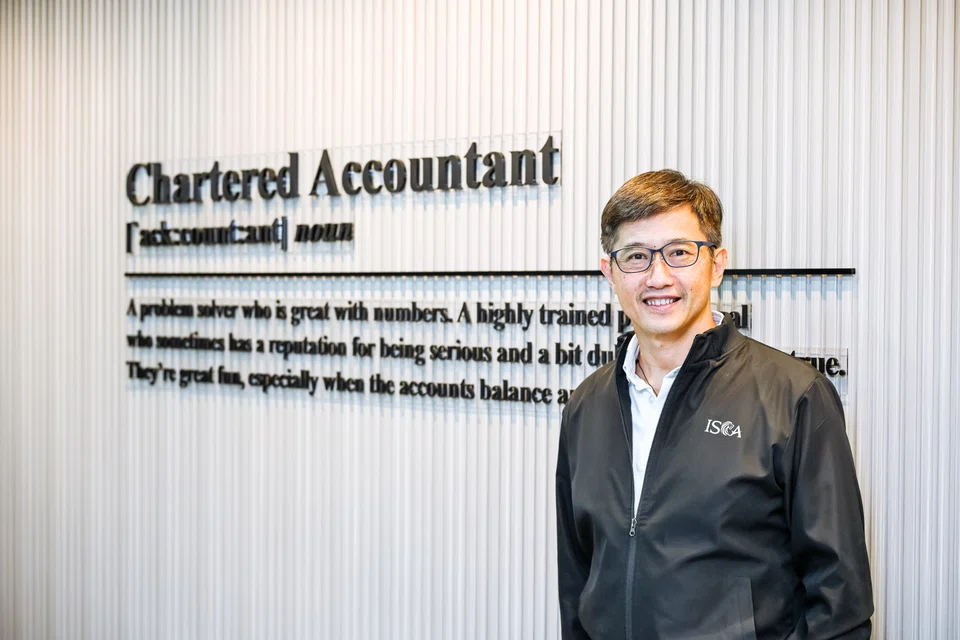
[SINGAPORE] Singapore’s national accounting body is in active talks to acquire a property in the Central Business District (CBD) for about S$50 million, as part of a long-term investment strategy.
Teo Ser Luck, president of the Institute of Singapore Chartered Accountants (Isca), told The Business Times that the organisation is exploring its options and hopes to conclude a deal by the end of the year.
He declined to reveal the size or location of these potential sites, as these could impact negotiations.
However, he shared that Isca is likely to purchase a floor within an existing building rather than an entire property, due to lofty CBD valuations.
If successful, the acquisition will mark Isca’s second property. The institute currently owns an entire floor at 6 Raffles Quay, a 10,129 square foot space purchased for S$15 million in 2006.
The new purchase could be funded entirely from Isca’s reserves, which stood at S$113.8 million – including fair value gains – as at end-December.
A real estate asset will create a “more balanced portfolio”, as part of the organisation’s reserves is already managed by external fund managers, Teo explained.
The new space could eventually serve as Isca’s headquarters, although there are no immediate plans to move out of its current premises at Cecil Street, which is leased from the Bank of China.
Beyond rental income, the new property could also house a for-profit adult learning arm that Isca plans to spin off by year end.
The subsidiary, to be named Isca Academy – which is also its current name as a division within the institute – will be incorporated as a private limited company, unlike Isca’s non-profit structure.
This will give the academy greater autonomy and flexibility, including the ability to pursue mergers and acquisitions (M&A) more easily, said Teo.
“We want Isca Academy to be an entity where it’s independent enough (and) it can operate on its own, and then explore possibilities of partnership or M&A with many others, so that it can scale.”
Currently, Isca Academy offers about 400 courses, ranging from accountancy to broader subjects such as sustainability. Most of these courses are delivered by external trainers engaged on a contract basis.
In 2024, it served around 14,600 unique learners, generating revenue in the high single-digit millions. No capital injection is required to launch the new company as the division is already profitable.
Hiring is now under way for key leadership positions at Isca Academy, which may double its current team of about 20 people in under a year.
The focus of the expansion is not on increasing course volume, but in improving quality and relevance, Teo said.
These include potential new offerings in areas such as supply chain management, technology and leadership training for chief executive officers.
Thinking longer-term
Both the property investment and academy spin-off are part of Isca’s broader efforts to ensure its long-term financial sustainability, said Teo.
For the year ended Dec 31, 2024, Isca posted a surplus of S$5.1 million, up 18.8 per cent from S$4.3 million the year before. Total income rose 18.7 per cent to S$27.7 million over the same period.
“The resources we have – it’s accumulating, it’s growing, so we have to protect it and also put it to good use,” he said. “Some part of the reserves will be put to the future of Isca (and) the profession, because you want to grow.”
Teo was first elected as Isca president in 2022 and re-elected in 2024. He will step down from the 39,127-strong accounting body next year due to term limits.
Succession planning is already under way, he said. “I need to make sure the pipeline is always full – if I have 18 places in the council, I (need to) have more than 18 people interested in those positions.”
He was referring to the 18-person Isca Council, which makes key policy decisions and oversees governance and membership matters.
He added: “I have a happy problem now, because there’s more interest (for people) to be in the Isca Council.”






