SBF banks on rebranding exercise to double corporate partnerships
The apex business chamber wants to raise more funds from private sponsors

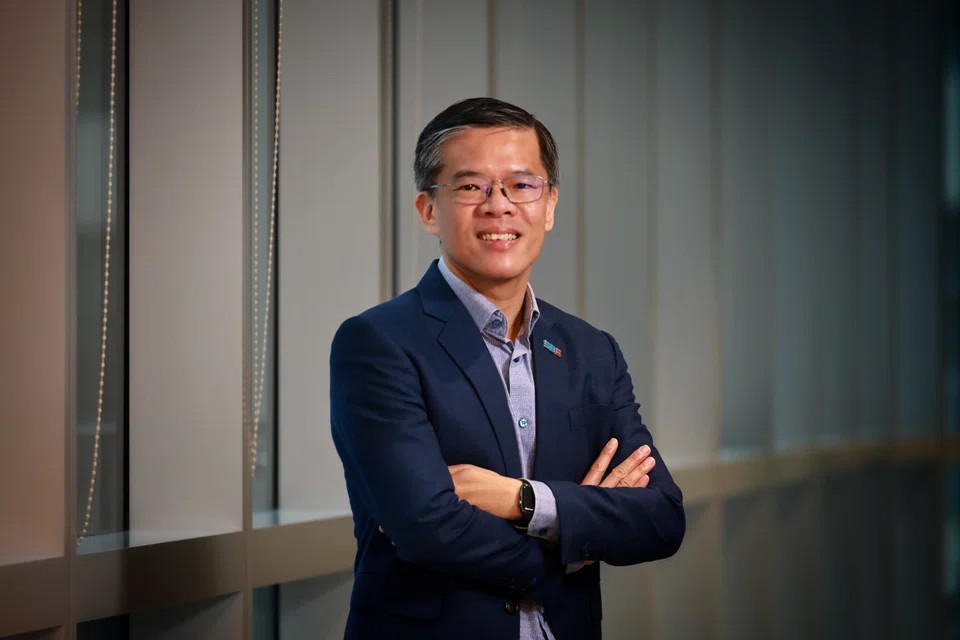
THE Singapore Business Federation (SBF) hopes to raise more funds from the private sector by doubling its corporate partnerships, and is embarking on a rebranding exercise to do so, said the chief of the city-state’s apex business chamber.
The federation is bankrolled by membership fees, private sponsorships and government funding.
While government funding accounts for 90 per cent, SBF believes this can be complemented by partnerships with corporates to develop programmes for the business community, said chief executive officer Kok Ping Soon.
“We’re not the government, so it’s not as if we (will) keep getting government funding,” Kok said in an interview with The Business Times and Lianhe Zaobao. “So we need to increase the partnerships that we have.”
With the rebranding, SBF is hoping to double its corporate partners to 300.
This would help shift the ratio of government funding to private funding towards the target of 70-30 by 2030, from 90-10 currently.
The federation’s rebranding and a new logo were unveiled on Thursday (Nov 7) at its inaugural Partners’ Appreciation Night, where SBF set new targets for expansion and its next phase of growth, 22 years since its establishment.
Beyond expanding its partnerships, SBF wants to grow its membership by a third to 40,000 and almost double the number of companies it engages to 25,000 from 13,000 currently.
A large majority of SBF’s members are statutory members: companies with a paid-up capital of S$500,000 and above, for which membership is mandatory under the Singapore Business Federation Act.
Only about 10 per cent of SBF’s 30,000-odd members are associate members: smaller companies that voluntarily joined the federation.
Achieving SBF’s membership target will depend on such companies.
Said Kok: “It will require us to attract companies which are not required by law but can join us as an associate member. It’s a validation of the worth of a business association.”
Action plan
To draw new members, SBF will sharpen its focus and approach in areas such as digitalisation, sustainability and creating social impact.
Instead of a more passive approach, the federation is being “very intentional”, said Kok. “Now (that) we are very clear that we want to do all these, we ask ourselves: ‘What’s our policy, what’s our platform, what’s our programme?’”
He wants SBF to be more “action-oriented”, beyond holding seminars and talks.
“(For) things that we do… (we want that) at the end of it, there’s some action companies can take, and we want to walk that journey with them.”
An example is a decarbonisation programme for small and medium enterprises.
Taking a sectoral approach, SBF focused on food manufacturing and worked with the Singapore Food Manufacturers’ Association to help 20 companies over eight weeks.
The federation’s own sustainability advisers then checked in with those companies every two months, to monitor progress and offer help if needed.
Such help, said Kok, is very tangible.
Beyond bolstering SBF’s funds, corporate partnerships can help to serve its members.
This involves finding corporates with objectives that are aligned with the federation’s goals.
For example, one of SBF’s core missions is to help companies internationalise.
The federation considered tapping non-government resources to achieve this, said Kok. “There are other organisations in Singapore where this is actually in their interest because there’s commercial value in it.”
This year, SBF struck separate partnerships with three banks – DBS, HSBC and UOB – to do just that.
Despite growing geopolitical uncertainty – including wars in the Middle East and Europe – there are still many opportunities for companies looking to expand abroad, said Kok.
“Our message to companies is that, yes, there’s all this uncertainty, but don’t look so far, just look at your back door.”
With a population of close to 700 million, South-east Asia remains a large market and a “hotbed of growth”, alongside China’s tier-two and tier-three cities.
Meanwhile, India is keen to build its own semiconductor ecosystem, which presents opportunities for Singapore’s chip companies.
Brand refresh
The challenging external environment was a key trigger for SBF’s rebranding. The operating environment for businesses today is very different, and the federation needs to transform and keep pace with it, said Kok.
He outlined three broad challenges: geopolitical uncertainties; supply chain disruptions; and an accelerated rate of change brought by technology and decarbonisation.
“I always tell my staff that if the rate of change outside is faster than the rate inside, then your end is in sight,” he said.
Laying out SBF’s vision, Kok said the federation would like Singapore to be a globally competitive and sustainable economy, for businesses to be future-ready, and for trade associations and chambers to be impactful.
“What we are trying to do here is… we are really trying to strengthen and build a business collective,” he said.
“I really hope to strengthen this business collective, where I’ve got enough business leaders who are prepared not to look at their selfish interests, but think of the good of the business community.”