

SBF pushes back on US trade probes, warns tariffs would hurt American firms
Singapore’s acts, policies and practices do not ‘burden or restrict’ commerce of the United States, it adds

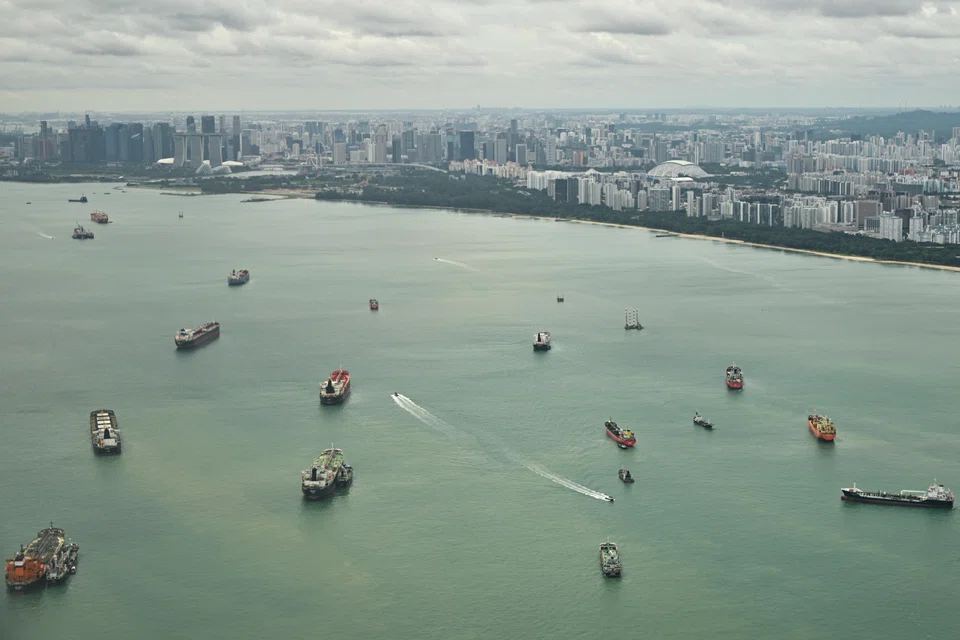
[SINGAPORE] The Singapore Business Federation (SBF) has urged the US to exempt Singapore from two ongoing trade investigations, arguing that the city-state’s economic practices do not disadvantage American commerce and that unilateral measures would backfire on US companies themselves.
The apex business chamber, which represents more than 34,000 companies, submitted formal comments to the United States Trade Representative (USTR) on a pair of Section 301 investigations: one targeting structural excess capacity and another on forced-labour import enforcement.
The submissions were prepared in consultation with 10 Singapore-based trade associations and chambers.
In a statement on Thursday (Apr 16), SBF stressed that Singapore’s acts, policies and practices are neither “unreasonable” nor “discriminatory” under Section 301, and do not “burden or restrict” US commerce.
It pointed to the US-Singapore Free Trade Agreement (USSFTA), now more than two decades old, as the foundation of a deep bilateral economic relationship, and noted that the US runs a substantial and growing trade surplus with Singapore.
This undermines any claim that Singapore’s trade practices work against American interests, said SBF.
The federation also highlighted that around 6,600 US companies operate in Singapore, with Singapore-based investments supporting more than 250,000 American jobs.
Rebutting investigations
On the excess capacity investigation, SBF argued that Singapore’s manufacturing sector is demand-led and commercially driven, with high operating costs and market discipline inherently discouraging the below-cost pricing and state-directed overproduction that the probe appears to target.
It also noted that a significant share of Singapore’s goods flows are tied to its entrepot and re-export functions, which should be distinguished from domestic capacity expansion.
SBF warned that import restrictions on Singapore would raise costs and disrupt supply chains for US firms that rely on Singapore as a regional base and logistics hub. This will damage “the very interests Section 301 is intended to protect”, it added.
On the forced-labour investigation, SBF pointed to Singapore’s constitutional and criminal law prohibitions on forced labour, backed by robust enforcement mechanisms including anti-trafficking legislation.
It also cited the US Department of State’s own 2025 Trafficking in Persons Report, which ranks Singapore as Tier 1 – the highest rating – for meeting international standards in combatting trafficking and forced labour.
The business chamber added that there is no Singapore-specific evidence that goods entering the US from Singapore were produced with forced labour, and cautioned that without harmonised international verification standards, a forced-labour import ban would be difficult to operationalise and risks trade diversion without addressing root causes.
In both its submissions to the respective probes, SBF urged that concerns over excess capacity or labour practices be addressed through established cooperative mechanisms, including the USSFTA Joint Committee and rules-based multilateral frameworks, rather than through unilateral action.
“Singapore and the United States share a longstanding economic partnership underpinned by more than two decades of the USSFTA,” said Kok Ping Soon, chief executive of SBF.
“We urge the US administration to recognise our shared commitment to fair, market-oriented trade and to avoid measures that would disrupt the deeply intertwined supply chains that benefit both our nations.”
Decoding Asia newsletter: your guide to navigating Asia in a new global order. Sign up here to get Decoding Asia newsletter. Delivered to your inbox. Free.
Copyright SPH Media. All rights reserved.
TRENDING NOW

DBS, OCBC, UOB rout lops billions off STI as inflation, rate concerns spook investors

Grab CEO’s wife Chloe Tong on life with Anthony Tan and finding her purpose

OCBC sheds S$8 billion in value as shares close nearly 6% down; analysts cautious on banks

Deal between tycoon friends sparks scrutiny of Philippine power sector

