Semicon industry body targets next wave of chip growth with new photonics committee, talent partnerships
The tie-ups include developing deep-tech talent and India-Singapore semiconductor collaboration

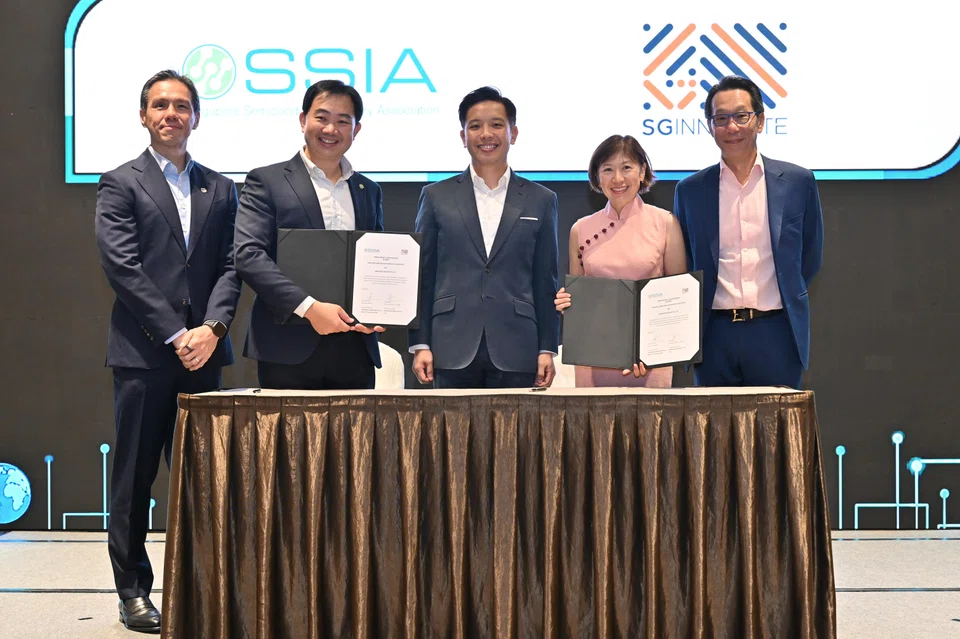
[SINGAPORE] The Singapore Semiconductor Industry Association (SSIA) has launched an industry-led photonics committee to strengthen partnerships across the ecosystem, as it looks to build “an intricate regional photonics network”.
Integrated photonics, which uses light rather than electrical signals to move data at high speed and lower power, is emerging as a critical technology for artificial intelligence infrastructure and “next-generation” data communication, said SSIA chairman Brian Tan on Thursday (Apr 16).
This field is reaching an inflection point globally and Singapore already has meaningful capacities across the value chain, supported by semiconductor companies, optics players and research institutions, he added.
“Our ambition is clear – to build a vibrant and connected photonics ecosystem in Singapore,” he said.
Though the Republic already has meaningful R&D capabilities in photonics, more needs to be done on the commercial side, SSIA executive director Ang Wee Seng told the media in an interview.
“We could have more companies, more startups, and we could actually scale up a lot of these businesses.”
He added: “That is the reason why we have the committee set up.”
The announcement was made at Semiconductor Business Connect 2026, an annual industry gathering hosted by SSIA. This year, the event attracted more than 800 delegates, its largest crowd to date.
Deep-tech talent, international collaboration
SSIA also formalised three new partnerships in talent development and international semiconductor collaboration.
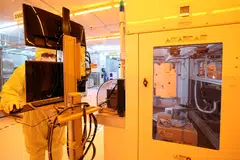
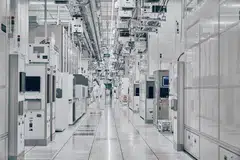

First, a new memorandum of understanding was signed with training centre NTUC LearningHub to support workforce transformation across the semiconductor ecosystem.
SSIA and NTUC LearningHub will explore initiatives supporting mid-career transitions and foundational semiconductor knowledge for new entrants to the industry.
It will also promote industry-relevant training programmes in areas such as agentic AI, AI-driven robotics and automation, process excellence and supply chain resilience.
The partnership also aims to support the growing demand for semiconductor engineers and technical professionals as the sector continues to expand across manufacturing, advanced packaging and emerging technologies, said SSIA in a statement.
With SGInnovate, Singapore’s government-backed deep-tech incubator, SSIA signed an agreement to strengthen the country’s deep-tech semiconductor talent pipeline.
This comes as innovations in nascent domains, such as new materials including photonics, advance industry capabilities, said SSIA.
The partnership will integrate initiatives such as SGInnovate’s deep-tech apprenticeship programme Summation, and PowerX, which supports mid-career workers transitioning into specialised deep-tech roles.
Both organisations will also collaborate on ecosystem research initiatives to assess industry maturity, capability gaps and talent needs across emerging semiconductor technologies.
Lastly, SSIA signed a memorandum of understanding with the India Cellular and Electronics Association to deepen collaboration between the Singapore and India semiconductor ecosystems.
The partnership will be centred on building a “robust and trusted” semiconductor corridor between India and Singapore, with a focus on strengthening semiconductor supply chain partnerships; advancing technology collaboration and co-development; as well as enabling two-way business collaboration and joint technology development.
Joint ecosystem studies will also be developed to identify supply chain complementarities, readiness and “uncover new opportunities for collaboration between companies across both ecosystems”.
RIE Flagship
The photonics committee and talent partnerships come as Singapore steps up public investment in semiconductor research and development under its Research, Innovation and Enterprise 2030 (RIE2030) plan.
During Budget 2026, Minister-in-charge of Energy and Science and Technology Tan See Leng announced that Singapore will commit S$800 million to establish an RIE Flagship in Semiconductors to strengthen capabilities in high-impact technology areas such as advanced packaging and photonics.
Minister of State for Trade and Industry Alvin Tan, who spoke at the SSIA event, said the flagship coordinates research in areas “where we have established strengths”.
The investment, he said, is part of three pillars underpinning Singapore’s position as a “steady hub” for the semiconductor industry: sustainability, R&D and talent.
On the infrastructure front, he pointed to the country’s network of National Semiconductor Translation and Innovation Centres, or NSTICs, as evidence of Singapore’s ability to bridge the gap “from lab to fab”.
He pointed to Advanced Micro Foundry as an example of how the Republic’s public research and development ecosystem can seed companies that later scale globally. The firm was acquired by GlobalFoundries and its technologies are now being deployed worldwide.
On talent, he noted that the global chip market is expected to hit US$1 trillion by 2030, requiring an additional one million skilled workers globally.
He highlighted that since 2016, Singapore’s Career Conversion Programme has helped more than 2,700 mid-career professionals move into semiconductor roles, while 18 semiconductor companies have awarded close to 300 scholarships under the Singapore-Industry Scholarship scheme over the past five years.
The city-state has attracted more than S$30 billion in semiconductor investments over the past four years, produces one in 10 chips globally, and one in five pieces of semiconductor equipment, he noted.
The sector accounts for 20 per cent of Singapore’s manufacturing output and 6 per cent of gross domestic product.
“Why especially Singapore? Because when the winds of change blow hard, you need a steady hub that keeps the lights on and the innovation moving,” he said.
Decoding Asia newsletter: your guide to navigating Asia in a new global order. Sign up here to get Decoding Asia newsletter. Delivered to your inbox. Free.
Copyright SPH Media. All rights reserved.