

Sheng Siong invests S$520 million to build new future-ready distribution centre
The project, its largest investment to date, will more than double logistics capacity and support expansion beyond 120 stores
Meera Pathmanathan
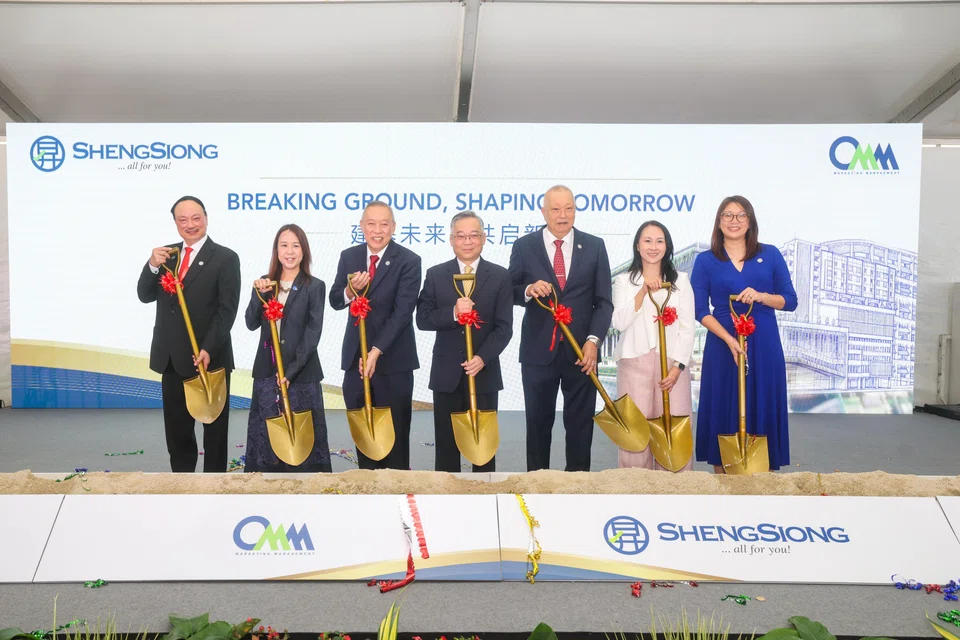
[SINGAPORE] Supermarket operator Sheng Siong broke ground on Monday (Jul 13) on a new integrated headquarters and distribution centre (IHDC) in Sungei Kadut, as part of a S$520 million investment to support its next phase of growth.
The seven-storey facility, expected to be completed in 2029, will span more than 61,000 square metres and provide storage capacity for more than 70,000 pallet positions.
It will be able to support more than 120 stores across Singapore, up from the group’s current network of 90 outlets.
At the ground-breaking ceremony were Deputy Prime Minister and Minister for Trade and Industry Gan Kim Yong, JTC assistant CEO for cluster group Christine Wong and Enterprise Singapore assistant managing director for services and growth enterprises Jeannie Lim.
DPM Gan said the project reflected Sheng Siong’s efforts to improve operational efficiency and deepen supplier partnerships to better serve customers.
Sheng Siong Group, the parent company of the supermarket operator, is listed on SGX.
Automation for the next phase of growth
The new site is about 2.5 times the size of Sheng Siong’s existing distribution centre at Mandai Link.
Despite expansions and investments in technology over the years, the Mandai facility is nearing full capacity as the retailer opens more outlets and carries a wider range of products.
Supported by Enterprise Singapore and JTC, the Sungei Kadut facility will integrate automated storage and retrieval systems, robotics, intelligent warehouse management technology and multi-temperature storage zones.
These systems are expected to improve the flow of goods and help the retailer respond faster to customer demand, particularly for temperature-sensitive products.
Sheng Siong CEO Lim Hock Chee said the group had studied automation and warehousing solutions in Europe, China and Australia before designing a facility tailored to its operational needs.
“Once completed, it is expected to become one of South-east Asia’s most highly automated grocery distribution centres,” Lim added.
Technology to reshape, not replace, warehouse jobs
Sheng Siong plans to progressively upskill workers in manual handling and warehouse support roles to take on higher-value positions such as system operators and maintenance technicians.
It will also build capabilities in systems engineering, automation and e-commerce fulfilment, while creating new technical positions and providing employees with a more future-ready working environment.
DPM Gan said end-to-end automation would “free manpower from repetitive and manual tasks”, allowing workers to be redeployed to areas where they could contribute greater value.
Lim said automation was not intended to replace employees, but to help them work more safely and efficiently while acquiring new skills.
“Machines can help us improve efficiency, but people will always remain at the heart of our company,” he added.
Strengthening supplier partnerships
The new facility is expected to deepen Sheng Siong’s ties with its network of more than 900 local suppliers, many of which have been partners for decades.
Once operational, the IHDC will allow suppliers to consolidate deliveries through a centralised distribution platform. This is expected to reduce unnecessary trips, improve supply and production planning, and contribute to lower wastage and a smaller carbon footprint.
DPM Gan said large companies such as Sheng Siong had both the ability and responsibility to strengthen the wider business ecosystem through long-term partnerships.
He encouraged suppliers to improve productivity within their own operations, adding that the government would continue to support product innovation, supply-chain resilience and enterprise transformation.
Sheng Siong also plans to use the IHDC as a shared learning platform for suppliers, industry peers and other organisations. It aims to provide practical exposure to warehouse automation and share the operating practices that underpin the group’s growth.
Building resilience amid global volatility
The larger storage capacity will also allow Sheng Siong to procure goods at greater scale and plan its inventory further ahead. This could support more reliable product availability and continued value for customers.
DPM Gan noted that keeping food prices affordable has become increasingly challenging amid geopolitical tensions, climate change, higher energy costs and disruptions to global supply chains.
Singapore, which imports about 90 per cent of its food, is particularly exposed to such pressures, he added.
“This forward-looking approach is what keeps businesses competitive and keeps Singapore vibrant and resilient,” DPM Gan said. “Together, we can ensure Singaporeans continue to enjoy a wide variety of food at affordable prices.”
Shares of Sheng Siong Group closed at S$3.28 on Friday, down 0.3 per cent from the previous trading session, giving the supermarket operator a market capitalisation of about S$4.93 billion.
Decoding Asia newsletter: your guide to navigating Asia in a new global order. Sign up here to get Decoding Asia newsletter. Delivered to your inbox. Free.
Share with us your feedback on BT's products and services






