

SIM marks turning 60 with new S$60 million fund to benefit 10,000 learners
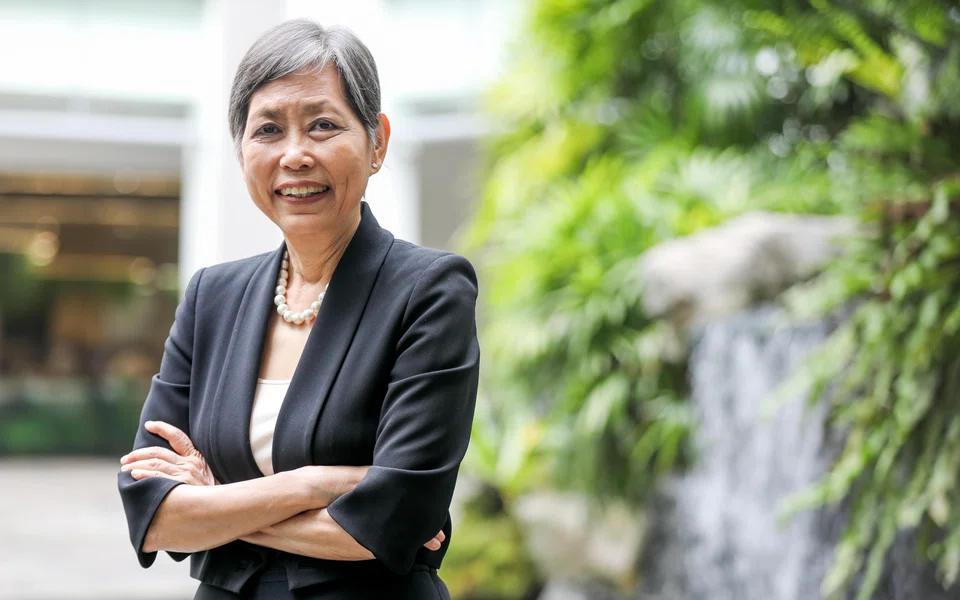
The private education institution is ploughing its profits back into society to provide accessible pathways for all, says chairperson and banking veteran Euleen Goh

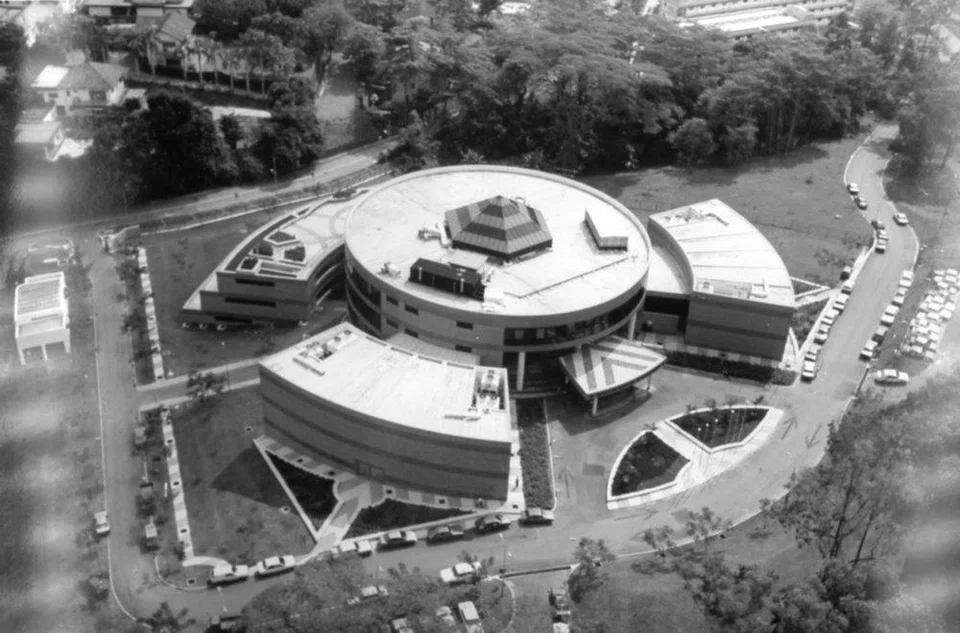
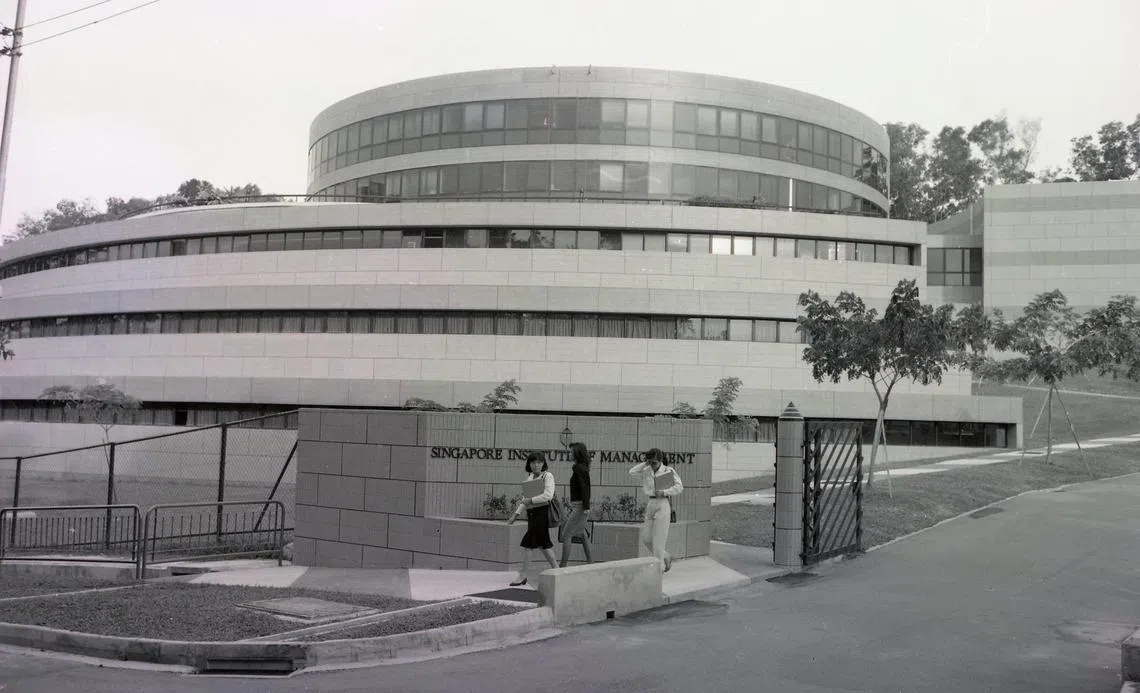
WHAT started out as a single classroom on the second storey of a shophouse in South Bridge Road back in 1964 is now one of Singapore’s leading private education and lifelong learning institutions with two campuses that have a combined area of about 20 football fields.
The Singapore Institute of Management (SIM) turns 60 this year, and it is celebrating the milestone in a big way with the launch of a new fund that will be worth S$60 million over the next decade, starting from 2025.
This is an increase from SIM’s current annual disbursement of S$1 million on average for the past five years.
The SIM Impact Fund, as it is called, will benefit some 10,000 learners, said SIM chairperson Euleen Goh in an interview with The Business Times.
A large chunk of the money will go into full scholarships and bursaries to be provided to Singaporeans below a certain per capita income – and this will benefit nearly 500 people each year.
Besides academic qualifications, scholarships will also be offered in recognition of an applicant’s leadership potential, or talent in sports or the arts.
The fund will also be used for internships and overseas exchanges.
“The story of SIM is how we want to do good, catalyse good, and promote good,” said Goh in the hour-long interview at SIM’s Clementi Road campus.
“What we do with our profits is to plough it back into society and to our mission,” said the former chief executive officer of Standard Chartered Bank (StanChart), Singapore. “We must make sure that whatever we earn is not just locked away and kept in a box to look at, to see how well we’ve done.”
SIM has long had a mission to provide accessible pathways for all, and to help businesses upskill their workforce to meet future needs.
Goh pointed out that many SIM students, especially those with some financial difficulty, take on temporary odd jobs during their vacation periods to fund their education.
“Why do casual work? (They can) go do an internship, and we will supplement whatever income they get (with) a monthly subsistence,” she said, with SIM committed to doing this so long as the company is approved by the institution.
The way she sees it, the aim of setting up the Impact Fund is to improve access to education and maximise one’s potential.
“We didn’t look at this S$60 million and say, ‘So, what (will) it do to promote our brand?’. Rather, we said, ‘What (will) it do to promote our mission and our goals?’.”
The answer, explained Goh, lay in the fact that the money would allow SIM to walk the talk in its two aspirations: being a force for good, and becoming a platform for upskilling and reskilling.
A portion of the SIM Impact Fund will also go into a S$3 million contribution to the President’s Challenge.
Growing regional footprint
SIM is not stopping in Singapore; the fund will also go into what it calls the Asean Impact Award.
“To have an Asean Impact Award is to recognise that (a large proportion of our students) is from Asean. Our graduates then go back and seed their communities with good, and we like that,” said Goh.
“We see ourselves as being the catalyst for impactful work in Singapore and in the region.”
A second merit-based award under the fund covers both tuition fees and living expenses for first-year undergraduate learners who demonstrate strong academic performance, show leadership potential and embody values such as resilience.
SIM had a cohort size of 700-plus students in the two years after its inception. Today, there are 16,000 students from more than 50 countries.
About 30 per cent of the students hail from overseas – a percentage that has been increasing with the expansion of university places in Singapore in recent years. Top origin countries include China and India, as well as South-east Asian markets Indonesia, Malaysia and Vietnam.
From an annual average of 50 courses and seminars in the 1960s, SIM now offers more than 140 academic programmes at its global education arm and over 100 professional development courses at its academy.
Past, present, future
Goh, who became SIM chairperson in 2018, was asked to crystal-gaze what the institution would be like 60 years from today.
She demurred that an organisation should not have a strategy that focuses only on getting from point A to B.
Point B will change, she explained. The crux is to prepare for different scenarios that allow one to reach multiple destinations.
Instead, she offered a snapshot of the journey to get there.
The world will be significantly technology-driven, which in turn will make it much smaller as access becomes more global, she said.
She added that delivery channels will also look very different, and huge blocks of buildings may no longer be needed.
“(In) the journey there... we must be a lot more agile, remaining relevant at any time. You don’t get ahead of the game, you also don’t want to fall behind,” noted the chairperson.
On the role of artificial intelligence (AI) in education, Goh said: “We should be shameless about using AI, so long as we are clear (about) how we are using it and making sure that the way we use it is factually correct.”
And on the relevance of a university degree, Goh pointed out that, rightly or wrongly, having this qualification does open doors to other paths in life.
“After the door gets open, it’s not about the degree. It’s about you, yourself and your soft skills. Your... drive, energy, resilience, agility and critical thinking – all those other factors that (contribute to) success in life,” she said.
She added that SIM, a non-profit organisation, does not try to compete with the six publicly funded universities in Singapore.
“We just offer choices, alternatives and accessibility,” she said.
“The private education (space) will always provide alternatives… We go out, source the best and bring them to Singapore. That’s what we are about. That’s our agility. We are not second-best. We’re as good as (the autonomous universities).”
At a glance: SIM chairperson Euleen Goh
A chartered accountant with professional qualifications in banking and taxation, Goh has served as SIM chairperson since 2018.
Present roles
- Trustee of the Singapore Institute of International Affairs Endowment Fund
- Member of the Public Service Commission
- Fellow of the Singapore Institute of Directors
A series of firsts
- 1999: First Singaporean to head StanChart’s sales, corporate and institutional banking unit
- 2005: First woman to chair International Enterprise Singapore
- 2006: First woman on the Singapore Airlines board
- 2014: First Singaporean and Asian on the Royal Dutch Shell (now known as Shell) board
Past roles
- Non-executive chairperson of Sats
- Former CEO of StanChart, Singapore (2001 – 2006); worked some 21 years at the bank
- Non-executive appointments on various boards including of Royal Dutch Shell, DBS Bank, Singapore Airlines, Aviva, Singapore Exchange
- Former chairperson of Singapore International Foundation, International Enterprise Singapore and Accounting Standards Council, Singapore
- Former board member of Temasek Trustees
- Former member of the management advisory board of the National University of Singapore (NUS) Business School
- Former rector of Cinnamon College at NUS
Accolades
- 2005: Public Service Medal, Her World Woman of the Year
- 2012: Public Service Star
- 2013: Justice of Peace
TRENDING NOW
From legacy to launch: Francis Yeoh and Yeoh Pei Xien on family unity and YTL’s next‑gen ventures

Could Japan trigger the next global financial crisis?

Wealthy Indonesians snap up government bonds as yields near 8%: OCBC
‘You buy more picks and shovels because you keep hitting gold’: Why AI spending needs to see results

