Singapore billionaire population more than doubles as Apac wealth surges: Knight Frank
The number of ultra-high-net-worth individuals has grown by 54.5% in 2021 to 7,171 this year

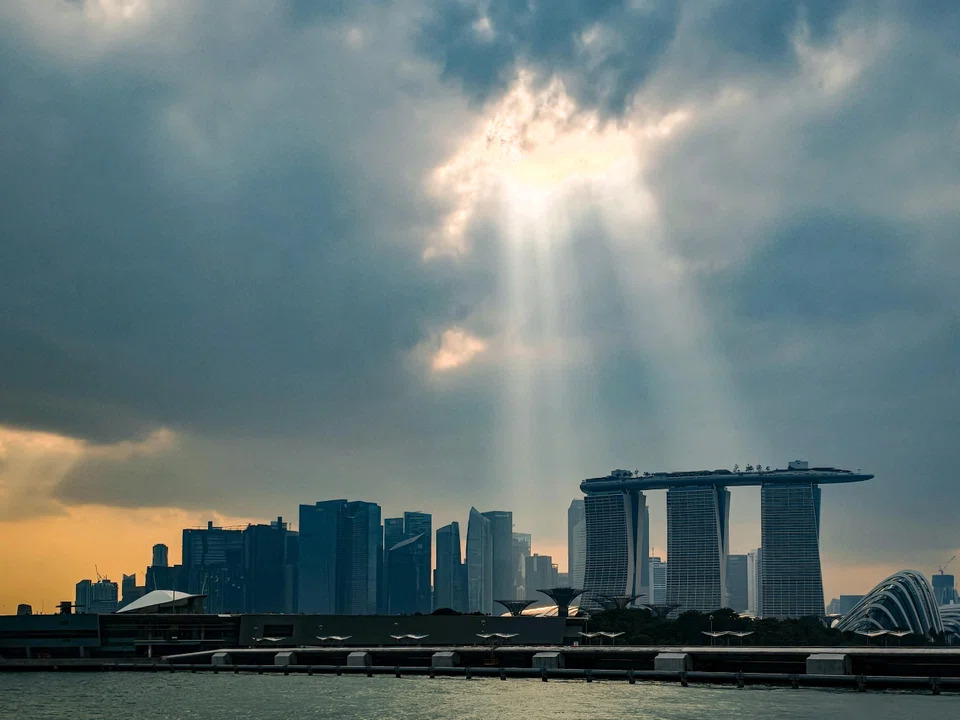
[SINGAPORE] Singapore’s billionaire population has more than doubled since 2021, with further growth expected in the ranks of the ultra-wealthy in the Asia-Pacific, a Knight Frank report showed.
The property consultancy’s latest Wealth Report released on Thursday (Apr 23) said the Republic added 35 billionaires over the last five years – bringing the total to 63 in 2026, from 28 in 2021.
Singapore’s number of ultra-high-net-worth (UHNW) individuals – defined as those with a net worth of US$30 million or more – expanded by 54.5 per cent to 7,171 individuals in 2026, from 4,642 in 2021.
This group is projected to reach 10,495, and the number of billionaires, 85, by 2031.
This places Singapore among the world’s top 10 for projected five-year UHNW growth, Knight Frank said.
It added: “Being a small nation with a geographical area of a mere 736.3 sq km in 2025, this rate of expansion disproportionately outpaces that in many larger and more mature developed markets.”
Singapore thus remains “one of the most densely concentrated UHNW markets globally”.
Wealth boom in Apac
Growth in the number of Singapore’s wealthy comes amid a broader wealth boom in the Asia-Pacific, the report said. The region now accounts for the largest share of the world’s billionaires, at 35.9 per cent, or 1,116 individuals.
Knight Frank expects this pool to expand further, with its share of billionaires projected to rise to 37.5 per cent by 2031.


South-east Asia, in particular, is emerging as one of the fastest-growing sources of new wealth, Knight Frank Singapore CEO Galven Tan noted. Indonesia’s UHNW population, for instance, is predicted to grow by 81.7 per cent to 6,966 in 2031; Vietnam’s is expected to rise 59 per cent to 1,960.
India is another standout performer in the global wealth landscape, with sustained growth in its UHNW population.
Between 2021 and 2026, the number of such individuals there jumped 63 per cent from just over 12,000 to nearly 20,000. “(This) is a reflection of extraordinary wealth creation in technology, industrials and capital markets,” Knight Frank said.
While the pace of growth is expected to moderate, India is set to add more than 5,000 new UHNW individuals by 2031, taking the total to more than 25,000.
Knight Frank’s CEO for the Asia-Pacific Craig Shute noted that the broadening wealth base in the region’s emerging markets “reflects profound economic shifts” driven by entrepreneurship, maturing capital markets and expanding domestic economics.
“While its leading hubs will remain prominent, the deepening capital pool in Apac will further elevate the region’s influence in capital markets and reinforce the region’s long-term significance in shaping global wealth flows,” he said.
More active value-add strategies
Amid the Asia-Pacific’s broader wealth boom, Knight Frank noted that a younger generation of the region’s investors is increasingly pivoting away from passive ownership towards more active, value-add strategies in the office, retail, hotel and operational real estate space.
Singapore continues to be viewed as a “necessary” hub for family offices, though Hong Kong is steadily capturing market share as regulatory frictions ease.
In 2024, for instance, the city abolished all taxes on home sales and relaxed requirements on down payments to boost its struggling housing market.
Alongside this shift, the Asia-Pacific’s cross-border investment in commercial real estate by high-net-worth individuals in 2025 surged to its highest level since 2019, noted Christine Li, Knight Frank’s head of research for the Asia-Pacific.
Capital from the Chinese mainland accounted for 46 per cent of buying interest, she added. “This renewed appetite is fuelled by attractive valuations and a generational shift, with younger investors targeting retail, office and hotel assets,” she said.
Singapore has emerged as a key beneficiary of this trend. The city-state ranked among the top 10 global cities for cross-border capital inflows in 2025, bagging S$4.2 billion in investments.
Singapore-based private capital is increasingly rebalancing towards the domestic market, Li said, as exchange-rate volatility continues to erode overseas returns.
“The focus is shifting from passive, trophy acquisitions to active, value-add strategies, often pursued through direct investments or fund partnerships,” she said.
“This creates a dual opportunity in 2026: a pool of returning cross-border capital, alongside a sophisticated and growing domestic investor base seeking direct deals, especially in resurgent core markets like Singapore and Hong Kong.”
Real estate investment sales in Singapore have consequently been on an upward trend since 2023, reaching a record S$40.5 billion in 2025.
In the first three months of 2026 alone, transaction volumes stood at S$16.7 billion. Including recent deals in April, total sales have hit about S$24 billion. This is already more than half of 2025’s total, and close to Knight Frank’s projected full-year figure of around US$30 billion.
Amid the steady build-up of wealth, Singapore placed 13th in Knight Frank’s Prime International Residential Index 100, with prime residential prices rising 7.9 per cent over the past year.
This was one of the strongest growth rates for luxury homes in recent years, compared with a range of around -0.2 to 3.9 per cent between 2020 and 2025.
A US$1 million budget buys less space in Singapore than before – just 28 square metres (sq m) in 2025, from 36 sq m in 2020.
In comparison, Tokyo led Knight Frank’s rankings, with a 58.5 per cent jump in luxury home prices. Growth was supported by the new-build apartment market, which has been “boosted by scarcity, low interest rates and strong inward demand from the Asia-Pacific”, the consultancy said.
On a five-year basis, Dubai topped the list with a 193.9 per cent surge in prime residential prices.
Luxury collectibles
Beyond traditional investments, Knight Frank noted in its report that demand for luxury collectibles has remained resilient amid a volatile macroeconomic backdrop.
“While values remained under pressure, the pace of annual decline slowed steadily through the year, from -5.3 per cent in Q1 to -0.4 per cent in Q4, suggesting the market is beginning to find its footing,” it said.
This moderation follows the boom cycle between 2020 and early 2022, with luxury assets recording their strongest gains since 2013. Quarterly growth also peaked at 19.1 per cent in that time.
The subsequent 2023 and 2024 period was marked by “broad-based declines” across most asset classes, Knight Frank said.
Performance was uneven across asset classes in 2025.
Impressionist art led gains, rising 13.6 per cent, and watches rose 5.1 per cent on strong demand for luxury brands Patek Philippe and Rolex. Whiskey was the weakest-performing category, declining 10.9 per cent.
“Collectors are increasingly pivoting towards rarity, provenance and cultural significance, with fractional ownership platforms seeing a surge in interest from investors under 40,” Knight Frank said.
“As the market moves into 2026, the key question is whether this period of stabilisation will translate into recovery, or whether a more selective market will persist.”
Decoding Asia newsletter: your guide to navigating Asia in a new global order. Sign up here to get Decoding Asia newsletter. Delivered to your inbox. Free.
Copyright SPH Media. All rights reserved.