Costs running up for Singapore businesses as Gulf conflict jacks up energy prices
Already hit by rising fuel costs, anticipated electricity price hikes could worsen the blow
Elysia Tan &
Koh Kim Xuan
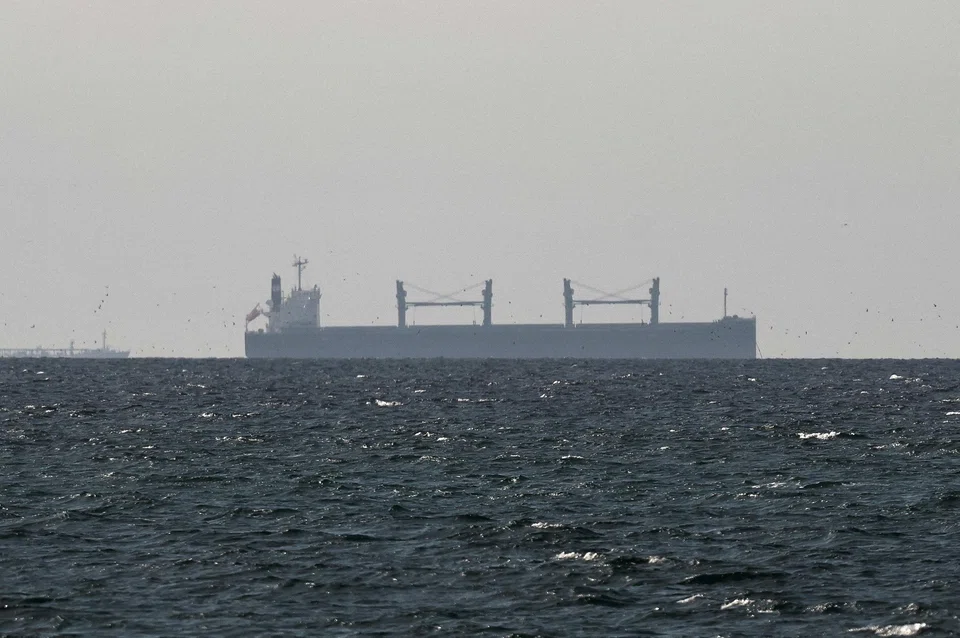
[SINGAPORE] Businesses in Singapore are already contending with higher energy costs arising from the Middle East conflict – and further hikes could come as electricity rates follow suit.
Petrol and diesel prices have climbed as the Strait of Hormuz’s closure disrupts fuel supply.
On Friday (Mar 13), the average price of the popular 95 octane petrol stood at S$3.41 per litre, up 18.4 per cent from S$2.88 on Feb 23, shortly before the conflict broke out.
Diesel prices climbed 31.8 per cent to an average of S$3.47 from S$2.63 over the same period.
While the Russia-Ukraine war also spiked fuel prices, that was “not as fast and as furious as the current situation”, where prices surged “almost in a week”, said Association of Small & Medium Enterprises (Asme) president Ang Yuit.
Logistics businesses are reporting 50 per cent increases in diesel prices for shipping, he added.
Chris Loh, co-owner of Rasel Catering, noted that petrol costs for its delivery fleet have gone up about 20 per cent amid the conflict.
Singapore Manufacturing Federation (SMF) vice-president and honorary secretary Melvin Tan said companies in the F&B and general manufacturing sectors are grappling with a surge in last-mile logistics costs.
School bus and transport bus operators, too, are facing cost increases, but are locked into contracts, said Ang. This is also happening to construction companies, where diesel is a big input cost, negatively affecting their margins, he added.
Freight fright
Satyaki Banerjee, CEO of luxury brand distributor Luxasia Group, highlighted higher air and ocean freight costs.
“Fuel prices also affect logistics across the supply chain, which can contribute to higher ingredient costs,” added Loh, noting that this has risen about 15 per cent.
In response, Rasel Catering is carrying out procurement in bulk via contract buying, reducing supplier deliveries and optimising its delivery locations.
It is absorbing cost increases for now, said Loh, though it is discussing whether menu price revisions may become necessary.
Smart juice vending machine company iJooz operates an international fresh produce supply chain.
While CEO and founder Bruce Zhang does not expect the impact of rising oil prices on its global logistics and local operating costs to be significant, the business is optimising operations to manage freight and logistics volatility and absorb short-term fluctuations.
Singapore Business Federation (SBF) CEO Kok Ping Soon said: “Companies in transport, logistics and export-oriented sectors are closely monitoring freight rates and delivery timelines as some vessels are rerouted away from affected areas.”
For engineering service firm Masterscan, which deploys its “lean manpower” across markets via fuel-based transport, the higher fuel prices have worsened manpower constraints, said managing director Vigneshwar Prabu.
Oil price volatility could also dampen small and medium-sized enterprises’ (SMEs’) long-term growth opportunities.
Companies in energy-reliant sectors, such as logistics and maritime service provision, may face declining new investment opportunities and growth initiatives from big energy players amid unstable price conditions, said Prabu.
Besides fuel, the Strait of Hormuz’s closure has also squeezed the supply of other materials that industries in Singapore rely on.
SMF’s Tan said the energy and chemicals subsector is in “the most acute pain”, noting: “When the Strait of Hormuz faces disruption, it chokes the supply of naphtha and natural gas, which is the lifeblood for our petrochemical plants.”
Asme’s Ang also flagged that one company making bottled water has recorded a 15 per cent increase in the cost of raw materials for plastic.
Anxious buzz over electricity
Singapore’s businesses are now bracing for the impact of higher electricity prices, which Minister-in-charge of Energy and Science and Technology Tan See Leng has said may hit in the coming months.
Rasel Catering’s Loh said electricity – essential for kitchen equipment and refrigeration – and gas – used for cooking – are key components of the company’s operational costs.
A rise in electricity prices may also affect operating costs for iJooz, said Zhang, as it needs power for refrigeration in its cold storage facilities.
Dr Tan suggested that the impact of these increases could be offset by conserving electricity and adopting more energy-efficient appliances.
This is already part of some businesses’ long-term strategies. Fossil fuel swings have made sustainability an operational priority, SMF’s Tan noted.
Luxasia is progressively rolling out more energy-efficient fittings across its operations as part of sustainability efforts, and iJooz is seeking to cut unnecessary electricity consumption, from the vending machine design stage to its cold storage operations.
Rasel Catering, meanwhile, is also exploring the installation of solar panels to generate renewable energy for internal use. It is considering the procurement of electric vans that could be powered by the solar energy generated.
SBF’s Kok suggested that SMEs may choose to reassess their exposure to rising energy and raw material costs by securing supply contracts, reviewing insurance coverage and strengthening cash-flow buffers.
SMF’s Tan added that firms are using artificial intelligence and data analytics to monitor equipment health and energy waste. The association is also watching regional renewable energy imports very closely, he added.
“For a land-constrained nation, importing green electrons from our neighbours isn’t just a policy goal; it’s becoming a strategic necessity for manufacturers to de-risk their carbon footprint and their cost base simultaneously.”
Regional agreements are already in place. On Sunday, Singapore’s Ministry of Trade and Industry (MTI) and Japan’s Ministry of Economy, Trade and Industry inked an accord to enhance collaboration in areas including cross-border electricity imports.
Under the Energy, Sustainability, and Climate Change Cooperation Framework, the two countries also agreed to boost partnership in low-carbon hydrogen and ammonia, civil nuclear energy and liquefied natural gas, among others.
“These collaborations may take the form of policy exchanges; business facilitation; facilitation of financial cooperation; and harmonisation and mutual recognition of standards, regulations and certification,” MTI said.