

Singapore companies must go global despite ongoing trade turbulence: SBF returning chairman SS Teo
Apex business chamber will help firms tide through tariff crisis, says shipping veteran

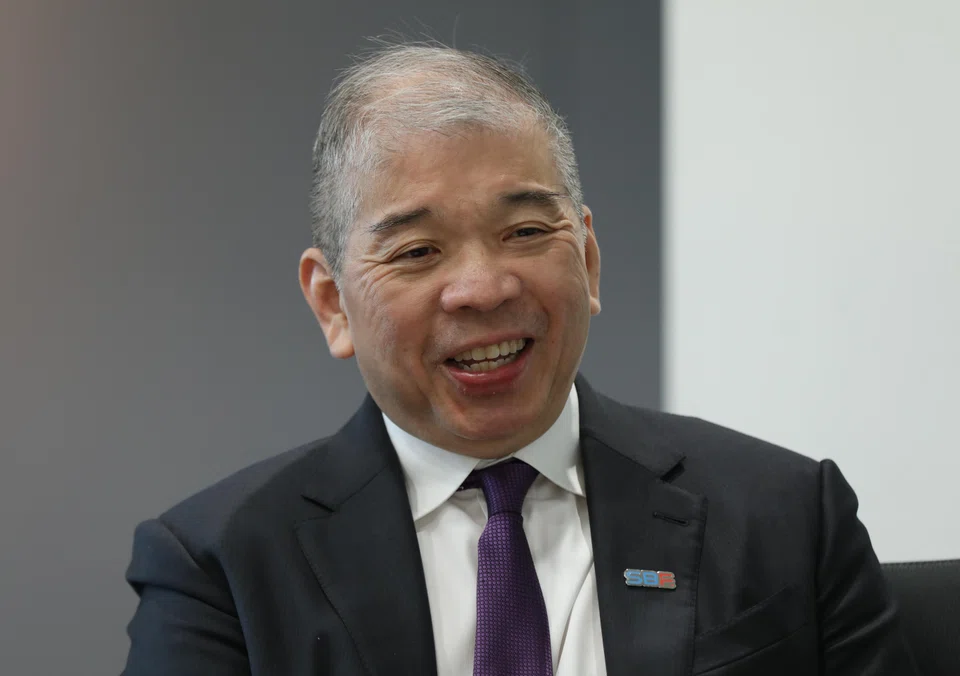
[SINGAPORE] In his second tenure as Singapore Business Federation (SBF) chairman, Teo Siong Seng is prioritising efforts to push businesses to venture into new markets.
In the face of global uncertainties and trade tensions, he stressed that companies can no longer rely exclusively on a few established major markets, such as the United States, for growth.
“While the environment is so complicated and fast changing, we have to be confident that Singapore companies do have a good reputation in terms of their quality of services and goods,” he said.
He urged businesses to “break out of their comfort zone” and actively pursue new opportunities in emerging markets, particularly in South-east Asia, Africa and the Middle East.
This was one of the key priorities Teo shared in his first media interview since he was reappointed as chairman on May 20.
He succeeded Lim Ming Yan, who stepped down early from his third consecutive two-year term to focus on his new role as chairman of Changi Airport Group.
The appointment marks Teo’s second stint as SBF chairman, having previously held the position from 2014 to 2020.
The 70-year-old shipping veteran, known among industry peers as SS Teo, is the first person in SBF’s history to return to the role.
Predecessor to successor
Though Teo stepped down from his post five years ago, he told The Business Times that he has remained active in the organisation.
Past council members are often consulted and engaged on matters, even after they step down from their posts, he noted.
In 2024, Teo was appointed chair of SBF’s Internationalisation Action Committee, which supports local companies to scale up their business overseas.
He was chosen due to his experience as executive chairman of Pacific International Lines, a home-grown shipping company with operations in South-east Asia, the Middle East, Africa, and Latin America.
Teo’s experience in internationalisation is also a key reason SBF saw him as a strong fit to return as chairman, as it aligns with the chamber’s 2030 plan to promote overseas expansion.
Asked if he will serve as an interim chairman until another successor is found, Teo replied: “We will always be looking out for a successor, and you will know in due course.”
He noted, however, that while previous SBF chairmen typically completed three two-year terms, the rapidly changing external environment means this may no longer be the case.
Going global
Though only five years have passed since he was last chairman, Teo noted that outside factors have transformed significantly.
“I would say that in my first six years of SBF chairmanship, the majority of the time, (Singapore’s) economy was growing and there was free trade,” he said. At the time, the chamber’s main priorities were growing its membership and leading business delegations.
However, since the Covid-19 pandemic, global crises have become shorter yet more frequent. Teo, who stepped down during the pandemic, is back at the helm amid a wave of trade tensions, triggered by US President Donald Trump’s “Liberation Day” tariffs.
In light of these challenges, businesses in the Republic must seek out like-minded partners and pursue overseas opportunities. “If they do nothing, they will be marginalised,” he warned.
To support this push, SBF will intensify its efforts to organise more trade missions, helping local companies explore promising international markets.
These missions typically bring together Singapore firms that have successfully expanded abroad to share their experience, as well as provide networking opportunities with local businesses in the target markets.
This year, SBF plans to lead trade missions to Dubai, Saudi Arabia, Africa, and Latin America.
According to Teo, interest in these missions has grown in recent years, thanks to the advocacy efforts of business chambers such as SBF in making companies more open to overseas expansion.
SBF also plans to launch two new Singapore Enterprise Centres (SECs) this year – one in Bengaluru, India, set to open in the third quarter; and another in Dubai, scheduled for the fourth quarter.
These international centres support businesses to expand overseas through providing advice on the market, business matching, and networking opportunities, under the chamber’s GlobalConnect programme.
The SECs in Vietnam, Indonesia and Thailand have successfully helped companies in the city-state to expand to these markets, said Teo.
When it comes to sectors that can seize opportunities in these emerging markets, Teo highlighted education, lifestyle, food manufacturing, and accommodation.
The new Johor-Singapore Special Economic Zone is another opportunity for firms. For instance, food-manufacturing companies can consider opening facilities in Johor to scale up production, he said.
Trump’s tariffs
Another priority for Teo is to help Singapore firms navigate the uncertainties caused by the US tariffs.
According to a survey by SBF in May, over a third of local businesses are already feeling the impact of the global tariff war, with nearly 90 per cent expecting to experience its effects within the next six months.
Many companies have also communicated to the chamber their need for larger and longer-term financing to weather these trade challenges, as they are uncertain if they can sell their inventory during this period of uncertainty.
Teo, who is now a member of the Singapore Economic Resilience Taskforce chaired by Deputy Prime Minister Gan Kim Yong, plans to raise these concerns with the taskforce.
In addition, SBF intends to enhance educational efforts to improve businesses’ understanding of how tariffs are applied and the role of free trade agreements – areas Teo noted many companies remain unfamiliar with.
In May, the chamber’s Centre for the Future of Trade and Investment launched a digital playbook aimed at helping businesses understand, respond to, and plan for the impact of the US tariffs.
In addition, SBF offers tailored advice to companies facing specific challenges and is working on launching a mentorship programme. This initiative will connect experienced business leaders with younger companies, including startups, to provide hands-on guidance.
In particular, it has been actively supporting the trading sector, which has been particularly affected by the ongoing tariff situation.
Beyond these immediate-term priorities, Teo will continue with efforts to help businesses transform, in areas of sustainability and digitalisation.
For instance, the chamber has a committee which advises small and medium-sized enterprises on how to adopt sustainability measures more meaningfully.
As for digitalisation, SBF is looking at how to help companies adopt artificial intelligence without breaking the bank.






