

Singapore convenes committee to review ministerial salaries
The current salary structure and benchmark has not been updated since 2012; the last review in 2023 was deferred amid uncertain economic conditions

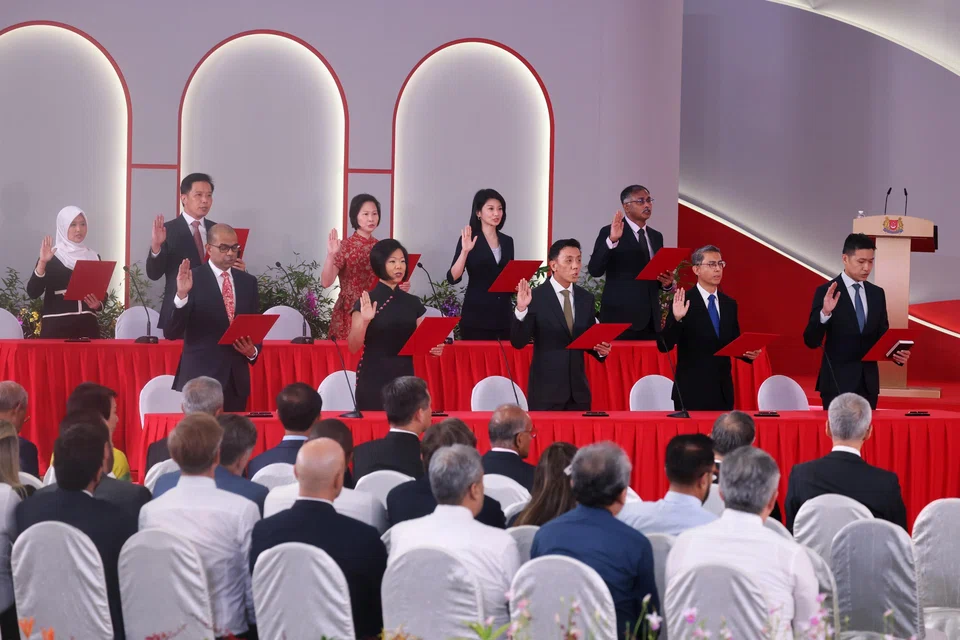
[SINGAPORE] An independent committee to review the salaries of political appointment holders has been formed, after the last scheduled review in 2023 was deferred.
The committee will recommend appropriate salary levels based on the current framework and propose refinements where necessary, to ensure it remains relevant and fit for purpose, said Chan Chun Sing, the coordinating minister for public services and minister-in-charge of the public service, in a written reply to a parliamentary question on Monday (Jan 12).
The committee is chaired by Gan Seow Kee, chairman of Singapore LNG Corporation.
Other members of the panel are Hsieh Fu Hua, chairman of the National University of Singapore Board of Trustees and GXS Bank; Lily Kong, Singapore Management University president; Cham Hui Fong, deputy secretary-general of the National Trades Union Congress; Thomas Chua, executive chairman of Teckwah Industrial Corporation; Theresa Goh, chairman of the Charity Council; Ramlee Buang, member of the Public Service Commission; and EY partner Shekaran Krishnan.
The committee will submit its report to the government, which will then consider its findings and provide an update in Parliament, said Chan.
The current salary framework for political appointment holders was implemented in 2012, following a review by a previous committee. The government agreed then that the framework should be reviewed by an independent committee every five years.
A subsequent committee was formed in 2017 for a review, and it concluded that the framework remained sound, and that political salaries should be adjusted annually in line with the movement of the benchmark salaries, noted Chan.
But the government decided against making any changes to political salaries then, he added.
In 2023, the government decided to defer the scheduled review, given the uncertain external environment, and the downside risks in the global economy at that time.
Political salaries are benchmarked against private sector salaries. The benchmark for an entry-level minister is based on the median income of the top 1,000 Singaporean income earners, with a 40 per cent discount applied to reflect the ethos of the public service.
The salaries of other political office holders are determined based on their salary ratios to an entry-level minister. The salary ratios reflect the roles and responsibilities of the various political appointment holders.
Decoding Asia newsletter: your guide to navigating Asia in a new global order. Sign up here to get Decoding Asia newsletter. Delivered to your inbox. Free.
Copyright SPH Media. All rights reserved.
TRENDING NOW

Once staunchly pro-China, Malaysian Chinese businesses are now distancing themselves from Beijing

Looking beyond looming CEO succession, should UOB potentially pursue a transformative merger?

Could stablecoins be the future of money?

Grab CEO’s wife Chloe Tong on life with Anthony Tan and finding her purpose

