Singapore convenes crisis committee to boost energy resilience and support amid Iran war
Firms and households can expect enhanced, earlier assistance, with targeted help for more severely affected sectors: PM Wong
 Add BT as a preferred source
DeeperDive is a beta AI feature. Refer to full articles for the facts.
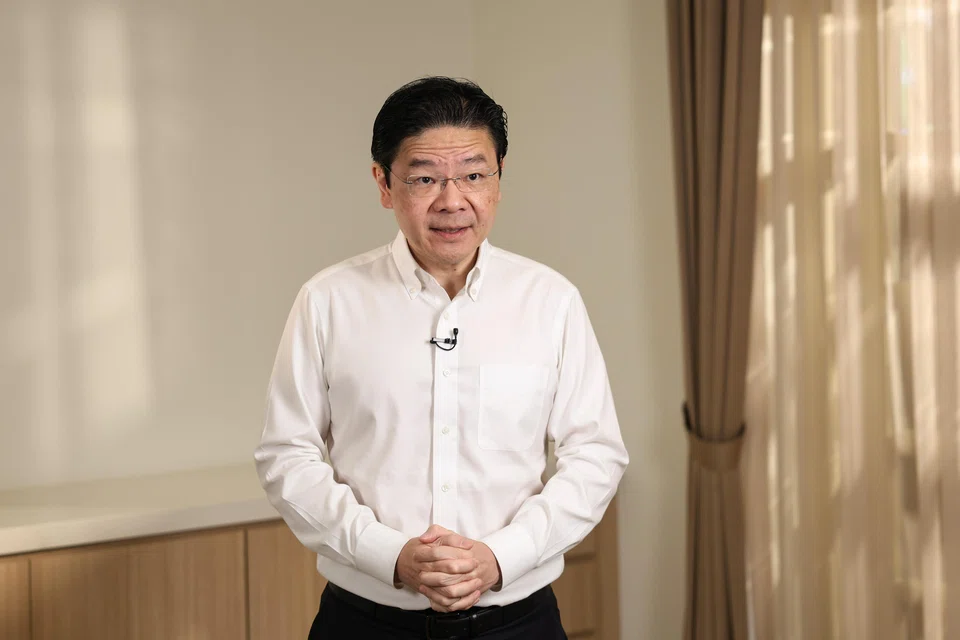
[SINGAPORE] Prime Minister Lawrence Wong has convened the Homefront Crisis Ministerial Committee, chaired by Coordinating Minister for National Security K Shanmugam, with Deputy Prime Minister Gan Kim Yong as adviser, to respond to the ongoing conflict in the Middle East.
The committee is updating contingency plans and developing new ones, in light of “unprecedented developments”, PM Wong said in a video message on Thursday (Apr 2), noting the possibility of a global energy crunch.
The response will strengthen Singapore’s energy and supply chain resilience, as well as “cushion the immediate impact on households and businesses”, with targeted support for more severely affected sectors.
Beyond widespread destruction, the war has sharply curtailed overall flows, affecting supplies of oil, liquefied natural gas (LNG) and other essential commodities, he said. Oil prices have risen more than 60 per cent since the conflict started on Feb 28.
PM Wong added that the effects will persist beyond any ceasefire or the end of the military conflict.
Energy production and distribution infrastructure have been damaged, and will likely require several months to return to full capacity. The more uncertain geopolitical situation in the war’s wake will have “wide-ranging implications for regional security and global energy flows”.
Navigate Asia in
a new global order
Get the insights delivered to your inbox.
A further escalation could occur, with a risk of additional strikes and of other groups, such as the Iran-backed Houthis, joining the fray.
A prolonged closure of the Strait of Hormuz as well as other key shipping routes in the region, including the Red Sea, is also a worrying possibility.
“If the critical Middle Eastern energy sources and supply routes remain constrained for an extended period, the consequences will be severe,” PM Wong warned. He added that this could mean not just higher prices, but a global energy crunch that would disrupt daily life and production activity.
This would put significant pressure on economies everywhere. Stagflation – where output weakens sharply, even as prices continue to rise – could take hold, and be “deeply damaging and very hard to bring under control”.
Building resilience, strengthening support
To coordinate Singapore’s response to the crisis, the Homefront Crisis Ministerial Committee will first take steps to strengthen the country’s energy and supply chain resilience.
Singapore has so far managed immediate disruptions. Refineries and chemical companies are scaling back production and sourcing crude oil and feedstock beyond the Middle East, and LNG importers are securing alternative supplies from global producers.
The Republic is also working with partners vital to its long-term security, PM Wong said.
The government is looking to deepen cooperation with Australia – which already accounts for over a third of Singapore’s LNG supply – and ensuring that supply lines for essential goods and food with New Zealand remain open during crises.
Next, the government is cushioning the conflict’s immediate impact on households and businesses. Budget support measures, including electricity-related rebates, are being rolled out.
Given the spike in oil prices and the uncertain outlook, the government will enhance existing measures and bring some forward for earlier relief, PM Wong said.
It will also provide more targeted support for sectors that are more severely affected, he continued, adding that more details will be shared in Parliament next week.
PM Wong called for Singaporeans to “stand together... to look out for one another, to act responsibly, and to pull together as one society”.
He also called on businesses to review operations and improve energy efficiency, and for households to be mindful of daily energy use, to conserve energy, and reduce unnecessary consumption and waste.
“The situation is highly uncertain, and we cannot predict how exactly events will unfold. But the risks are significant, and the worst may not yet be behind us,” said the prime minister.
“Singapore cannot be insulated from such global upheavals – no country can, least of all a small island nation like ours. But I assure you: We have the plans, the capabilities and the resilience to navigate this together.”
Decoding Asia newsletter: your guide to navigating Asia in a new global order. Sign up here to get Decoding Asia newsletter. Delivered to your inbox. Free.
Copyright SPH Media. All rights reserved.