

Singapore core inflation holds at 1.4% in May, undershooting forecasts as services prices cool
Private-sector economists estimated 1.6 per cent growth in a Bloomberg poll

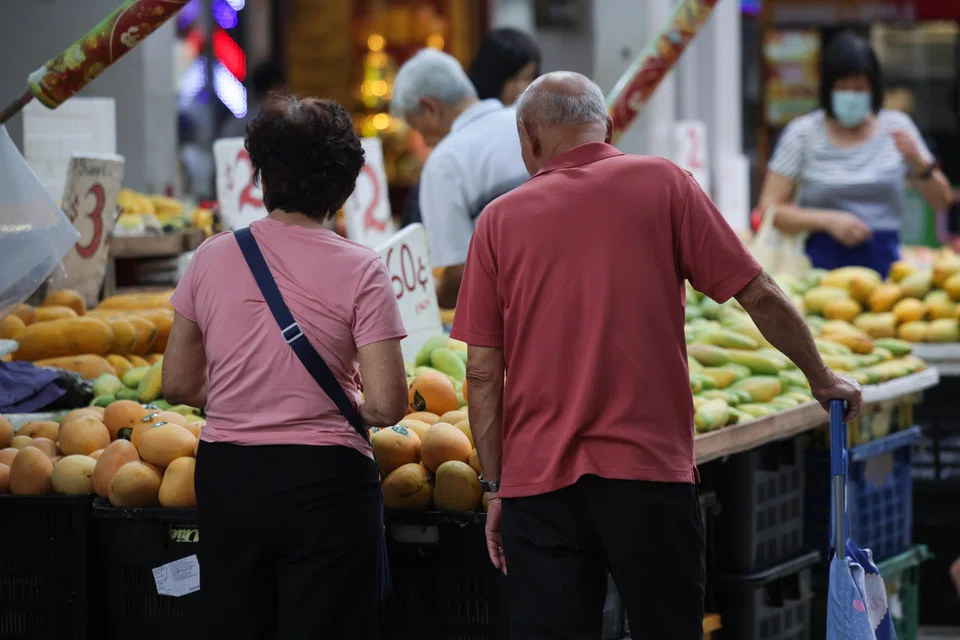
[SINGAPORE] Core inflation held steady at 1.4 per cent in May, defying expectations of an acceleration to 1.6 per cent, data from the Singapore Department of Statistics showed on Tuesday (Jun 23).
This was largely due to lower services inflation, which offset higher food and retail and other goods inflation, the Monetary Authority of Singapore (MAS) and the Ministry of Trade and Industry (MTI) said in a joint statement.
Private-sector economists had expected core inflation – excluding accommodation and private transport – to rise to 1.6 per cent, a Bloomberg poll indicated.
Meanwhile, headline inflation also held steady at 1.8 per cent in May, as higher private transport, accommodation, food and retail and other goods inflation was offset by lower services inflation.
The reading came in below economists’ expectations of 2 per cent.
On a month-on-month basis, the core consumer price index was unchanged, while the all-items CPI rose by 0.7 per cent.
Inflation outlook
MAS and MTI maintained their 2026 full-year forecast range for both core and headline inflation at 1.5 to 2.5 per cent.
The authorities cautioned, however, that global energy prices remain elevated relative to 2025 levels despite easing recently.
As higher energy costs pass through global supply chains with a lag, they are expected to raise production and transport costs for a wider range of Singapore’s imported goods and services over time.


On the domestic front, services unit labour costs are likely to increase at a slower pace this year as nominal wage growth eases, while consumer spending could turn more cautious amid economic uncertainty, they added.
The authorities said inflation risks remain tilted to the upside, as a slower-than-expected resumption in global energy supplies or continued shortages in key intermediate inputs to regional supply chains could further raise imported costs for Singapore.
But downside risks are also present, as a stronger-than-expected tightening in global financial conditions could slow economic activity and lower inflation.
Key CPI categories
In May, inflation trends across CPI categories were mixed, with private transport and accommodation costs rising faster while services inflation eased.
Private transport recorded the largest increase, rising to 8.6 per cent year on year in May from 8.1 per cent in April, due to larger increases in car and motorcycle prices.
Accommodation inflation edged up to 0.5 per cent from 0.4 per cent in April, due to a larger increase in housing rents.
Food inflation picked up to 1.8 per cent from 1.6 per cent in April, as both non-cooked food and food services prices rose at a quicker pace.
Meanwhile, services inflation eased to 1.3 per cent in May from 1.5 per cent in April, largely due to a steeper decline in telecommunication services prices.
Retail and other goods inflation edged up to 1.6 per cent from 1.5 per cent, as prices of personal care appliances and information and communication equipment rose at a faster pace.
Electricity and gas prices fell at the same pace as in April, declining 3 per cent year on year, as electricity prices dropped at a similar rate in both months.
Decoding Asia newsletter: your guide to navigating Asia in a new global order. Sign up here to get Decoding Asia newsletter. Delivered to your inbox. Free.
Copyright SPH Media. All rights reserved.
TRENDING NOW

Stocks to watch: CapitaLand Ascott Trust, Keppel Infrastructure Trust, iFast, ESR Reit, First Sponsor

Indonesia says gas export cuts to Singapore remain within contract terms

If Europe goes to war, the fallout will be felt in East Asia

Government to bring forward raising of retirement age, give employers more financial support to create flexi-load jobs

