

Singapore court upholds worldwide asset freeze in alleged fraudulent US$38 million gold scheme
Claimants say they were induced to invest in what was presented as a trading operation spanning South Africa and Zimbabwe

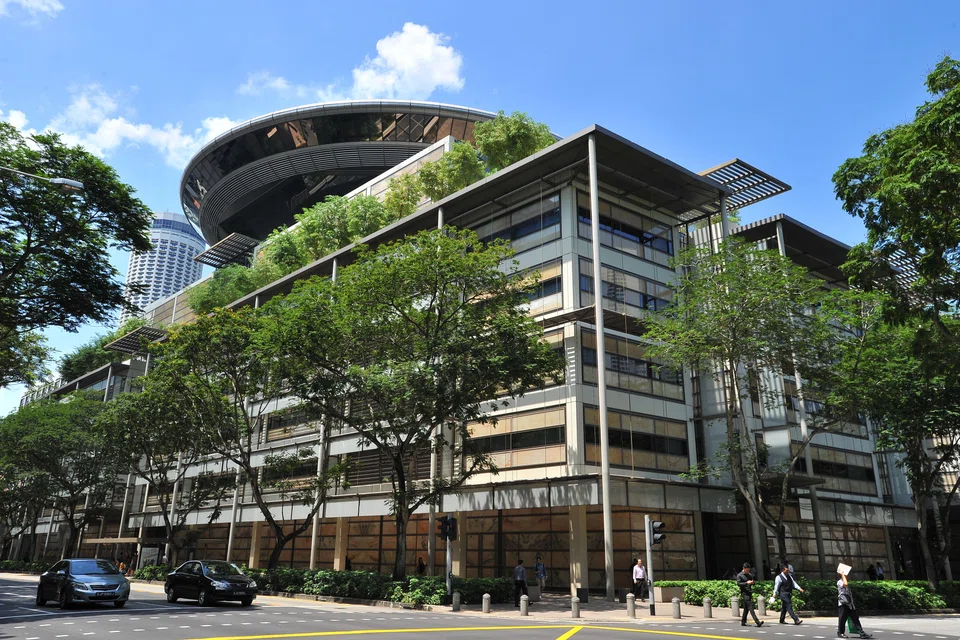
[SINGAPORE] The High Court has upheld a worldwide asset-freeze order against two individuals accused of involvement in an alleged fraudulent gold-trading scheme involving more than US$38 million.
In a written judgment, Senior Judge Tan Siong Thye dismissed an application by Mark Yong and Emily Hwang to set aside a Mareva injunction – a court order that freezes a defendant’s assets to prevent them from being moved or hidden before a case is resolved.
The injunction was granted in July on an ex parte basis, meaning it was issued without prior notice to the defendants. This followed an application by Ser Kang Wei, also known as Xu Kangwei, and Lucent Trading.
The claimants allege that they were induced to invest in what was presented as a gold-trading operation spanning South Africa and Zimbabwe, but that the scheme was fraudulent.
They say about US$2.8 million was invested through a Cayman Islands fund linked to South African gold trading, while a further US$35.9 million was channelled through a British Virgin Islands company for a Zimbabwe-based operation.
In refusing to lift the injunction, the court found that the claimants had produced sufficient preliminary evidence of fraud, including records of cryptocurrency transfers, contemporaneous messages and call transcripts, as well as inconsistencies in Yong’s explanations of his role.
The court further found there was a “real risk” that assets could be dissipated, noting that the claimants had “established a well-substantiated allegation” that Yong and Hwang were “involved in egregious acts of fraud which reveal grave dishonesty”, and that they had also “failed to disclose certain assets”.
Yong and Hwang argued that they were not involved in any fraudulent scheme, that the investments were part of legitimate gold-trading activities, and that the asset freeze was unjustified, contending that the claimants had failed to show a good arguable case or any real risk of asset dissipation.
They also sought higher allowances for living expenses under the injunction.

The court rejected those arguments but ordered the claimants to fortify their undertaking as to damages – a safeguard for defendants if the injunction is later found to be wrongly granted – by paying S$100,000 into court.
The main lawsuit, which seeks the return of invested capital and promised profits totalling more than US$77 million, is ongoing.
Decoding Asia newsletter: your guide to navigating Asia in a new global order. Sign up here to get Decoding Asia newsletter. Delivered to your inbox. Free.
Copyright SPH Media. All rights reserved.
TRENDING NOW

Once staunchly pro-China, Malaysian Chinese businesses are now distancing themselves from Beijing

Looking beyond looming CEO succession, should UOB potentially pursue a transformative merger?

Could stablecoins be the future of money?

Grab CEO’s wife Chloe Tong on life with Anthony Tan and finding her purpose

