

Singapore F1 attendance down, but hotel takings may still exceed 2022 levels

Paige Lim
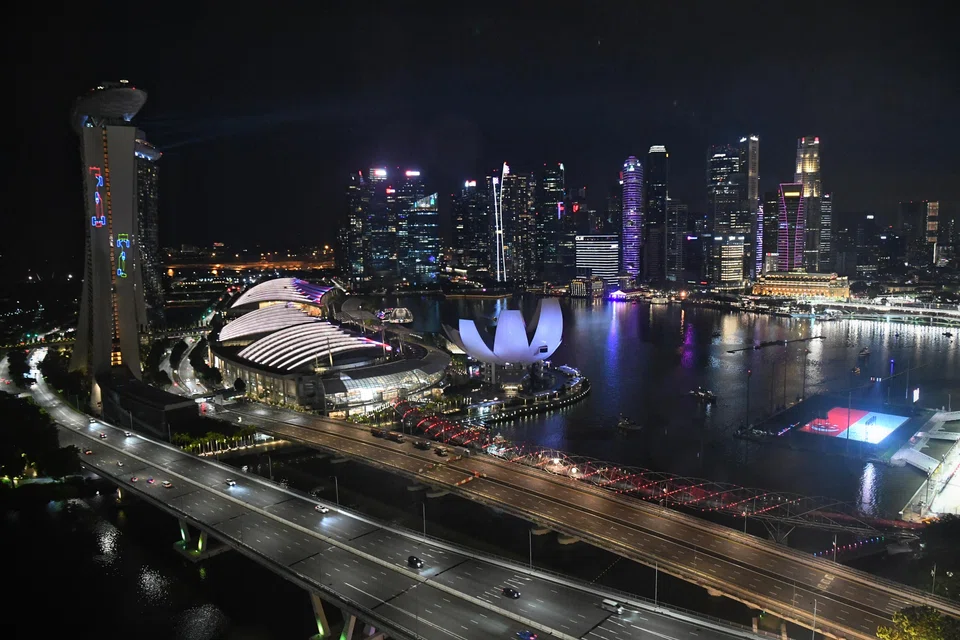
ATTENDANCE may be down, but takings could still rise at this year’s Singapore Formula 1 (F1) Grand Prix, with tourism players and observers expecting receipts to exceed at least pre-Covid levels – if not those of 2022.
About 250,000 spectators are expected at the three-day night race, which takes place from Friday (Sep 15) to Sunday. This is down 17 per cent from 2022’s record turnout of 302,000 attendees, as the Bay Grandstand is closed for the redevelopment of The Float at Marina Bay.
Yet, industry observers and players expect this year’s takings to be boosted by the resumption in travel, as borders have fully reopened.
During the 2022 F1 period, Singapore’s pandemic situation was still at “yellow” under the disease outbreak response system condition (Dorscon) framework, noted Jacqueline Poey, general manager of Sofitel Singapore City Centre.
“The mild infection spreading locally and severe infection elsewhere (then) meant that some individuals may still have had reservations or concerns about attending a large-scale event,” she said. Singapore reverted to Dorscon green – the lowest level – in February this year.
Occupancy rates at Sofitel Singapore City Centre during the F1 weekend have been “fairly healthy and consistent”, similar to last year, she added.
Demand this year might also have been boosted by the earlier F1 dates, compared to last year’s race weekend of Sep 30 to Oct 2, said Lina Ang, managing director, Asia-Pacific at travel marketing platform Sojern.
This year’s schedule is closer to the summer months, which Western travellers may view as a “more accessible and convenient time” to travel, she said.
The increase in foreign attendees has led to higher room rates, said Caesar Indra, president of online travel startup Traveloka. Based on Traveloka data, room rates for this year’s F1 weekend are slightly more than 10 per cent higher compared with 2022’s F1 weekend.
Hotels near the downtown race circuit generally expect their F1 takings to exceed pre-Covid levels, and possibly those of 2022.
Gino Tan, country general manager for The Fullerton Hotels and Resorts, expects this year’s F1 revenue to surpass both that of 2022 and 2019. This is “primarily driven by a higher average room rate across the board”, rather than occupancy, he said.
Both of the group’s hotels – The Fullerton Hotel and The Fullerton Bay Hotel – are near peak occupancy for the F1 weekend.
Fairmont Singapore and Swissotel The Stamford have seen a “slower pickup” in occupancy rates this year than in 2022, said commercial general manager Theo Ocks.
Last year’s stronger rate was fuelled by pent-up demand after the race was scrapped in 2020 and 2021. But F1 revenue this year should still surpass pre-Covid levels, as global interest in the event has “increased steadily”, he added.
Despite the predicted attendance dip, hotels “will continue to see good results, given the reported strong take-up for the race”, said Margaret Heng, executive director of the Singapore Hotel Association.
Corporates flock to Singapore
F1-related corporate demand has spilled over to other businesses and attractions.
Food and beverage (F&B) collective 1-Group’s restaurants and cafes are fully booked for September, thanks to corporate demand, said managing director Joseph Ong. The group received about 25 per cent more corporate enquiries this F1 season, compared with 2022.
Gardens by the Bay’s event space, Flower Field Hall, is fully booked this week by corporates “wanting to leverage F1 for their attendees”, said senior director of business development Ong Kian Ann.
At cocktail bar MO Bar at Mandarin Oriental, 70 per cent to 90 per cent of its race weekend F&B packages have been snapped up, said Marcel Li, the hotel’s director of F&B.
What helps this year is that F1 festivities and ancillary activities, such as meetings, incentives, conferences and exhibitions (Mice) events, are spread out across a longer timeframe, said 1-Group’s Ong.
A spokesperson from the Orchard Road Business Association said that its members – which include retailers, hotels, restaurateurs and mall owners – expect a “significant” boost this period, as with past years.
But “most people are not expecting this year’s (F1 period) to be as frenetic as last year”, in which there was an upsurge in large-scale Mice activities on the back of borders reopening, the spokesperson added.
Minimal impact from China
While China’s reopening has been a major factor to watch in Singapore’s overall tourism recovery, it is expected to play a limited role this F1 season.
“It’s important to note that F1 has traditionally not held as much appeal for East and South-east Asian travellers,” said Sojern’s Ang, noting that the race attracts a comparatively higher volume of Western visitors.
Based on Sojern data, Chinese travellers account for 5 per cent of flight bookings to Singapore in 2023’s F1 week, similar to 2019’s pre-pandemic 6 per cent figure and up from 1 per cent during 2022’s F1 week – before China reopened borders.
In contrast, travellers from Australia lead the pack at 14 per cent, followed by the UK at 11 per cent.
Fullerton’s Tan said the bulk of visitors at both of the group’s hotels during this F1 season are from Europe and Australia. “The share of Chinese travellers is not as significant at this stage.”
Cinn Tan, chief commercial and marketing officer of Pan Pacific Hotels Group, said “there has not been a significant increase from the Chinese market” for bookings at Parkroyal Collection Marina Bay, near the race circuit.
The group’s portfolio consists of Parkroyal Collection and Parkroyal hotels, as well as Pan Pacific Singapore and Pan Pacific Orchard. Occupancy is currently at more than 90 per cent, with a surge in last-minute bookings expected this week, Tan added.
TRENDING NOW
First Resources blames El Nino, outside fires for Kalimantan hotspots amid haze scrutiny
High Court rules against Julius Baer’s Singapore trust arm in US$50 million family trust dispute
Singapore key exports jump by higher-than-expected 68.4% in September, led by non-electronics
MSCI proposes downgrading Indonesia to standalone market status

