

Singapore F&B players push for more changes in import rules to ease food cost squeeze
Operators laud moves to diversify food sources, say more can be done to help local business compete against global players with strong supply chains

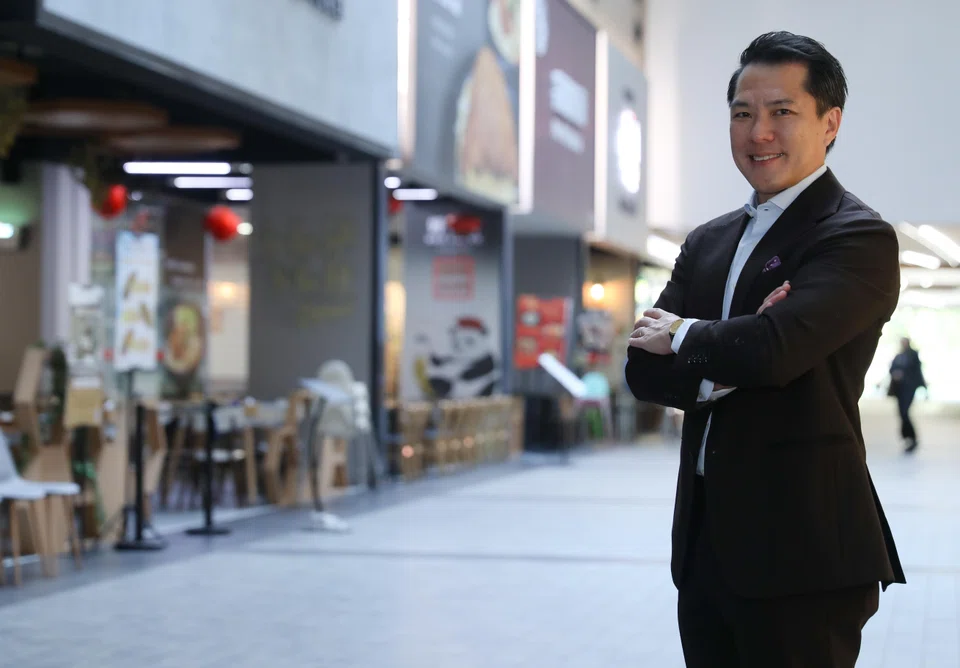
[SINGAPORE] The Restaurant Association of Singapore (RAS) is calling for an expansion of food sources approved by the authorities while also exploring collective procurement, as local food and beverage (F&B) operators face stiffer competition and rising operating costs.
Benjamin Boh, RAS president, told The Business Times that the main challenge for the local industry players remains the “relentless squeeze” from rising operating costs and the volatility of a market defined by rapidly shifting consumer preferences.
Food costs account for a significant portion of F&B expenses, typically 30 to 40 per cent, and have risen over the past decade – often outpacing food consumer price inflation (CPI) increases, he added.
“Operators are all saying that their cost increase is higher than what they are able to pass down to consumers.”
Boh noted that operators are generally more sensitive to food cost inflation than rent. While rent is a major expense, leases are typically locked in for three years, giving “some level of predictability”.
Food costs, by contrast, are volatile – especially for smaller brands or individual operators who purchase ingredients weekly or monthly, whereas larger chains typically lock in prices for a year and buy from major suppliers.
The cost of raw materials accounted for 33 per cent of total operating expenditure of F&B operators in 2023. Other major cost components include worker remuneration (29 per cent) and rentals (13 per cent), indicated data from the Department of Statistics.
Import prices for food commodities rose 8.7 per cent year on year in 2022 but growth has moderated to 1.3 per cent year on year in October 2025, said a spokesperson from the Ministry of Trade and Industry (MTI).
MTI noted that food import prices in Singapore are affected by global food commodity prices as Singapore imports more than 90 per cent of its food, as well as other factors such as energy and freight costs.
Since the end of the pandemic in 2022, supply chain frictions have eased, resulting in global food prices falling from their highs, and Singapore’s food import inflation has moderated.
Collective procurement could potentially lower ingredient costs through economies of scale, Boh said. But it is not straightforward, as operators must keep menu offerings distinctive, and ingredient sourcing can be a differentiation point. It could also create an oligopoly, where only a few suppliers serve the entire industry.
For collective procurement to work, Boh said, it is important to identify which ingredients operators are willing to buy from the same source and have a logistics network capable of storing and delivering them efficiently.
Quick wins can be found in non-food items: Sourcing chicken may be a differentiator for a yakitori restaurant, but sourcing napkins is not. “Therefore, the industry can start with non-food material sourcing to get some efficiencies there,” added Boh.
Ongoing challenges in import restrictions
Andrew Tjioe, president and chief executive of TungLok, said: “The only ongoing challenge is that the import of certain products, such as pigeon and goose remains prohibited. We are still unclear about the specific reasons behind these restrictions, which naturally limits what we can offer.”
TungLok owns and manages more than 35 restaurants in Singapore, Indonesia, China, Japan and Vietnam. Some of its brands include TungLok Peking Duck, TungLok Teahouse and Lao Beijing.
For the first half ended September, TungLok’s revenue fell 3.7 per cent on year to S$37.1 million, as some outlets closed and existing outlets made lower contributions. Cost of sales dipped 7.2 per cent on year to S$10.6 million. Its net loss narrowed to S$2.5 million in H1, versus S$2.6 million in the year-ago period.
While the group expects global tensions to continue weighing on business confidence and discretionary spending, it said that it will continue to drive growth through “product innovation and value-driven ingredient sourcing” to align with evolving consumer preferences.
Food costs at homegrown Italian casual dining chain Pastamania have been relatively stable over the past two to three years, but overall expenses are rising due to higher raw ingredient prices, freight, labour and rent.
Certain import restrictions limit sourcing flexibility at the group level, said Brian Stampe, chief operating officer of Commonwealth Concepts, which owns PastaMania. Mongolian beef and lamb – known for their distinctive flavour and quality – were not approved, restricting the group’s ability to offer premium proteins or diversify menus across some of its concepts.
The group works closely with approved suppliers to ensure supply resilience and has also introduced new items, such as Hanwoo Korean beef.
Exports of beef and pork from Jeju Island and processed egg products from South Korea were approved in November 2025, following approval of beef, pork, poultry and processed egg products from Paraguay in June.
Singapore has expanded its approved food sources to 187 countries/regions, up from 140 two decades ago.
“While the impact on day-to-day operations is incremental, we view these developments as positive long-term enhancements that reduce vulnerability to global disruptions,” said Stampe.
A spokesperson for homegrown chain Jumbo lauded the expansion but noted that faster vetting of new suppliers would have a “stronger impact” on local F&B operations.
Jumbo has 13 brands, including Jumbo Signatures, Ng Ah Sio Bak Kut Teh, and Tsui Wah. For FY2025, cost of sales – raw materials and consumables – rose 1.3 per cent to S$66.2 million.
“SFA’s (Singapore Food Agency) sourcing rules ensure food safety but limit flexibility. For certain ingredients, like specific types of poultry, we cannot import from preferred regions with desirable taste profiles. This can raise costs and narrow product availability,” said a Jumbo spokesperson.
Additional support, such as faster accreditation approval and strengthened cold chain logistics, will help operators manage rising costs and maintain consistency, the spokesperson added.
Singapore’s F&B landscape is increasingly crowded. In the year to Oct 23, there were 3,357 new F&B establishments and 2,431 closures, resulting in a net increase in the number of retail food establishments, indicated MTI data.
With an influx of global players from South Korea, Japan and the US, Chinese F&B chains in particular have emerged as a major force, backed by highly sophisticated supply chains and strong cost efficiencies.
As Li Jianggan, chief executive of venture firm Momentum Works, observed: “The brands’ emphasis on speed and efficiency could push the whole section to be more competitive.”
Supply chain advantage
Chinese brands rely on centralised procurement, research and development hubs, and regional commissaries to support large domestic networks, said Chen Bao, managing director of EHL Campus (Singapore). Overseas, they replicate the model by exporting semi-finished items from China or setting up regional hubs for logistics, packaging and light manufacturing.
More brands are leasing logistics hubs, factories and cold chain warehouses in the region to localise operations, Chen observed.
Haidilao supplier Yihai International has major factories in Malaysia and Thailand, and drinks giant Mixue has dedicated supply chain centres across the region.
“By leasing industrial infrastructure, they can manufacture soup bases or process ingredients closer to the market, bypassing tariffs and ensuring standardised product taste across thousands of stores,” said Chen.
Li noted that most Chinese brands in Singapore rely on shared facilities or third-party providers, while larger beverage chains decide which items to ship from China versus sourcing locally or regionally.
To help local operators keep pace, RAS has ramped up knowledge-sharing, including study missions to Chengdu and Shenzhen.
“These trips were specifically designed to expose our members to the advanced operational and supply chain models leveraged by overseas brands,” said Boh.
In a survival of the fittest environment, local F&B operators must evolve from a small business mindset to professional enterprise management, said Chen.
Local operators need to upgrade their capabilities, including adopting full digital supply chain systems, while differentiating in areas that global players cannot easily replicate – such as heritage flavours, authenticity and hyper-local concepts.
Shared infrastructure and collective logistics – from cloud kitchens to joint warehousing – can help smaller operators access scale without heavy capital investment.
But as a country that imports more than 90 per cent of its food, Singapore “requires structural intervention beyond generic grants”, Chen added.
He suggested co-investment in specialised infrastructure such as food manufacturing parks, targeted subsidies for cold chain systems and energy-efficient kitchens, and government-coordinated shared storage and logistics hubs for small and medium-sized enterprises to aggregate demand and tap economies of scale.
Boh said: “With the increasing speed of evolving consumer preferences and the growing competition from new brands and regional dining options, adapting and pivoting is truly existential for every F&B operator. Our future success hinges on agility and creativity.”
TRENDING NOW

OCBC mobile, online banking services restored after Friday afternoon disruption

SGX CEO Loh Boon Chye to step down; succession planning under way

Waymo founder predicts ‘landslide’ robotaxi adoption in Singapore, driven by high car costs

Vietnam’s northern provinces, not Hanoi or Ho Chi Minh City, are powering near 10% GDP growth

