Singapore government gazettes site at 38 Oxley Road as a national monument
Founding prime minister Lee Kuan Yew’s former residence is owned by his youngest son, Lee Hsien Yang, who has submitted a written objection

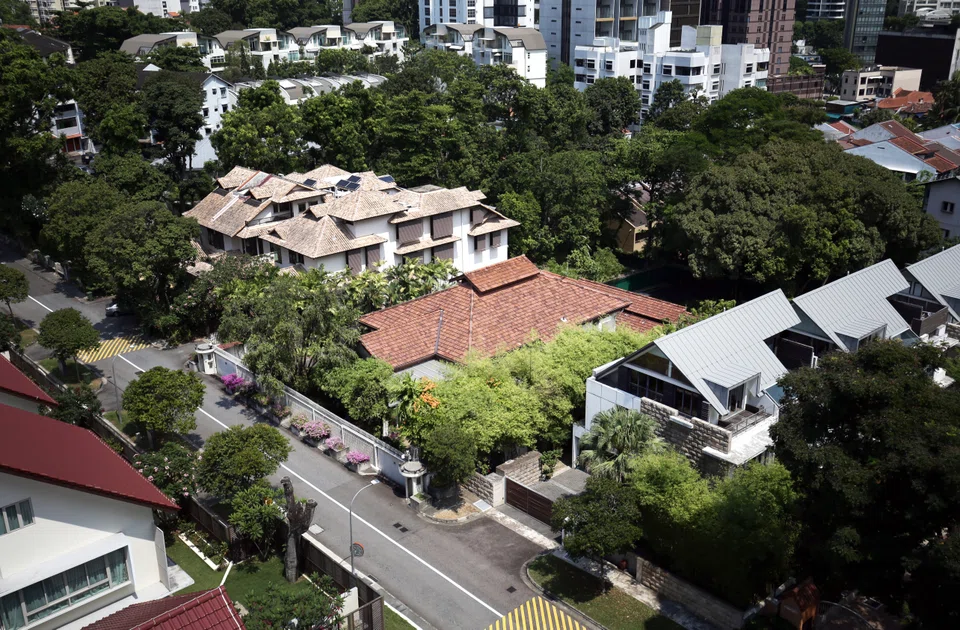
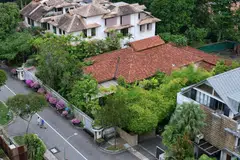
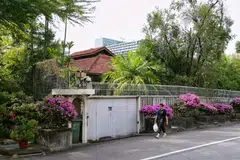
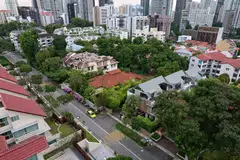
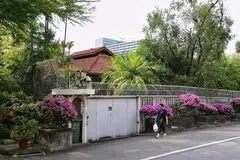
[SINGAPORE] The Singapore government has gazetted the site at 38 Oxley Road as the city-state’s 77th national monument, a joint statement from the Ministry of Culture, Community and Youth (MCCY) and National Heritage Board (NHB) said on Friday (Dec 12).
The site is founding prime minister Lee Kuan Yew’s former residence and currently owned by his youngest son, Lee Hsien Yang, who had submitted a written objection on Nov 17. This was after the government said on Nov 3 that it intended to gazette the site.
“In line with established processes under the PMA (Preservation of Monuments’ Act), NHB has reviewed the objection letter and maintained its recommendation that the site is worthy of preservation as a national monument for its historic significance and national importance,” the statement said.
It added that in deciding to proceed with the preservation of the site, Acting Minister for Culture, Community and Youth David Neo noted that Lee’s objection letter did not challenge the site’s historic significance or national importance, nor the evaluation process for identifying potential national monuments.
He also did not dispute the Preservation of Sites and Monuments Advisory Board’s assessment of the site’s preservation worthiness, the statement added.
In his objection letter, Lee Hsien Yang had stated among other things that Lee Kuan Yew was “clear and unambiguous” throughout his life that he wanted his home demolished.
MCCY and NHB’s statement noted that it was clearly documented in the 2018 Report of the Ministerial Committee on 38 Oxley Road that even if this was Lee Kuan Yew’s preference, he was “prepared to accept options other than demolition, provided that suitable arrangements were made to (i) refurbish the building and keep it in a habitable state; and (ii) protect his family’s privacy”.
The statement reiterated that preserving the site does not mean that the building and structures there must be kept in their original state.
“As (the) acting minister explained in Parliament, the appropriate treatment of the building and structures will be subject to further study, once the government has access to the site,” it said.
“Nevertheless, to respect Mr Lee’s wishes, the government has committed to removing the private living spaces from the interior of the building to protect the privacy of Mr Lee and his family under all eventual options.”
Next steps
Now that a Preservation Order has been issued, the government intends to acquire the site to safeguard and preserve it. This means it cannot be redeveloped for residential, commercial or other private uses.
“After acquisition, the relevant authorities will assess the condition of the buildings and structures within the site, and undertake a detailed study to consider the next steps,” said the statement.
“While the government intends to convert the site into a public space, with one possible outcome being a heritage park, all options, including those outlined by the 2018 Ministerial Committee, will be considered before a decision is made.”
Decoding Asia newsletter: your guide to navigating Asia in a new global order. Sign up here to get Decoding Asia newsletter. Delivered to your inbox. Free.
Copyright SPH Media. All rights reserved.