Singapore, Japan ‘strategically aligned’ for a stronger partnership: PM Wong
The Republic supports more cooperation with Tokyo on security matters, and has done so over the years, he says
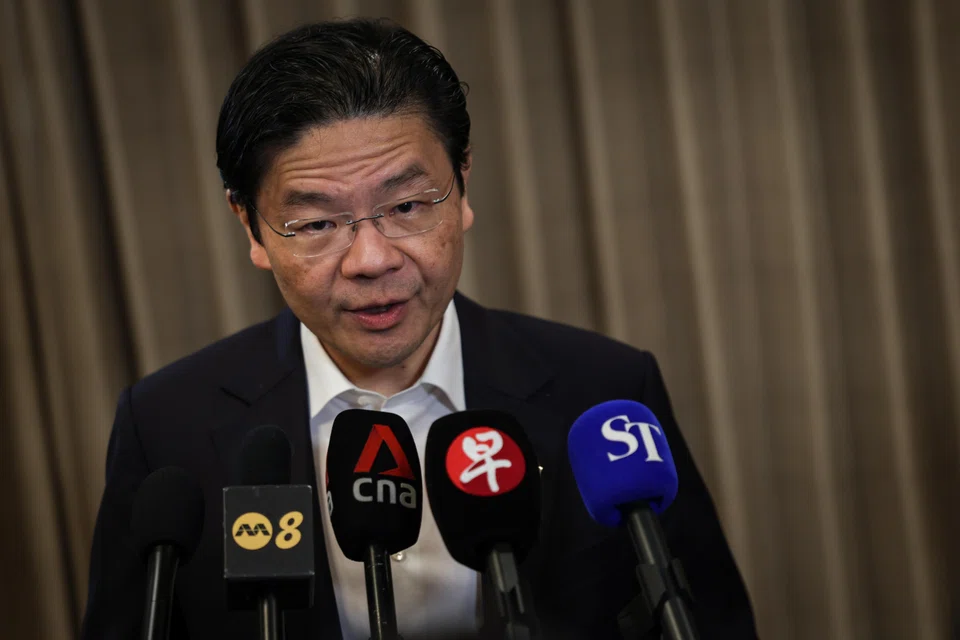
[TOKYO] Singapore and Japan are strategically aligned, with similar views on the importance of free and open trade, as well as international cooperation. Both also have a shared interest in new areas of growth, said Prime Minister Lawrence Wong on Wednesday (Mar 18).
While the Republic remembers its history and the Japanese Occupation, this does not mean Singapore cannot move forward to forge a mutually beneficial relationship with Japan as it has done over the decades, he said as he concluded the main section of his three-day official visit to Tokyo.
Both countries have a longstanding relationship and believe in free and open trade, as well as in upholding the rules-based international order. Both sides are also pushing forward in similar sectors of artificial intelligence, quantum and space technologies, and cybersecurity, said PM Wong.
These are new opportunities that will benefit both countries, including in research, investments and job creation, he added.
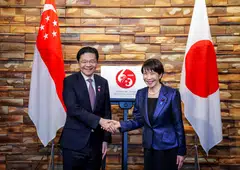
He was speaking to the Singapore media in Tokyo after meeting his counterpart Sanae Takaichi earlier in the day, when they discussed a wide range of areas for collaboration and announced upgraded ties to a strategic partnership.
It is his first visit to Japan as prime minister, and part of a series of introductory visits to countries in Asean and the wider region, as well as broader efforts to upgrade bilateral ties around the world. He had also launched a strategic partnership with South Korea during his visit there in end-2025.
He said that while Singapore remembers the “dark, painful period” during the Japanese Occupation and continues to mark the day when the British surrendered to the Japanese in 1942, on what is now Total Defence Day, it also learnt the hard lesson that no one will defend Singapore but Singaporeans.
“The history is important, we cannot forget the history, and the history matters to us too... At the same time, we do not allow ourselves to be trapped by history,” he said.
This is not a new position, he added, citing a 1967 quote from founding prime minister Lee Kuan Yew when he opened the Civilian War Memorial: “We meet not to rekindle old fires of hatred, nor to seek settlements for blood debts.”
The world has changed, and Singapore’s approach is to build a more secure nation with as many strong and reliable friends as possible, said Lee then.
PM Wong said on Mar 18: “If you take a step back, Singapore’s starting point is that we want a peaceful, stable and secure region – that’s in our national interest.
“Of course, we cannot achieve that by ourselves, so we need to do this with partners.”
This is why Singapore has long advocated an open and inclusive region with Asean at its centre, where Asean itself engages all key partners, he said.
Japan is a very important partner for Asean as a Group of Seven economy – a grouping that accounts for under a third of the global economy – and has significant economic and diplomatic clout, he added.
It should then play a key role in regional affairs, though historically it has been more active on the economic front and in development assistance, while on security matters it has traditionally taken a more low-key approach owing to its war history, said PM Wong.
Singapore supports more cooperation with Japan on security matters, and has done so over the years, he said.
Many Asean countries feel the same way, and there are various arrangements and dialogues available for such cooperation, he added.
“Of course, not all countries in the region feel the same way,” noted PM Wong.
“Some have a different historical perspective, and they feel that some of these historical issues have not been resolved.”
Singapore hopes Japan can more clearly articulate its position on the outstanding historical issues and put them to rest, said PM Wong.
“Doing so, we believe, will enable Japan to play a larger role in regional affairs and to be more active on regional security matters.”
Asked if his discussions with Takaichi included the steps to resolving these issues, PM Wong said they had spoken broadly about security cooperation, including issues “related to the past and the perspectives of history”.
“We believe our position is clear. It’s been articulated not just by me, but by previous prime ministers before. I believe Japan understands the position and the building of trust and confidence is ongoing,” he added.
This will move at a different pace for different countries, he noted. With Japan’s neighbours, it will be more complicated.
For example, with the current South Korean administration, despite differences of views about the past, both sides want to continue their cooperation and find common ground to work together, said PM Wong. South Korean President Lee Jae-myung met Takaichi in Japan in January.
With China, the relationship will be more challenging, PM Wong noted.
“Singapore is a friend to both China and Japan, and we hope both sides will continue to maintain dialogue and eventually find ways to resolve their differences.”
On how else Japan can play a bigger role in South-east Asia and the wider continent, PM Wong said Japan is already very active in development assistance and capability building for Asean countries and works with Singapore on this front.
Japan also leads in investments for the region, creating jobs and new opportunities.
Singapore will continue to discuss the various possibilities with Japan in its capacity as the designated coordinator for Asean-Japan relations and Asean chair in 2027, said PM Wong.
“But again, I just want to be clear: Our approach is not specific to any one country,” he said.
Singapore’s approach is to have an open and inclusive regional architecture with Asean at the centre, engaging with all the major powers, including Japan, China, South Korea, the United States, India and Europe, he added.
“We want all of these powers to be actively engaged and present in Asean, to have stakes in Asean, because we believe that makes for a stabler and more inclusive architecture that will maximise our chances for peace and shared prosperity.”
On Singapore’s collaboration with Japan on longer-term energy security plans, PM Wong noted that both countries are energy importers and heavy users of liquefied natural gas (LNG).
Japan does “quite a bit” of LNG procurement and trading out of Singapore and a lot of the oil and gas supplies come through the nearby Strait of Malacca, he added.
“We are both, in a way, vulnerable, but we can provide mutual support for one another, because we are in a very similar situation and circumstances.”
Beyond that, Japan has considerable experience and expertise in low-carbon energy and is also looking at diversifying with ammonia, hydrogen and nuclear power, noted PM Wong. “As we look to study the feasibility of civilian nuclear power in Singapore, it’s also an area where we would like to learn from Japan’s experience.”
These various initiatives to work together continue beyond the changes in administration, said PM Wong, responding to a question on continuity amid the series of changes in Japanese prime ministers.
While he had only just met Takaichi – the two had previously met briefly at multilateral meetings since she took on the role in October 2025 – they had a good meeting and were able to exchange notes candidly, he said.
These include not just bilateral matters but the situation in the Middle East, as well as Takaichi’s next engagement, said PM Wong. The Japanese Prime Minister left for the United States on the night of Mar 18 to meet US President Donald Trump.
“There is strategic perspective. There is a clear understanding on the mutual benefits of engaging one another and having closer cooperation between our two countries,” said PM Wong. THE STRAITS TIMES
Decoding Asia newsletter: your guide to navigating Asia in a new global order. Sign up here to get Decoding Asia newsletter. Delivered to your inbox. Free.
Share with us your feedback on BT's products and services