

Singapore manufacturing contraction likely to persist as January data disappoints

Elysia Tan
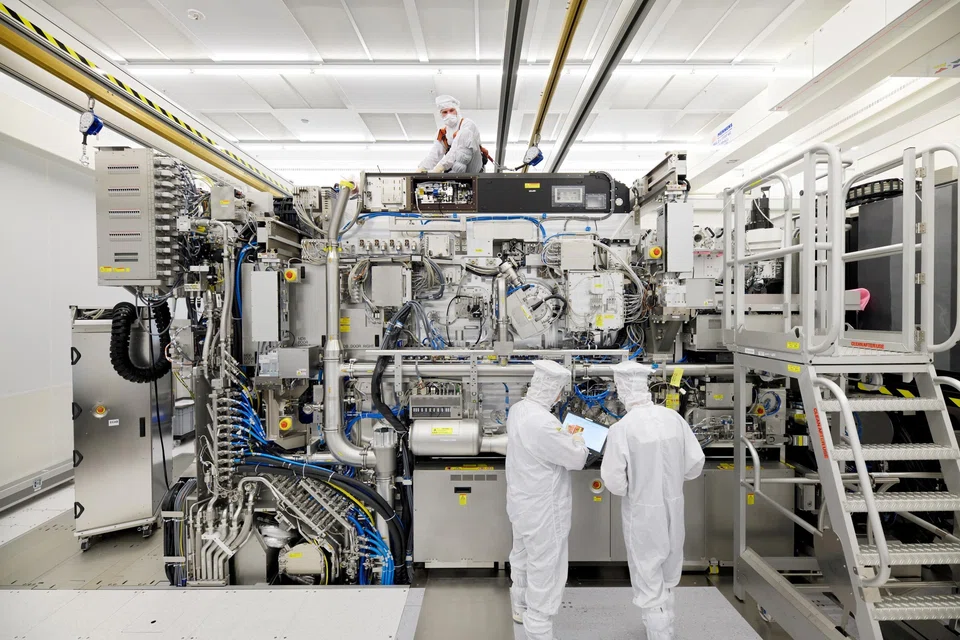
SINGAPORE’s manufacturing activities will likely continue to contract for the first half of 2023 amid lacklustre external conditions, before stabilising in H2, economists said after monthly factory output numbers were released on Friday (Feb 24).
In what UOB senior economist Alvin Liew called “the worst streak since 2015”, industrial production fell for the fourth consecutive month in January, dropping by 2.7 per cent on the year and deepening from December 2022’s revised 2.6 per cent fall, Economic Development Board (EDB) data showed.
January’s performance was the worst start to the year since 2012, said OCBC chief economist Selena Ling. It was also worse than the 0.8 per cent expansion expected by economists in a Bloomberg poll.
But noting this year’s earlier Chinese New Year holiday, Maybank economists Chua Hak Bin and Lee Ju Ye said combined January and February numbers would be more meaningful.
Excluding the volatile biomedical manufacturing cluster, factory output sank further, down 6.3 per cent year on year, reversing from December’s 0.3 per cent growth.
Noting that Singapore’s non-oil domestic exports recorded “the deepest decline since January 2009 during the Global Financial Crisis” in January, RHB senior economist Barnabas Gan said: “With Singapore being an export-oriented economy, manufacturing activities have slowed in tandem.”
Electronics manufacturing fell 2.9 per cent from the year-ago period, reversing December’s 4.2 per cent growth.
Prices in the global memory chip industry fell in H2 2022, prompting some tech companies to rein in supply plans, Ling said. But generative artificial intelligence technology could potentially drive memory demand.
Some economists said China’s reopening may boost production. Its manufacturing Purchasing Manager’s Index grew in January for the first time since September 2022, the Maybank team said. “Singapore will likely decouple from the risk of a US recession in 2023, in part because of the reopening tailwinds and China’s reopening.”
Liew added that in-person services, excluding trade-related ones, may benefit.
But Gan was less upbeat, expecting China’s economic growth to moderate further in Q1. This downturn, coupled with adverse spill-over effects on global external demand, is “one of the most significant risk factors for Singapore’s economic prognosis”, he said.
“We remain pessimistic on Singapore’s outward-oriented sectors into the next six to eight months, including the electronics and chemicals clusters, given that China is the world’s largest importer of semiconductor chips and petrochemicals.”
In addition to electronics, clusters that recorded falls were:
- Chemicals (-13 per cent)
- Precision engineering (-11.1 per cent)
- General manufacturing (-18.3 per cent)
Precision engineering and general manufacturing fell more steeply than in December.
Production in the remaining clusters grew:
- Biomedical manufacturing (23.2 per cent)
- Transport engineering (4.7 per cent)
But Liew noted that the aerospace sub-cluster, which anchored transport engineering’s growth in 2022, turned negative in January, the first contraction since March 2021.
On a seasonally adjusted, monthly basis, manufacturing output dropped 1.1 per cent in January, reversing from December’s revised 2.9 per cent expansion. Excluding biomedical manufacturing, production edged up 0.4 per cent sequentially, less than December’s 4.8 per cent.
Decoding Asia newsletter: your guide to navigating Asia in a new global order. Sign up here to get Decoding Asia newsletter. Delivered to your inbox. Free.
Copyright SPH Media. All rights reserved.
TRENDING NOW

Britain’s mansion tax shows the difficulty of targeting wealth

Once staunchly pro-China, Malaysian Chinese businesses are now distancing themselves from Beijing

The only common thing in S-E Asia is that we all eat rice: Cisco’s Asean president

Singapore data centre operator DayOne opts for US IPO at likely US$20 billion valuation

