

Singapore must train more people to build AI, official says
The challenge comes as companies increasingly adopt the technology and cut back on junior hiring
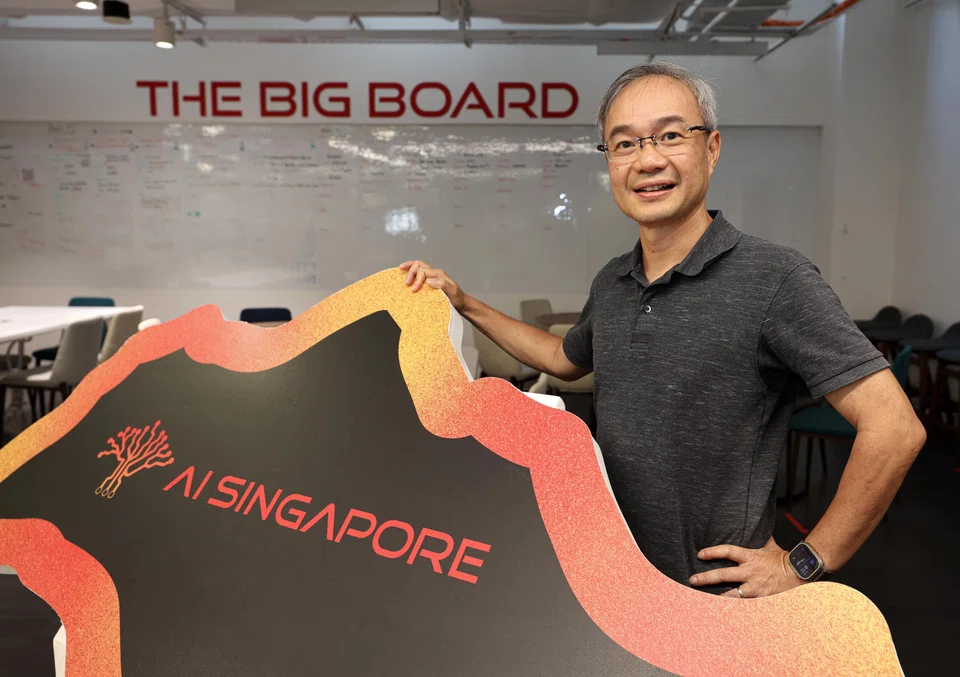
[SINGAPORE] Singapore has committed more than S$1 billion to become a global hub for artificial intelligence. But one of the architects of that effort says the country’s approach to AI readiness may not be sufficient.
The current approach risks focusing on producing certified AI users when the nation also needs more AI builders, said Leslie Teo, a senior director at AI Singapore, the national AI research and development programme established in 2017. The challenge comes as companies increasingly adopt the technology and cut back on junior hiring.
“Junior employees are cheap. AI is cheaper, though,” Teo said in an interview on Thursday (Mar 12).
AI has become a strategic priority for governments as countries compete to develop their own technology rather than rely on systems built elsewhere. The US, China and other major economies are investing heavily in AI research, computing power and talent development to build domestic capabilities. That global push is raising questions about how smaller economies like Singapore can keep pace.
Teo, who was GIC’s former chief economist and director of economics and investment strategy, believes the Singapore government will need to step in and treat early-career training as a public good as firms reduce the training they once provided new hires.
At the moment, the country’s main tool to do so is SkillsFuture, the national training credits programme that subsidises courses for citizens throughout their careers. About 606,000 individuals took part in supported training programmes in 2025.
While participation is high, the issue lies in speed, Teo said. Training programmes must be designed, approved and rolled out through formal systems, meaning they can be years out of date by the time a curriculum is approved.
“The thing about AI is what you know today and what you know tomorrow can dramatically be opposite each other,” said Teo, whose career has spanned global financial institutions and the tech industry, including roles at the International Monetary Fund, the Monetary Authority of Singapore and Grab Holdings.
The rapid pace of change is already showing in Singapore’s job market. The share of fresh graduates securing full-time permanent jobs fell to 74.4 per cent in 2025, down from 79.4 per cent the year before, according to the latest annual graduate employment survey by Singapore’s universities.
SEE ALSO





But for Teo, the stakes go beyond the job market. Countries that rely entirely on AI systems developed elsewhere risk having little influence over how the technology evolves or whose interests it serves.
“There are certain decisions about technology and building that if you’re not at the table, you cannot say so.”
Singapore is trying to secure that seat at the table. Its AI Singapore programme has developed Sea-LION, a large language model designed for South-east Asia and used by regional companies including GoTo Group.
The government says it is narrowing the gap by bringing in technical talent and training workers in AI. A tech and AI track added to the Overseas Networks & Expertise Pass under Singapore’s 2026 budget is expected to attract foreign specialists, alongside programmes to help industries adopt the technology.
“You bring in talent, you groom existing talent across sectors, and you make it quite fertile for people to adopt these use cases quickly,” Alvin Tan, minister of state for trade and industry, said in an interview on Friday.
Still, the question facing Singapore is ultimately about capability rather than participation: whether the country can develop enough people capable of building AI systems, rather than simply train workers to use them, Teo said. BLOOMBERG
Decoding Asia newsletter: your guide to navigating Asia in a new global order. Sign up here to get Decoding Asia newsletter. Delivered to your inbox. Free.
Share with us your feedback on BT's products and services






