

Singapore to pump S$800 million into transport and connectivity research and innovation over 5 years
The investment falls under RIE2030, and integrates earlier sector-based research

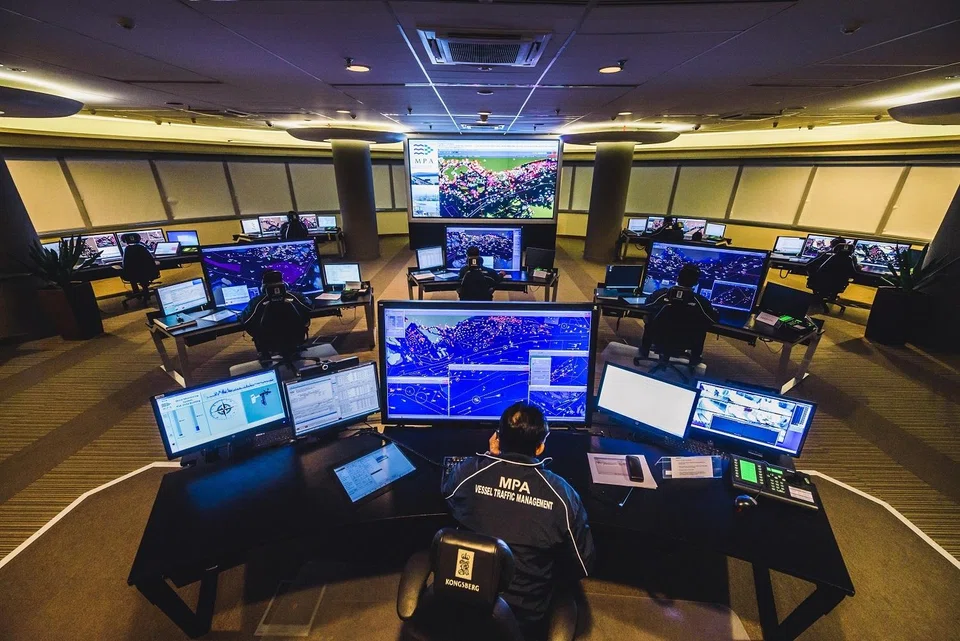
[SINGAPORE] The Republic will more than double its investment in research and innovation for transport and connectivity to S$800 million over the next five years, Acting Minister for Transport Jeffrey Siow said in Parliament on Tuesday (Jul 7).
He was responding to a motion on reinforcing Singapore’s position as a global transport hub, tabled by the Government Parliamentary Committee (GPC) for Transport chaired by Marine Parade-Braddell Heights MP Tin Pei Ling.
The GPC moved the motion as Singapore “is compelled to rethink how we remain globally connected, as we confront an ever-dynamic geopolitical environment and emerging technological game changers”, said Tin, adding that connectivity enables economic prosperity.
Siow said that as supply chains become more digital, connectivity will increasingly depend on technology, and thus, part of the Ministry of Transport’s (MOT) strategy is to be future-focused.
Singapore will use these funds to “back ideas that could completely transform how transport operates today”, he said. This could mean a fully automated MRT depot, an artificial intelligence-enabled air traffic management system, or a smart port network that uses tools like digital twins, he continued.
“If these projects succeed in the next decade, Singapore will still remain as one of the world’s major transport and logistics hubs, but it will look completely different.”
The ministry said this investment comes under the National Research Foundation’s Research, Innovation and Enterprise (RIE) 2030 Flagship.
It builds upon RIE2025 by building cross-cutting capabilities to enhance connectivity across the aviation, maritime and land transport sectors, while deepening these sectoral capabilities.
Providing more details in a separate speech, Minister of State for Transport Baey Yam Keng said about two-thirds of the S$800 million investment will be directed towards cross-cutting capabilities in autonomy and digital twins.
Better operations and oversight
One key transport challenge is tightening manpower, even as the transport system becomes more complex, said Baey. Singapore is thus investing in autonomy to fundamentally improve operations.
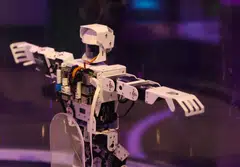
It will focus on new operating models involving autonomous vehicles (AVs), vessels and robotics across its port, airport and logistics network.
This includes developing testing and certification frameworks, and could be used for functions such as cargo transloading, where goods are transferred from one mode of transport to another.
This focus will equip the city-state to handle higher volumes more efficiently, and let workers focus on tasks that need human judgment and expertise, Baey said.
Singapore, with its high cargo volumes and supportive regulatory environment, “can serve as a real-world ‘living lab’ to test and deploy these solutions at scale”, he said.
The solutions developed will be piloted within the industry and, once proven, can then be adopted internationally, Baey added.
Beyond autonomy, he said that how the transport system works as a whole must be improved – and Singapore will invest in digital twins to more intelligently manage the transport network.
By integrating land, sea and air transport data and applying AI-enabled simulations, Singapore will have a single, connected system to track cargo and people flows in real-time, anticipate disruptions, and adjust operations more effectively.
Deepening sectoral capabilities
The remaining one-third of the S$800 million investment will be used for research to deepen sectoral capabilities.
In aviation, this will focus on creating a technology-enabled air hub, to meet rising air travel demand and increased air cargo volumes.
Singapore will invest in AI-enabled air traffic flow management, to better balance traffic demand with airport capacity for smoother, more efficient flights, Baey said.
Above ground, the R&D projects will also leverage AI to cut carbon emissions; predict and mitigate weather disruptions; and provide decision-support tools for air traffic controllers.
On the ground, the investment could also support airside operations; help aviation workers with manual tasks such as baggage handling; and improve passenger experience.
For the maritime sector, research will focus on smart and sustainable port and ship operations.
“As vessel traffic increases, we need to manage more activities within limited land and sea space, as well as manpower constraints,” said Baey.
Investments will go towards AI-enabled port analytics and predictive vessel traffic management, for higher efficiency, shorter vessel turnaround times and better synchronised operations.
Singapore is also transitioning towards cleaner fuels, in line with its national and international sustainability goals. In view of the new safety risks introduced by alternative fuels, the Republic will also invest in research to ensure they can be delivered and bunkered safely.
As for land transport, MOT said research will explore next-generation rail technologies that simplify system design and reduce maintenance needs.
It will also support the development of highly automated rail depots that use AI and sensors for more effective predictive maintenance and to automate maintenance tasks, supporting the workforce.
The RIE2030 funding is open to institutes of higher learning and research institutes, and industry can participate through qualifying research collaborations with these institutes, MOT said.
Manpower transition package
Separately, Senior Minister of State for Transport Sun Xueling on Tuesday announced a manpower transition package for point-to-point drivers, as Singapore prepares for the future of mobility and progressively adopts AV technologies.
A new career conversion programme (CCP) to equip drivers with technical and operational skills for roles in the AV sector, as well as a new pathway under the CCP for public transport professionals to help them become bus captains, will be launched in the third quarter of 2026.
These will come with up to 90 per cent salary support.
A new training incentive scheme focused on short-form courses, which drivers can tap to have an early taste of reskilling before longer-term commitments, will be piloted from January 2027 and run for three years.
Eligible drivers will receive a training incentive of S$20 per hour, up to a cap of 80 hours.
The government and labour movement will also step up outreach and career guidance efforts – including through a new one-stop webpage – to raise awareness of support measures.
Decoding Asia newsletter: your guide to navigating Asia in a new global order. Sign up here to get Decoding Asia newsletter. Delivered to your inbox. Free.
Copyright SPH Media. All rights reserved.
TRENDING NOW

Once staunchly pro-China, Malaysian Chinese businesses are now distancing themselves from Beijing
Stocks to watch: HPL, Aims Apac Reit, Zico, Advanced Systems Automation, ComfortDelGro
‘How many will survive?’: Bubble fears arise as China’s humanoid robotics face reality check
Smaller board lots can’t fix a market run by three banks

