

Singapore retail sales up 4.5% in March, easing from February’s double-digit growth

Tessa Oh
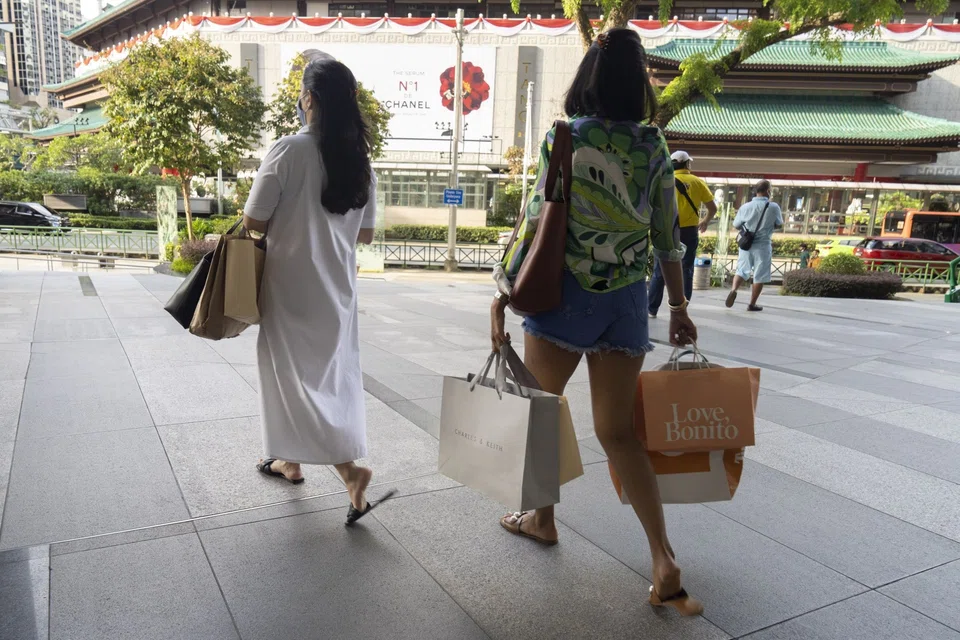
SINGAPORE’s retail sales rose 4.5 per cent year on year in March, slowing from the previous month’s 12.6 per cent rise, data from the Department of Statistics Singapore (SingStat) showed on Friday (May 5).
On a month-on-month seasonally adjusted basis, retail sales were up 2.2 per cent, easing from the 4.1 per cent growth in February.
March’s estimated total retail sales value was S$4.1 billion, with online sales accounting for 13 per cent.
Excluding motor vehicles, retail sales expanded by 4.1 per cent from the year-ago period and rose 2.4 per cent from the previous month, on a seasonally adjusted basis.
March’s retail sales growth was mainly supported by demand from the tourism and hospitality-related sectors as Singapore’s tourism arrival numbers continue to improve, noted private-sector economists.
This is likely why the food and alcohol segment has continued to benefit from double-digit growth, expanding by 55.1 per cent year on year in March, said UOB senior economist Alvin Liew.
Other segments which have benefited include wearing apparel and footwear (26.5 per cent) and department stores (16.8 per cent).
With Singapore’s growth expected to slow in the second quarter of the year, some retail sales categories – such as motor vehicles and household equipment – may decelerate in the near term due to more cautious discretionary spending, said RHB senior economist Barnabas Gan.
Nevertheless, improving tourism figures may still cushion overall retail sales.
But in the second half of the year, Gan expects Singapore’s improving growth momentum to lead to stronger domestic consumption, which would uplift sales in discretionary products such as motor vehicles and luxury goods.
Additionally, households may spend more during this period in anticipation of the second step of the goods and services tax hike to 9 per cent in 2024, just as they did late last year.
UOB’s Liew expects retailers to continue being propped up by both domestic and external support: “The return of major events... (will continue) attracting tourist arrivals, while strong employment and wage growth conditions will likely contribute further to domestic consumption demand.”
But downside risks remain, including a more cautionary external environment, and still-elevated inflation pressures that may increasingly curb discretionary spending of households, said Liew.
The low-base effect is also likely to fade and render less uplift in the second half of the year.
Almost all retail sales categories grew year on year, with the exceptions being supermarkets and hypermarkets; petrol service stations; furniture and household equipment; and computer and telecommunications equipment.
On a month-on-month seasonally adjusted basis, about half of the retail sales categories recorded sales declines, while the other half gained.
Motor vehicles was the only category that remained flat from the previous month.
Food and beverage services sales expanded by 17.8 per cent year on year in March, and 0.7 per cent on a monthly seasonally adjusted basis, with year-on-year growth recorded across all segments:
- Restaurants (16.4 per cent)
- Food caterers (80.1 per cent)
- Fast food outlets (11.1 per cent)
- Cafes, food courts and other eating places (13.2 per cent)
SingStat attributed the gains in the food caterers industry to higher demand for both event and in-flight catering with the ease of restrictions on large-scale events, international travel, as well as social gatherings.
TRENDING NOW

First Resources blames El Nino, outside fires for Kalimantan hotspots amid haze scrutiny

High Court rules against Julius Baer’s Singapore trust arm in US$50 million family trust dispute

Singapore key exports jump by higher-than-expected 68.4% in September, led by non-electronics

MSCI proposes downgrading Indonesia to standalone market status

