

Singapore retail sales unexpectedly dip 0.7% in November, with mixed performance across industries
Of the 14 sectors, seven report year-on-year growth

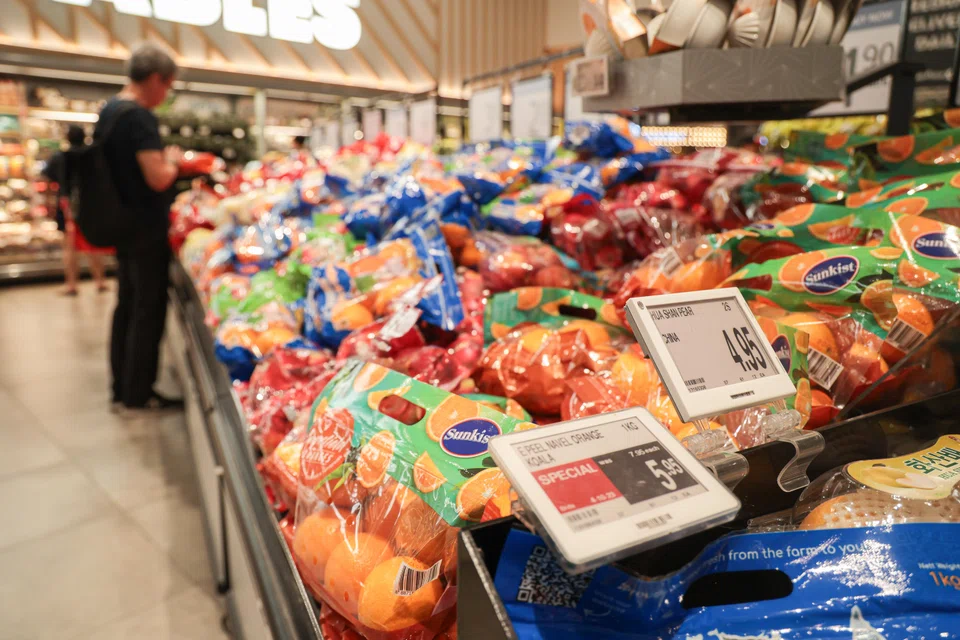
SINGAPORE’S retail sales unexpectedly shrank 0.7 per cent on year last November, reversing from the 2.4 per cent growth logged in October, based on Department of Statistics (SingStat) data released on Friday (Jan 3).
Performance was mixed across industries, with just half recording year-on-year growth.
Private-sector economists had predicted growth, with a median forecast of a 1.5 per cent expansion in a Bloomberg poll.
They attributed the weakness to slowing motor vehicle sales growth and spending diverted abroad.
November’s print marked the first fall since June 2024, and the steepest since April, noted RHB acting group chief economist Barnabas Gan and associate research analyst Laalitha Raveenthar.
While the latest data suggests that retail demand is on the downside, it could be temporary on account of a higher base in 2023, they said.
On a month-on-month, seasonally adjusted basis, retail sales fell 2.8 per cent, in a turnaround from the 0.3 per cent uptick in October.
Excluding motor vehicles, year-on-year retail sales decreased more steeply – down 1.4 per cent from the year-ago period, reversing from October’s 0.5 per cent rise.
It slid sequentially – falling 2.1 per cent on a seasonally adjusted basis, against the preceding month’s 1.4 per cent rise.
November’s estimated total retail sales value was S$4.1 billion, with online sales accounting for 14.6 per cent – higher than October’s 12.6 per cent.
“The larger proportion of online retail sales was mainly attributed to higher online sales during the year-end online shopping events such as Singles’ Day (11.11) and Black Friday,” SingStat said.
This trend was also observed in previous years, said UOB associate economist Jester Koh.
But he added that online sales in November 2024 seemed weaker than in 2023.
Motor vehicle sales growth moderated from the double-digit expansion in the preceding seven months, said DBS economist Chua Han Teng.
This was consistent with the dip in Certificate of Entitlement (COE) premiums last November, he added.
Koh also flagged the lower year-on-year increase in the quota of successful COE bids.
Discretionary items – department store goods, wearing apparel and footwear, and optical goods and books – remained in contraction.
“Increased local outbound travel during the year-end school holidays that started from mid-November, amid a still-strong Singapore dollar relative to the currencies of popular travel destinations, likely dampened spending in these items,” Chua explained. On a month-on-month, seasonally adjusted basis, sales decline was recorded in 13 out of the 14 retail categories. (*See amendment note)
For December’s data, Chua expects festive season spending, an uptick in foreign tourists, and Assurance Package support to have bolstered domestic spending. However, the growth would likely be limited by higher outbound travel.
RHB’s team predicts that retail sales momentum turned positive in December, and would further improve in the first quarter of 2025.
But they cautioned that uncertainties loom in the new year, with households possibly reducing discretionary spending amid easing economic growth in Singapore and globally.
In addition to business and leisure events, the issuance of S$300 of CDC vouchers on Friday could support retail sales, said Koh – although the effect may not be apparent, given similar distributions in preceding years.
Meanwhile, in a separate index, sales of food and beverage (F&B) services climbed 3.9 per cent on year in November, similar to October. It was down 2 per cent on a monthly, seasonally adjusted basis.
On the year, growth was recorded across all F&B segments:
- restaurants (2.2 per cent);
- fast-food outlets (1.4 per cent);
- food caterers (19.7 per cent);
- cafes, food courts and other eating places (2.3 per cent).
Still, all industries except food caterers were down on a seasonally adjusted, month-on-month basis.
F&B services receipts amounted to S$970 million, with online sales accounting for 24.7 per cent.
*Amendment note: An earlier version of this story incorrectly said that 13 of the 14 retail sales industries recorded growth, when they in fact declined. The story has been amended to reflect this.
TRENDING NOW

Once staunchly pro-China, Malaysian Chinese businesses are now distancing themselves from Beijing

Stocks to watch: HPL, Aims Apac Reit, Zico, Advanced Systems Automation, ComfortDelGro

‘How many will survive?’: Bubble fears arise as China’s humanoid robotics face reality check
Smaller board lots can’t fix a market run by three banks

