Singapore semiconductor manufacturers unaffected by China’s metal export curbs

Tessa Oh
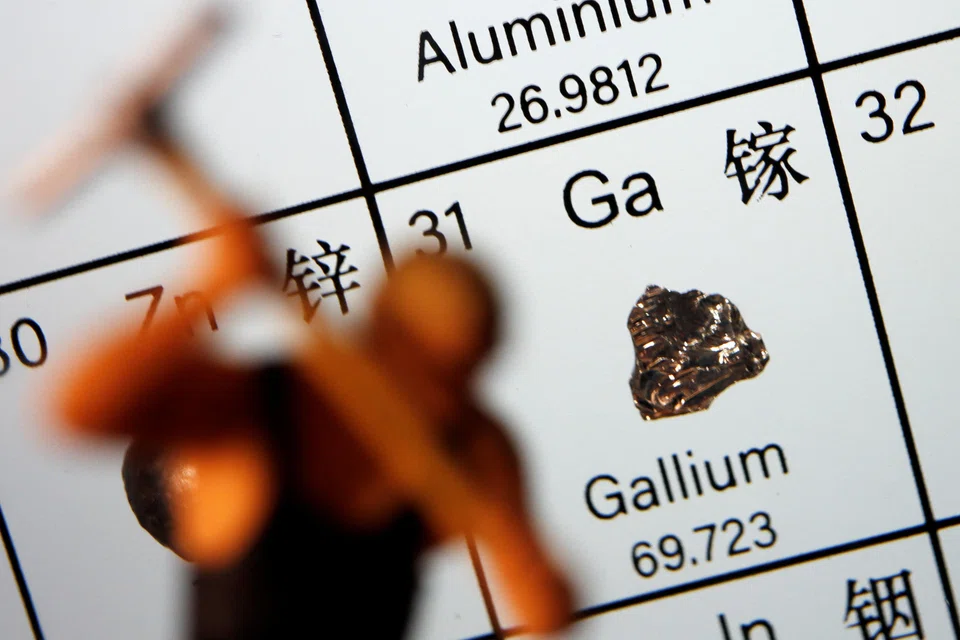
SEMICONDUCTOR companies in Singapore do not expect China’s recent export curbs on gallium and germanium – metals key to the making of chips – to have a major impact on operations because they source their materials from multiple countries.
Nevertheless, the companies approached by The Business Times (BT) said they will continue to monitor the situation as it develops.
China said on Jul 3 that it plans to impose export restrictions on the two metals from Aug 1, in what has been viewed as retaliation over similar curbs previously imposed upon China by the US and others.
Data from industry body Critical Raw Materials Alliance indicated that China produces 60 per cent of the world’s germanium and 80 per cent of its gallium.
But semiconductor firms told BT that they do not expect the export restrictions to have a major impact on them.
“We do not currently see any potential major impact on (our) material supplies as we source these materials from a number of countries, in line with our multi-sourcing strategy,” said a spokesperson for STMicroelectronics.
In response to queries, Infineon Singapore said it “follows a multi-sourcing strategy to include suppliers in different geographies”, though it “cannot comment on specific materials”.
“Infineon’s procurement team, which is responsible for raw material supplies, is continuously monitoring developments,” said the semiconductor manufacturer. “Currently, we do not see an impact on material supplies which would disrupt our manufacturing capabilities.”
Nor does Infineon expect the move to have an impact on its testing operations in Singapore.
Stanley Loh, executive director of semiconductor equipment manufacturing firm UMS, said the export restrictions from China have no direct relevance to the company’s business. He did not elaborate.
Following China’s announcement of the curbs, South Korea and Taiwan officials reportedly said they did not expect any major short-term impact. Separately, Taiwan chip giant TSMC similarly said it did not expect the ban to have direct impact on production.