Singapore SMEs increasingly ‘immune to uncertainty’ after years of volatility: OCBC executive
The OCBC SME Index shows they remain in expansionary mode in Q2, albeit at a slower rate than in Q1

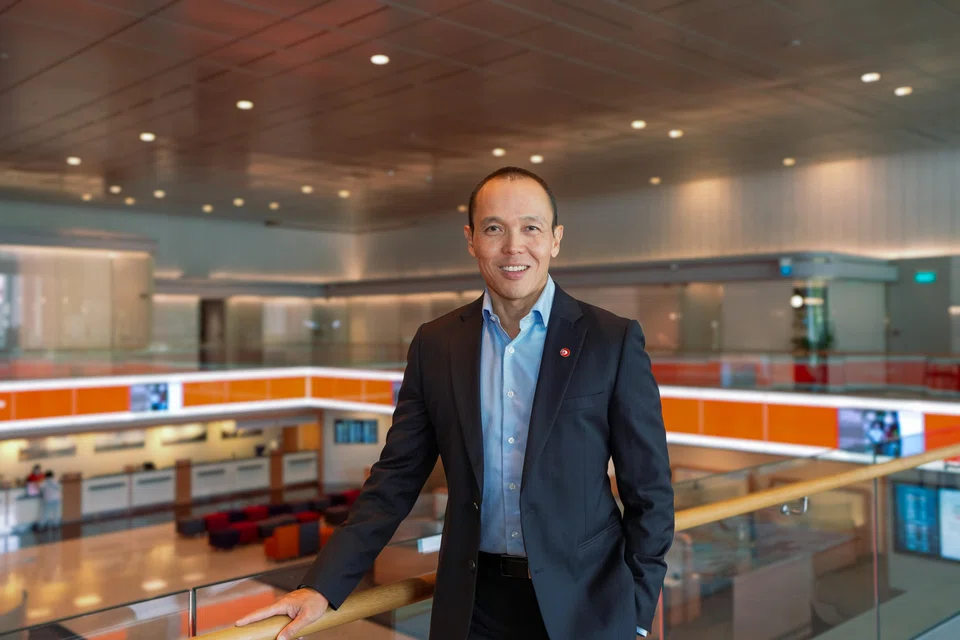
[SINGAPORE] Small and medium-sized enterprises (SMEs) in Singapore have increasingly built a tolerance against volatility, after multiple years of uncertainty in recent times.
They are now more adaptable and resilient, having learnt to build up more buffers and diversify their supply chains, said Eric Ong, head of enterprise banking, global commercial banking at OCBC.
“The SMEs have adjusted,” he said. “When you talk to SMEs now, the antenna for risk management is so much higher to navigate the uncertainty.”
Based on the latest OCBC SME Index released on Wednesday (Jul 15), Singapore’s SMEs remained in expansionary mode in Q2, albeit at a slower rate than in Q1. This was amid prolonged geopolitical uncertainty arising from conflict in the Middle East.
SMEs had to navigate challenging business conditions amid higher fuel and freight costs, with crude oil prices and global container shipping rates significantly above year-ago levels, OCBC said.
The quarterly index, which tracks the business health and performance of SMEs, fell to 51.3 in Q2 from 51.6 in Q1, but marked a fifth consecutive quarter of expansion.
A reading above 50 signals increased business activity from a year earlier, while a score below 50 indicates contraction. The index is compiled from transactional data of more than 100,000 OCBC SME customers in Singapore, each with annual revenue of up to S$30 million.
The sentiment among SMEs show that they are now more “immune to uncertainty” since the Covid-19 pandemic six years ago, Ong said in an interview ahead of the release of the index.
Since then, SMEs have had to navigate uncertainty arising from the Ukraine war, tariffs imposed by US President Donald Trump in 2025, and now conflict in the Middle East.
“The winter is slightly longer nowadays,” Ong said.
In OCBC’s accompanying business sentiment survey, some 19 per cent of respondents see business conditions worsening, down three percentage points from three months earlier.
At the same time, there has been a corresponding three-percentage-point increase to SMEs expecting business conditions to remain as they are.
For Q2, 33 per cent of respondents also cited an improvement in their businesses, up two percentage points from the poll conducted in March.
Ong noted that the sentiment survey was conducted during the ceasefire between Iran and US, which may explain some of the optimism.
Geopolitical uncertainty also remains a key concern, with several areas to watch including new US Federal Reserve chairman Kevin Warsh and the November midterm elections in the US.
Nevertheless, Ong remains optimistic about the SME community and business climate due to opportunities and demand in certain segments.
The drive for artificial intelligence creates demand downstream, such as for equipment, manufacturers and wholesalers.
Flows from the Greater China Region to Asean are also driving demand, as companies use a “China + N” strategy to diversify from core production bases in the Asian country.
Fundamentals in Singapore also remain strong, with inflation under control, he said.
“There’s a lot of uncertainty, but how to navigate this uncertainty is by mitigating the risk and building new capabilities,” Ong said. “AI adoption or digital adoption is one of them, and delivering better goods and being innovative.”
Expansion in Q2
In Q2, overall expansion for SMEs was driven by broad-based growth in outward-oriented sectors, such as in manufacturing and ICT.
Manufacturing posted its fifth straight quarter of expansion with a reading of 52.1 in Q2, up from 51.6 in Q1, mainly due to the precision engineering, consumer products and electronics and semiconductor segments.
OCBC said that the industry is likely benefiting from the ongoing demand for AI related hardware and advanced electronics manufacturing equipment, which has supported business activity.
Increased spending on technology and the growing adoption of AI and automation has also created opportunities for SMEs in the ICT sector, the lender added.
While ICT eased to 51.1 in Q2, from 51.4 in Q1, it remained in expansionary territory for the fourth consecutive quarter.
Performance was mixed among domestically oriented sectors.
Retail moderated from the peak of 53.4 last quarter to 52.8 in Q2, and F&B fell to 50.3 in Q2 from 51.1 in Q1. Demand in June rose across the retail, services and wholesale trade segments compared to earlier months in the quarter.
Ong said that uncertainty in the Middle East may have resulted in changes to travel plans of Singaporeans during the June holidays, resulting in more local spending.
Building and construction eased to 50.6 in Q2 from 51 in Q1. While the industry sees strong demand from several infrastructure projects announced over the past year, it is also facing higher manpower and material costs, Ong said.
Overall, payments rose 19.4 per cent in Q2 and collections was up 19.1 per cent.
In addition to the underlying growth in business activity, part of the expansionary reading may reflect the pass-through of higher input and operating costs through the value chain to downstream businesses and consumers, OCBC said.