

Singapore tourist arrivals grow to 931,530 in January; pace of recovery to slow

Tessa Oh
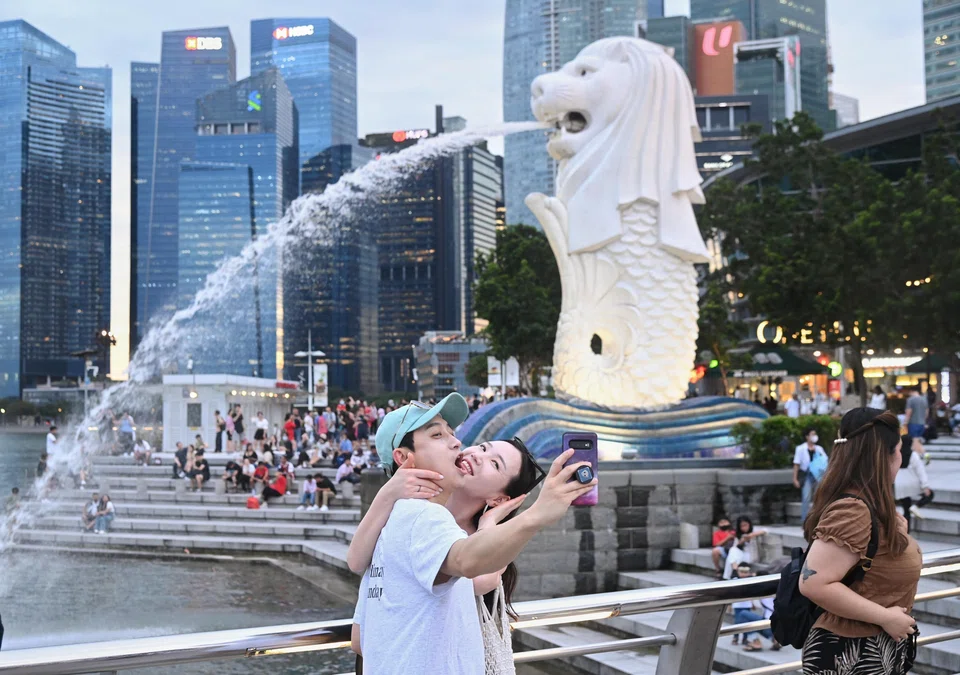
SINGAPORE’S international visitor arrivals rose to 931,530 in January, setting a new record since the onset of the pandemic, according to the latest figures from the Singapore Tourism Board (STB) on Friday (Feb 17).
January’s arrival numbers nudged up slightly from the 931,337 visitors recorded in the previous month, but were still below the 1.5 million visitors recorded in November 2019, before the Covid-19 pandemic.
The nearly flat month-on-month growth was not too surprising, given that January is typically a “seasonally weaker month” than December, which would usually see more travellers due to the year-end holidays, said Maybank economist Lee Ju Ye.
Additionally, while China may have relaxed its borders on Jan 8, it will still take some time before Singapore sees Chinese tourist arrivals return to pre-pandemic levels, observers told The Business Times.
Once Singapore’s biggest inbound market from 2017 to 2019, China sent just 28,362 visitors in January, up from 19,684 visitors in December.
Lee noted that this was also due to the fact that outbound tour groups were only allowed to resume on Feb 6, and flight capacity between China and Singapore was still very low – at less than 10 per cent of pre-Covid levels. “Chinese consumers may also be budget-conscious in the initial years after finances were impacted by the pandemic,” she added.
Indeed, anecdotal data shows that there has not been a rush of outbound visitors so far from China, said Govinda Singh, executive director for hotels and leisure in Asia at Colliers. “This was expected as the situation stabilises in China and countries review their travel policies.”
According to DBS analyst Geraldine Wong, it will take one to two quarters for the number of visitors from China to ramp up and stabilise.
As for when Singapore can expect to see a rebound in Chinese visitor arrivals, Singh expects the numbers to climb from the beginning of the second half of the year as airlift capacity increases. He added that China could claim its top spot as the biggest source of arrivals in the first half of 2024.
Lee similarly thinks that the earliest China will reclaim its top spot will be at the end of 2023 or the first half of 2024, noting that China’s visitor arrivals to Singapore were at just 8.6 per cent of pre-pandemic levels in January, compared to Indonesia’s 60 per cent, Malaysia’s 80 per cent, and India’s 57 per cent.
Indonesia clinched first place as the biggest source of arrivals for the 10th straight month, sending some 168,963 travellers in January – though this was less than the 197,260 recorded in the previous month. Australia came in second place, sending 102,877 of its ranks, up from 89,128 recorded in December. There were 72,748 visitors hailing from Malaysia, down from 95,472 in the previous month. Meanwhile, South Korea sent 60,442 visitors in January, up from 31,811 recorded in December. Both countries came in third and fourth place respectively.
Analysts expect visitor arrivals to continue growing, but at a slower pace than than seen last year. After all, pent-up demand from the leisure market has started to slow, and the full return of business travel is still some time away, said Singh.
Nevertheless, there is still some room for normalisation in visitor arrivals from countries such as Japan – which is at 32 per cent of January 2020 levels – and Europe – which is currently at 59 per cent of pre-pandemic levels, noted Lee.
For the full year, Singh expects Singapore’s visitor arrivals to be around 60-65 per cent of 2019 levels, with a full recovery not expected before the first half of 2025.
DBS’ Wong believes the figures will either be in line with STB’s forecast or may surpass it marginally. According to the board, an estimated 12 to 14 million visitors are anticipated to bring in about S$18 billion to S$21 billion in tourism receipts – around two-thirds to three-quarters of 2019 levels.
TRENDING NOW

If Europe goes to war, the fallout will be felt in East Asia

Indonesia stocks suffer worst plunge in nearly 30 years as MSCI proposes standalone status

Vietnam’s race for growth tests pace of energy transition: experts

China’s market is tougher than ever. Where can Singapore firms still find room to grow?

