

Singapore’s key exports surge by surprise 15.7% in July, reversing from June drop
Both electronics and non-electronics NODX chart double-digit growth

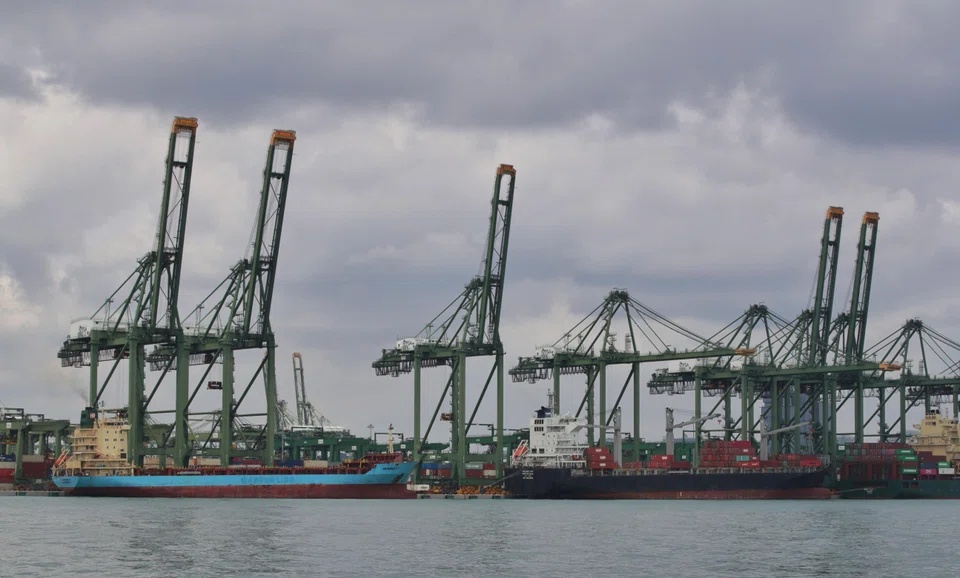
SINGAPORE’S non-oil domestic exports (NODX) far exceeded economist estimates to climb 15.7 per cent in July – the largest increase since January – as both electronics and non-electronics exports grew, data from Enterprise Singapore (EnterpriseSG) showed on Friday (Aug 16).
UOB associate economist Jester Koh said the performance reflected both strong sequential expansion and favourable base effects.
The latest print marked a turnaround from the preceding month’s surprise 8.8 per cent tumble. For July, private-sector economists polled by Bloomberg had expected a rise, but at a much more moderate 1.2 per cent.
This comes days after EnterpriseSG narrowed its full-year key exports outlook to a range of 4 to 5 per cent growth, from 4 to 6 per cent. Key downsides risks remain for the NODX forecast, including a weaker-than-expected H2, the agency warned.
RHB upgraded its full-year forecast to 1.5 per cent, from 0.5 per cent previously, to factor in the stronger July data, the “relatively positive” export outlook, and its recent change in base case to expect a 25-basis point Fed funds rate cut in September.
In July, NODX jumped 12.2 per cent on a seasonally adjusted monthly basis, reversing from June’s 0.4 per cent slip. Both non-electronics and electronics grew.
Key exports’ value hit S$15.4 billion last month, seasonally adjusted, up from S$13.8 billion in the preceding month, and the highest since April 2023. It was also higher than 2023’s average of S$14.5 billion, and the year-ago period’s S$14 billion.
The strong performance proves that June’s pullback was “a temporary setback”, said DBS economist Chua Han Teng. Exports are still on track for a gradual recovery, he said, citing improved external demand seen in the still-expanding new export orders in July’s purchasing managers’ index (PMI).
But he added that uncertainties – such as ongoing political conflicts, China’s uneven growth and the US’ high interest rates – could keep the recovery fragile.
OCBC chief economist Selena Ling believes NODX could record double-digit growth in August and September, given Q3 2023’s low base. Considering the decline of 2.1 per cent between January and July, the full-year 2024 NODX may average around 3.5 to 4 per cent, she said. The lower bound of this falls below the official forecast range.
This is assuming that NODX growth in H2 can exceed 11 per cent on the year, “on the back of a global soft landing narrative, more green shoots of the electronics recovery, continued potential front-loading by China before the year-end, and resilient domestic consumption in Asean”, she added.
Following Friday’s data, Maybank analysts Chua Hak Bin and Brian Lee said EnterpriseSG’s new forecast is reasonable. UOB’s Koh maintained his full-year forecast at 2.5 per cent, weaker than the official range, even as he expects a more meaningful sequential recovery in Q4.
Broad strength
On year, electronics exports gained 16.5 per cent in July, about-turning from June’s 9.5 per cent drop. Disk media products (113.2 per cent), other computer peripherals (a growth rate of more than 1,000 per cent is not cited, due to low base effects) and integrated circuits (13.5 per cent) drove the expansion.
This broadening of the electronics growth base beyond integrated circuits “is an encouraging signal that the electronics recovery is gaining traction”, said Ling.
Barclays senior regional economist Brian Tan added that the semiconductor upcycle is broadening out of South Korea and Taiwan into South-east Asia, particularly Malaysia and Singapore.
Economists remain optimistic on electronics, due to the ongoing global tech cycle upturn, which will support demand for smartphone, PC and AI-related chips.
Koh added: “Furthermore, key sub-indices in July’s electronics PMI such as new orders, new export orders and future business remain firmly expansionary.”
Non-electronics shipments last month grew 15.5 per cent from the year-ago period, reversing from June’s 8.6 per cent contraction. The largest contributors were non-monetary gold (260.3 per cent), petrochemicals (28.1 per cent) and specialised machinery (8 per cent).
DBS’ Chua said: “Pharmaceutical shipments, a primary contributor to the non-electronics NODX drop in Q2, started Q3 with gains.” The segment is typically volatile.
While shipments of volatile non-monetary gold were admittedly the largest growth driver, NODX growth would nonetheless have been robust in its absence, said Maybank’s duo. They noted broadening external demand, with strength in July driven by multiple products across electronics and non-electronics.
The team also expects exports to recover and broaden in H2, “although growth may taper from the exceptional July print”.
“Besides the sizeable contribution from lumpy non-monetary gold, port congestion and shipment delays could remain a concern in the near term, as suggested by the fall in July’s supplier deliveries PMI sub-index.”
Mixed market performance
NODX to six of Singapore’s top 10 markets reported year-on-year increases in July. As a whole, key exports to these top markets expanded, mainly due to the US (28.9 per cent), Malaysia (49.1 per cent) and China (21.1 per cent).
Ling said: “Electronics NODX to China continued to increase by double-digit year-on-year terms in July, possibly due to some frontloading ahead of anticipated US tariffs pending the outcome of the US presidential elections.”
But NODX to the European Union (EU) (-4.7 per cent), Japan (-7.9 per cent), Hong Kong (-3.3 per cent) and South Korea (-3.1 per cent) fell on year last month.
UOB’s Koh also noted that on a year on year, six-month moving average basis, July’s NODX to the US and EU posted double-digit contractions, possibly as elevated policy rates weigh on investment and consumption activity.
As for China, this slowed significantly, though it remained positive, reflecting the still weak consumer sentiment, dragged by sluggish home prices which continued to fall in July.
Total trade grew 13.7 per cent in July, year on year, accelerating from the 1.2 per cent increase in June. On a seasonally adjusted monthly basis, total trade was up 3.1 per cent last month, following June’s 4.2 per cent decline.
Seasonally adjusted, the level of total trade reached S$106.7 billion, more than the preceding month’s S$103.5 billion. Total exports expanded 6.3 per cent, and imports shrank 0.2 per cent.
TRENDING NOW

If Europe goes to war, the fallout will be felt in East Asia

Indonesia stocks suffer worst plunge in nearly 30 years as MSCI proposes standalone status

Markets can absorb current yields which are still ‘pretty normal’, says Franklin Templeton CEO

Vietnam’s race for growth tests pace of energy transition: experts

