Singapore’s manufacturing could see modest recovery in 2024 on global electronics demand

Tessa Oh
SINGAPORE’S manufacturing slump has likely bottomed out, and the industry should gradually recover in 2024 – though the magnitude and trajectory of this remains uncertain, said observers.
“Manufacturing has been the underdog for 2023. The question is whether we will get a turnaround story in 2024,” said OCBC chief economist Selena Ling.
Singapore’s factory output entered a year-long decline in October 2022, only snapping out of contraction the next October, when output rebounded 7.6 per cent year on year (yoy).
In November 2023, manufacturing output rose 1 per cent yoy. Although below economists’ expectations of 2.2 per cent growth in a Bloomberg poll, it marked the first time since September 2022 that the sector grew for two straight months.
According to advance estimates of gross domestic product growth on Jan 2 – computed largely from October and November data – growth in the fourth quarter was boosted by the manufacturing sector’s 3.2 per cent growth, after three quarters in contraction.
Electronics turnaround
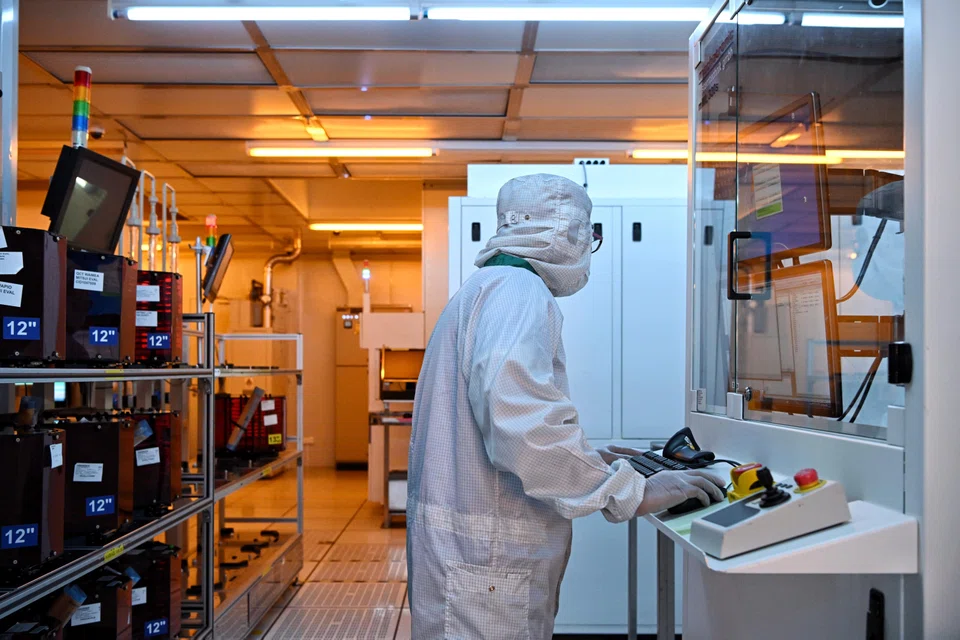
These “green shoots” suggest a nascent recovery, largely driven by the turnaround in the lynchpin electronics cluster, said analysts.
“The brightest spot for us in South-east Asia’s manufacturing sector is the recovery in electronics... so (the recent signs of) recovery will have a huge impact on the manufacturing sector here,” said Coface Asia-Pacific economist Eve Barre.
Singapore’s electronics output experienced double-digit growth in both October and November on average, noted HSBC Asean economist Yun Liu. This is a dramatic turnaround from double-digit falls earlier in the year, with the cluster contracting month on month for six straight months from January to June 2023.
Factors driving the recovery include the tech replacement cycle as new models and upgrades are released; depleting US inventories; and generous US subsidies on semiconductors and electric vehicles, said Maybank economists Chua Hak Bin and Brian Lee in a report.
In particular, a stronger rebound is expected for the memory, data centre and graphics processing unit segments, compared with consumer tech, said MUFG senior currency analyst Michael Wan. “This in turn reflects the stronger demand for artificial intelligence (AI)-related tech investments, relative to consumer tech products, at this point.”
Alexandra Zhang, co-founder and chief executive of manufacturer Factorem, noted increased demand from sectors such as industrial automation, robotics and Internet-of-Things sensors.
Risks to recovery
Observers are cautiously optimistic, believing that the manufacturing sector as a whole could see a “modest recovery” in 2024.
The advance estimates showed that manufacturing shrank 3.6 per cent for the whole of 2023, with this figure to be updated in February.
“Given the very low base in 2023, a recovery in 2024 is likely with the gradual stabilisation of the global electronics industry,” said OCBC’s Ling.
She forecasts modest yoy growth of 1 to 3 per cent in 2024, compared with OCBC’s projected 4.6 per cent contraction in 2023.
UOB economists Alvin Liew and Jester Koh were more optimistic, forecasting factory output to expand 4 per cent yoy in 2024, compared to the bank’s projected 4 per cent contraction in 2023.
But there are still some key risks, and the recovery trajectory remains uncertain and potentially bumpy.
“The main risks to the manufacturing recovery are slower-than-expected global growth on the demand side, and further supply chain shocks on the supply side,” said Moody’s Analytics economist Denise Cheok.
If the US Federal Reserve takes a higher-for-longer stance and does not cut interest rates soon, continued monetary tightness will also weigh on global demand, said OCBC’s Ling.
In addition to the risks faced by the overall manufacturing sector, the electronics and semiconductor segments are “particularly vulnerable to geopolitical tensions”, said Cheok.
One key risk is the ongoing decoupling trend between the US and China, especially in the run-up to the US presidential elections in late 2024, noted Ling.
MUFG’s Wan said an escalation of trade restrictions between the US and China, especially in tech and semiconductors, “is certainly a possibility in 2024”, catalysed by a rapid breakthrough in China’s semiconductor capabilities.
Another risk is a material escalation in ongoing wars in the Middle East and between Russia and Ukraine, he added. These could lead to supply chain disruptions and sharp commodity price spikes.
Nevertheless, the prospects for tech are “still very much positive in the long run”, said Moody’s Cheok.
“In particular, we see developments in AI and the push towards more environmentally friendly or climate-related technology such as electronic vehicles fuelling chip demand next year,” she said.
Asia, and South-east Asia specifically, remain bright spots in the long term, said Wan. India, Indonesia and Asean are pushing through structural reforms, while manufacturers are investing in the region by diversifying their supply chains.
Other manufacturing industries
Beyond electronics, the 2024 outlook is gloomier for chemicals and precision engineering clusters, but more upbeat for transport engineering.
Demand for petrochemicals is likely to be muted as the economy of Singapore’s main export destination, China, could slow further, said Coface’s Barre.
On the supply side, there are risks linked to input costs as crude oil prices stay high and volatile, she added.
As for precision engineering, a high interest rate environment is likely to continue to constrain investments, said Barre.
In contrast, in transport engineering, Factorem’s Zhang noted a surge in demand for renewable energy projects within the marine and offshore segment.