SINGAPORE BUDGET 2025

Singapore’s operating revenue on track to exceed full-year estimate, allowing ‘generous’ Budget 2025: economists

Corporate and personal income tax receipts outpace expectations for 9M FY2024

Summarise
Renald Yeo
Published Mon, Feb 3, 2025 · 05:00 AM
    • The Singapore government’s financial year runs from Apr 1 to Mar 31 of the following year.
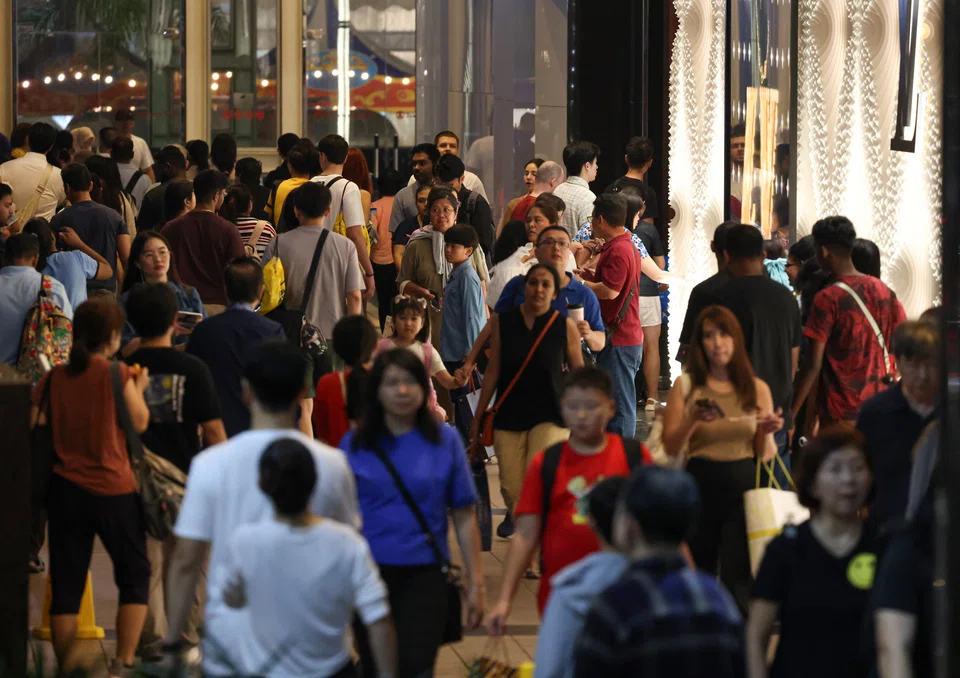
    • The Singapore government’s financial year runs from Apr 1 to Mar 31 of the following year. PHOTO: YEN MENG JIIN, BT

    AFTER the first nine months of Singapore’s fiscal year, the government’s operating revenue is on track to meet – and likely surpass – the full-year estimate, said economists.

    This could mean a larger-than-expected surplus for the 2024 fiscal year, allowing Budget 2025 to be more generous, they added.

    OCBC chief economist Selena Ling expects a “bumper” FY2024 surplus that provides “ample room” for a “generous and impactful” Budget 2025, which comes both in an election year and amid SG60 celebrations.

    Operating revenue was S$87.5 billion for the nine months ended Dec 31, 2024, Accountant-General’s Department data showed. This amounts to 80.5 per cent of the full-year forecast of S$108.6 billion for FY2024, ahead of the 75 per cent benchmark for the first three quarters.

    Historically, 9M operating revenue figures have been within one to two percentage points of the 75 per cent benchmark, noted Christopher Gee, deputy director at the Institute of Policy Studies.

    “The 9M FY2024 total operating revenues are tracking above what would have been the equivalent in FY2023, with a large portion of the above-expectations revenue coming from corporate income taxation,” he said.

    Ling said there is “definitely room” for operating revenues to exceed projections, especially with the stronger-than-expected gross domestic product growth of 4 per cent in 2024.

    The Singapore government’s financial year runs from Apr 1 to Mar 31 of the following year.

    In the first nine months, corporate income tax takings reached S$25.4 billion, or 90.5 per cent of its full-year S$28 billion projection.

    This figure was also up 6.2 per cent from S$23.9 billion in the same period the year before.

    “The good progress in corporate income tax revenues reflected robust corporate earnings growth, supported by strong external-led economic growth momentum,” DBS economist Chua Han Teng told The Business Times.

    Personal income tax

    Personal income tax collections stood at S$14.8 billion, or 81.9 per cent of the full-year estimate. This marked a 9.4 per cent increase from S$13.5 billion a year earlier.

    “Significant increases in corporate and personal income tax are being driven by much-better-than-expected economic and employment growth,” said Jose Torres, senior economist at Interactive Brokers.

    “Additionally, the capital markets and foreign direct investment have been especially supportive of this landscape.”

    “Better-than-expected budgetary performance in FY2024 could raise the cumulative overall fiscal surplus from FY2021 to FY2024 above S$1.8 billion, implying greater fiscal ammunition and room to provide support in Budget 2025.”

    DBS economist Chua Han Teng

    Goods and services tax (GST) collections are also on track to meet full-year projections, said Song Seng Wun, Singapore economic adviser at CGS International.

    GST receipts for 9M FY2024 rose 25 per cent year on year to S$14.9 billion, or 76.9 per cent of the S$19.4 billion full-year projection.

    This rise was partly because the GST rate was hiked from 8 per cent to 9 per cent on Jan 1, 2024, but higher consumer spending also played a role, said economists.

    “Since the Singapore labour market is basically at full employment – normalising to post-pandemic conditions, with jobs and income growth – it will be supportive of consumption, especially the consumption of services,” said Song.

    Torres agreed, pointing to “buoyant” employment conditions. Consumer spending and business investment have also been driven by moderating inflation, stronger markets, rising employment and a supportive monetary policy outlook, he added.

    More fiscal firepower

    With this “robust” operating revenue – and despite rising expenditures – there is “potential for a positive surprise to the modest overall fiscal surplus” of S$0.8 billion projected for FY2024, said DBS’ Chua.

    “Better-than-expected budgetary performance in FY2024 could raise the cumulative overall fiscal surplus from FY2021 to FY2024 above S$1.8 billion, implying greater fiscal ammunition and room to provide support in Budget 2025,” he said.

    Prime Minister and Finance Minister Lawrence Wong will deliver the Budget statement on Feb 18, ahead of the upcoming general election, which must be held by November.

    If the government maintains its previously announced spending plans, the overall surplus for FY2024 could be closer to S$8 billion, Song estimated.

    Torres expects the actual surplus for FY2024 to “meaningfully overshoot” the government’s S$0.8 billion projection, though he did not provide a specific forecast.

    He sees the main contributors to this overshoot as corporate and personal income tax, GST, stamp duties, vehicle quota premiums, and other receipts.

    While US President Donald Trump’s tariffs could disrupt supply chains and weigh on business conditions, Torres noted that any negative impact would likely be felt only in the next fiscal year, beginning in April 2025.

    “The current lead is too wide at the moment for an undershoot to occur,” he added.