Singapore’s PMI improves in October as regionwide factory activity stays weak

Tessa Oh
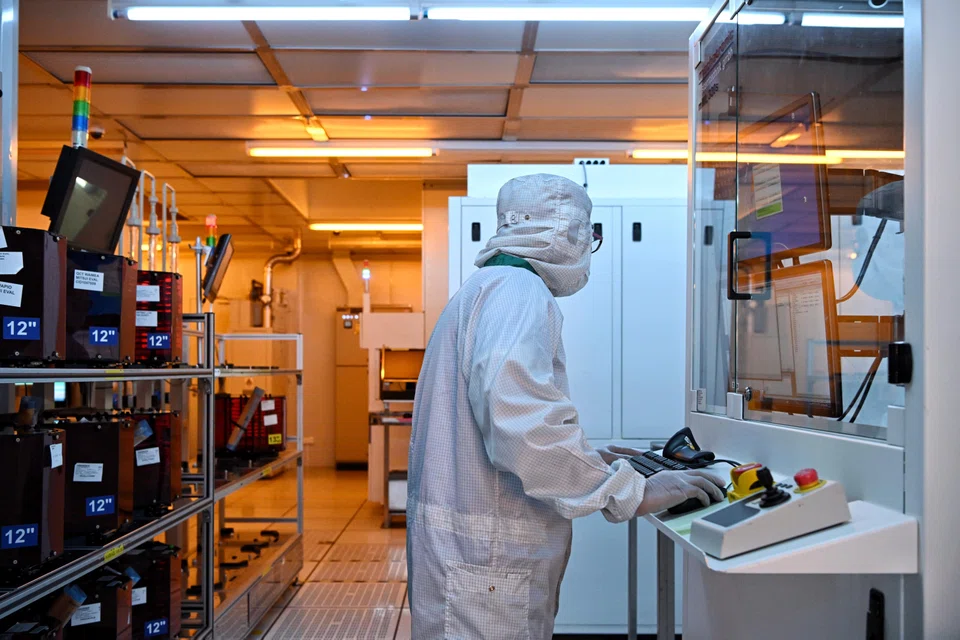
SINGAPORE’S overall manufacturing sentiment improved further in October, even as regionwide factory activity remained weak.
The purchasing managers’ index (PMI) edged up to 50.2 in October, a 0.1 point gain from the previous month, data from the Singapore Institute of Purchasing and Materials Management (SIPMM) indicated on Thursday (Nov 2).
A reading above 50 on the index indicates growth from the previous month, while one below 50 points to a contraction.
The linchpin electronics sector contracted for the 15th consecutive month in October, though at a slower rate than the month before. The sector gained 0.1 point to 49.9 in October.
The improved readings suggest that local manufacturers are becoming less pessimistic about the economic outlook going into the next year, said SIPMM executive director Stephen Poh.
But private-sector economists cautioned that the manufacturing sector’s recovery is still uncertain, given that the electronics sector’s turnaround has yet to stabilise.
“While we are heartened by the broad-based improvement in October’s overall PMI, we caution that the manufacturing sector could remain downbeat in the near term – likely for the rest of 2023 and into early 2024 – given the weak external demand,” said UOB associate economist Jester Koh. He added: “The sub-50 reading for electronics PMI reaffirms the assessment that the electronics sector is likely to remain lacklustre in the near term.”
This is even while the latest non-oil domestic exports (NODX) and industrial production readings from Singapore suggest that the electronics cycle has tentatively bottomed, said Koh.
Singapore’s overall NODX shrunk by 13.2 per cent year on year in September, an improvement from the previous month. Meanwhile, the Republic’s factory output decline moderated to 2.1 per cent year on year that same month, as electronics output picked up.
“Headwinds in the manufacturing sector could persist on tight financial conditions stemming from an elevated interest rate environment,” noted Koh.
The improving trend of Singapore’s overall manufacturing PMI over the past few months is a “nascent sign” that a gradual yet fragile manufacturing recovery is possibly underway, said DBS economist Chua Han Teng.
But the continued electronics PMI contraction signals that the electronics turnaround is not yet firm, added Chua. “The global economic backdrop is still uncertain amid high interest rates in advanced economies, bumpy conditions in China and lingering geopolitical tensions that could disrupt supply chains.”
Regionwide factory activity stayed soft, with regional manufacturing powerhouses – such as South Korea and China – posting contractions.
In China, the official manufacturing PMI fell a surprising 0.7 point to 49.5 in October. The Caixin PMI, derived from smaller private manufacturers, shed 1.1 points to 49.5 – falling into contractionary territory for the first time in three months.
ANZ chief economist for Greater China Raymond Yeung said that the downside surprise suggests the path of China’s economic recovery remains fragile.
While other economic data out of China showed signs that the economy is bottoming out, the foundation of recovery is not solid, noted Caixin Insight Group senior economist Wang Zhe, adding: “Demand is weak; many internal and external uncertainties remain, and expectations are still relatively weak.”
In South Korea, the S&P Global Manufacturing PMI dipped 0.1 point to 49.8 in October, suggesting that overall factory activity remains muted.
Closer to home, the S&P Global Thailand Manufacturing PMI slipped 0.3 point to 47.5 in October. The S&P Global Vietnam Manufacturing PMI edged down 0.1 point to 49.6.
Bucking the trend was Taiwan. The S&P Global Manufacturing PMI improved 1.2 points to 47.6 in October – but the improvement was still not enough to pull it out of contraction mode.