

Singapore’s retail sales up 7.4% in December, extending November’s growth

Tessa Oh
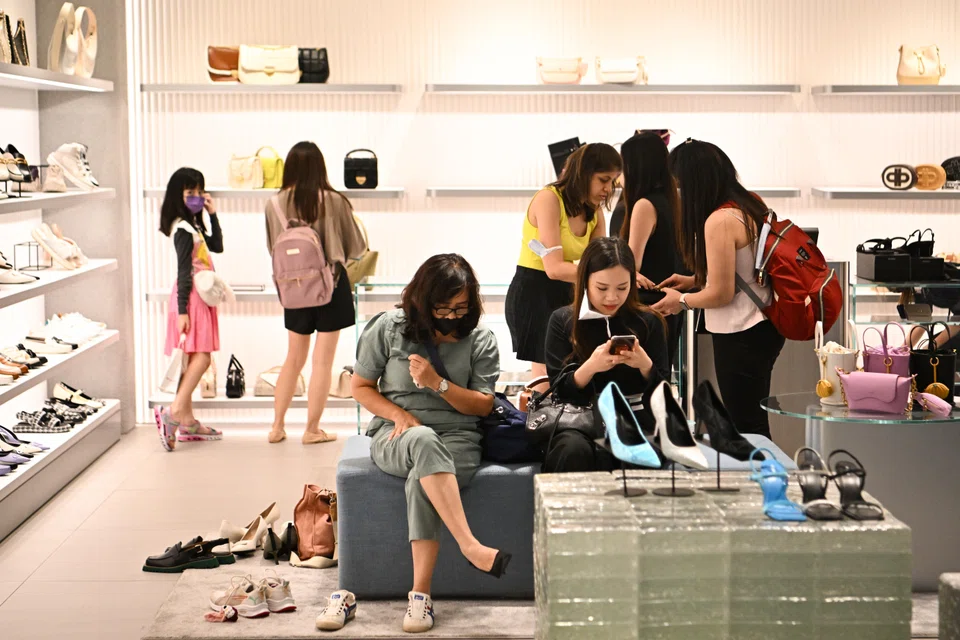
SINGAPORE’S retail sales rose 7.4 per cent year on year in December, extending the previous month’s 6.5 per cent growth, the latest data from the Department of Statistics (SingStat) showed on Friday (Feb 3).
On a month-on-month seasonally adjusted basis, retail sales were up 1.3 per cent, reversing from the 3.6 per cent decline recorded in November.
December’s estimated total retail sales value was S$4.7 billion, with online sales accounting for 12.9 per cent. This was lower than the 15 per cent recorded in the previous month, in which there were major online shopping events, said SingStat.
“We suspect the high December sales were due to a combination of stronger demand, with some element of revenge spending; higher prices (due to inflation); and buying ahead of the January 2023 goods and services tax (GST) hike,” said UOB economist Alvin Liew.
He also noted that December’s total retail sales value was the highest monthly record since the data was made available in 1997.
Excluding motor vehicles, retail sales expanded by 9.5 per cent from the year-ago period and rose 1 per cent from the previous month, on a seasonally adjusted basis.
Almost all retail sales categories saw year-on-year growth in December, with the exceptions being supermarkets and hypermarkets; motor vehicles; and petrol services stations.
On a month-on-month seasonally adjusted basis, half of the retail categories recorded sales declines, while the other half saw gains.
The biggest declines were seen in the petrol service stations; food and alcohol; and recreational goods industries. Meanwhile, watches and jewellery; mini-marts and convenience stores; and computer and telecommunications equipment recorded the biggest gains. (*see amendment note)
Sales of food and beverage services rose by 13.9 per cent year on year and 0.1 per cent on a monthly seasonally adjusted basis, with year-on-year growth recorded across all segments:
- Restaurants (5.5 per cent)
- Fast food outlets (14.6 per cent)
- Food caterers (115.8 per cent)
- Cafes, food courts and other eating places (10.5 per cent)
SingStat attributed the gains in the food caterers industry to higher demand for both event and in-flight catering with the easing of restrictions on large-scale events and international travel.
Despite the good performance seen in December, RHB senior economist Barnabas Gan expects retail sales momentum to decelerate in the first half of the year.
Firstly, demand is likely to slow as consumers respond to the “front-loading” behaviour seen in the final quarter of last year in anticipation of the GST hike. The seasonal build-up led by Single’s Day, Black Friday and Christmas may also wane in the next three to six months.
Secondly, retail sales growth will also have to contend with high base prints seen throughout 2022, said Gan. Demand is also likely to slow in tandem with the slowing growth momentum across Asia and Singapore, which may dissuade domestic and tourism-related spending, especially in the first half of 2023.
In contrast, UOB’s Liew was more optimistic, upgrading his 2023 retail sales forecast to 5 per cent, from 2.3 per cent previously.
He believes retailers here will continue to be supported by domestic and external demand. The return of major events, concerts, and meeting, incentive, convention and exhibition activities will continue to attract tourist arrivals, while the tight labour market will contribute to domestic consumption, he said.
Both economists see China’s reopening moves as one bright spot. Gan said: “We expect tourism demand to recover further in 2023, owing to China’s reopening of its borders ... As such, the recovering inbound tourism may continue to support Singapore’s hospitality industries, including food and beverages and other discretionary items.”
Liew added: “The boost to (Singapore’s travel- and tourism-related sectors) could be significant because prior to the Covid-19 pandemic, China was Singapore’s top source of inbound tourists and the biggest contributor to tourism receipts in 2019.”
*Amendment note: An earlier version of the article wrongly stated that department stores and wearing apparel and footwear industries were among the industries which recorded the biggest month-on-month declines.
TRENDING NOW

Nvidia reinstates Jensen Huang as CEO; Trump says move poses no national security risk

Indonesia’s coal tycoon Low Tuck Kwong replaced as Bayan Resources president-director

Nvidia surges 33% after reinstating Jensen Huang, reviving AI trade; stocks soar in US and Europe

Consider lowering homeownership barriers for some non-resident foreigners

