Clinical input, real-world testing: How SingHealth wants medtech firms to build with hospitals, not just for them
SingHealth will join over 1,000 exhibitors at the 16th Medical Fair Asia from Sept 9 to 11, part of three co-located exhibitions that will connect firms from medical manufacturing to rehabilitation and eldercare
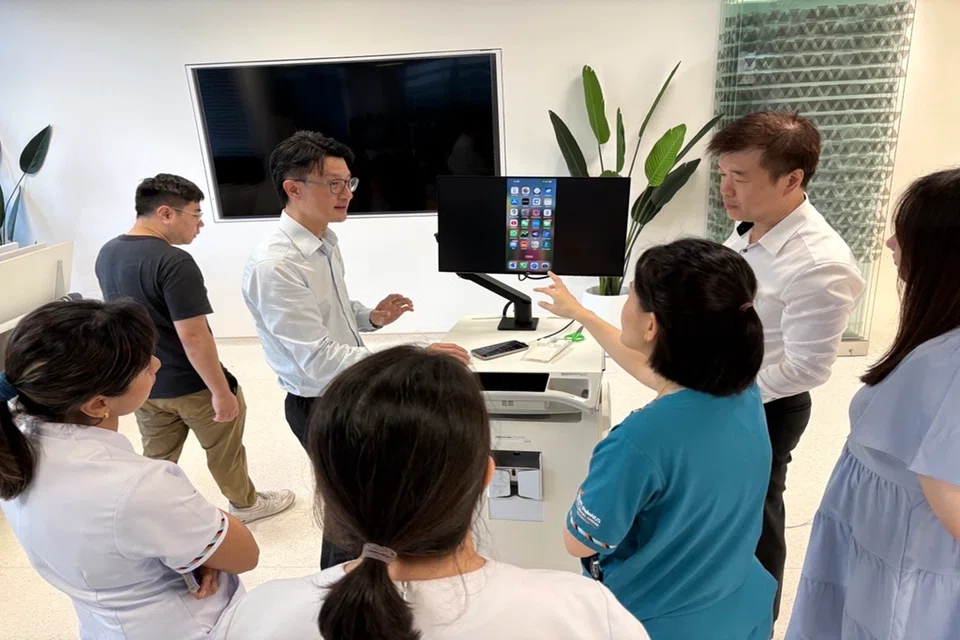
ASIA’S growing healthcare needs could mean expanding opportunities for healthtech companies. But developing a promising product is only the beginning.
Before a new diagnostic tool, medical device or digital health solution reaches patients, businesses must prove that it works clinically and ensures it fits into existing healthcare workflows, meets regulatory requirements, and can be manufactured effectively.
Enter another Asian market, and a different set of hurdles can arise.
“There is a significant gap between a promising idea and a solution that can be adopted in healthcare,” says associate professor Goh Su Yen, group director for innovation and transformation at SingHealth, Singapore’s largest integrated public healthcare group.
“Discussions about healthcare innovation often centre on the technology itself. We want to shift that conversation towards what it actually takes for an innovation to work in practice.”
Through its Alice Lee Innovation Centre of Excellence (A.L.I.C.E.), SingHealth works with healthcare professionals, researchers and companies to identify healthcare problems, develop and test potential solutions in real-world settings.
Companies can tap SingHealth’s network across acute, primary and community care, as well as research across more than 40 clinical specialties, to understand how a product performs in practice and identify problems before taking it further to market.
The model brings healthcare professionals into the developmental process early, rather than waiting until a finished product is presented to them.
One example is TIIM Healthcare, whose aiTriage platform uses AI to support the rapid assessment of chest-pain patients.
Co-developed with clinician-researchers at Singapore General Hospital, the technology addresses the challenge of identifying patients at risk of serious cardiac events – a problem first identified by healthcare professionals on the ground.
It is precisely the kind of needs-driven collaboration A.L.I.C.E. was built to support.
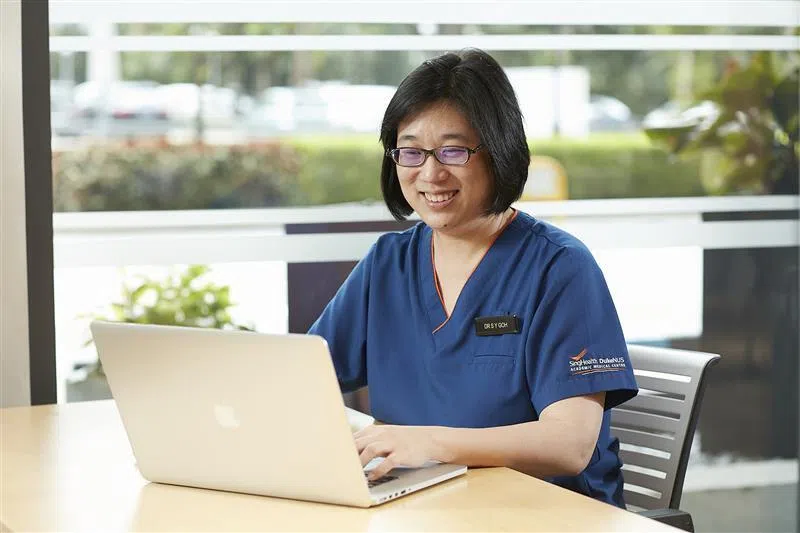
That approach will be in focus at the 16th Medical Fair Asia, where SingHealth is the Healthcare Innovation Partner. It will bring its clinical and translational expertise to one of Asia’s most significant healthtech exhibitions.
Organised by Messe Düsseldorf Asia, Medical Fair Asia has been held in Singapore since 1997. This year, it will run alongside the 7th Medical Manufacturing Asia and the inaugural RehaCare Asia, from Sept 9 to 11.
Together, the three exhibitions cover different parts of the healthcare ecosystem – from medical technology and manufacturing to rehabilitation, preventive care and eldercare.
For companies, that creates an opportunity not just to feature technology, but to meet potential healthcare users, manufacturing partners and other players needed to take an innovation from idea to market.
At the last iteration of Medical Fair Asia in 2024, more than 40 per cent of attendees came from outside Singapore. This year’s three exhibitions are expected to attract more than 1,000 exhibitors from 40 countries and 14,000 trade visitors.
Says Goh: “We see this as a tremendous opportunity to serve as a gateway for healthcare innovation, connecting clinicians, researchers, enterprises and innovators to develop solutions that are not only technically promising, but can make a meaningful difference in practice and in the lives of the patients we care for.”
What it takes to bring an innovation to life
As a healthcare innovation moves closer to market, the questions around it become more practical – and more varied.
For a healthcare provider, questions include how a solution fits into existing clinical processes and how staff will use it.
For a MedTech company developing the physical product, another set of considerations arise upstream – from component parts and specifications of materials to production capabilities, quality control and the resilience of its supply chain.
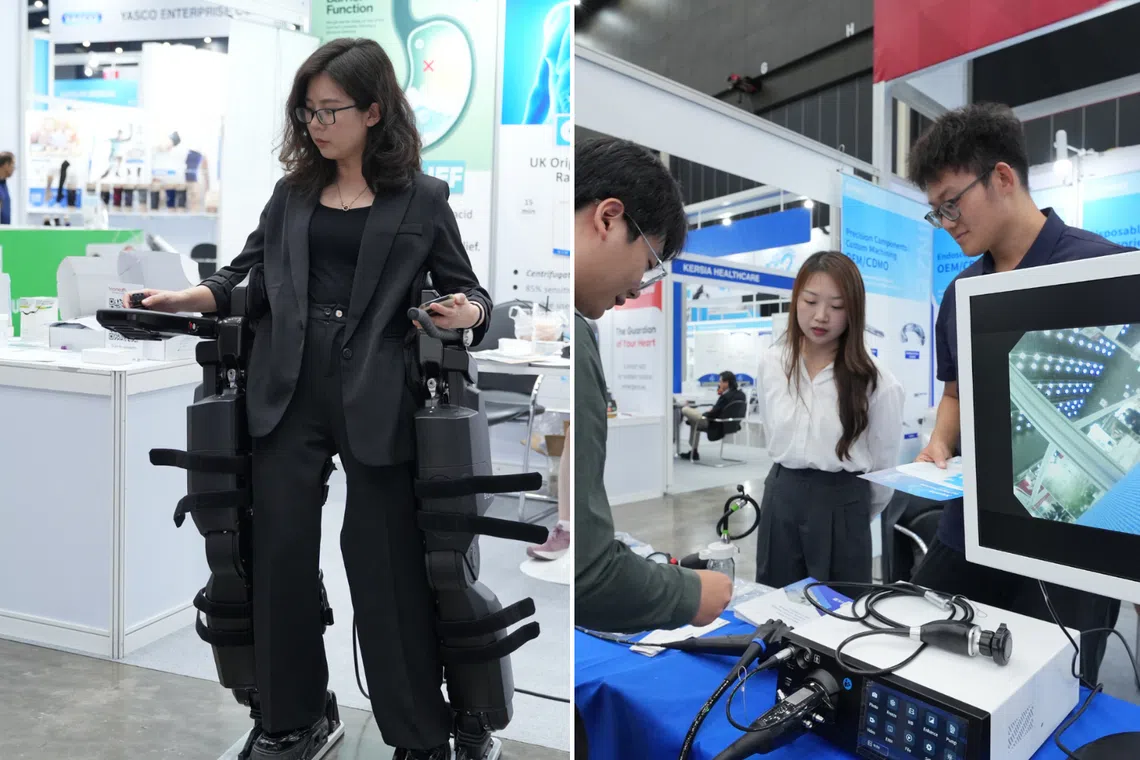
“When care extends beyond the hospital, accessibility, ease of use and the ability to work across different care settings become increasingly important,” says Goh.
Medical Fair Asia and Medical Manufacturing Asia have for years been held together, connecting medical technology providers with the upstream capabilities needed to produce them.
Combined with the inaugural RehaCare Asia, the three exhibitions now cover rehabilitation, assistive technology, preventive care and eldercare.
Says Lars Wismer, Messe Düsseldorf Asia’s managing director: “A healthcare executive may discover a digital solution at Medical Fair Asia, assess its manufacturing and scaling requirements at Medical Manufacturing Asia, and explore its relevance to recovery or care beyond the hospital at Rehacare Asia.”
Singapore as a gateway for regional healthcare innovation
Many of the pressures reshaping Singapore’s healthcare system are also playing out elsewhere in Asia.
Singapore can provide a strong starting point, says Goh.
“Singapore’s strengths – a rigorous regulatory environment, a strong research base, a highly trained clinical workforce and a proven track record of translating innovations into real-world care – give us something meaningful to contribute,” she adds.
Regional collaboration also works both ways.
“The diversity of healthcare systems, populations and challenges across Asia means there is enormous value in what we can learn from our regional partners,” she says. “When institutions share openly about what works, what does not, and what remains unsolved, the whole region benefits.”
At Medical Fair Asia, SingHealth will feature companies whose products have been developed around real healthcare needs and refined through collaboration with healthcare professionals.
Companies looking to speak with SingHealth representatives about working with A.L.I.C.E. can visit the SingHealth pavilion at Medical Fair Asia.
Goh says: “We are most interested in meeting partners who are genuinely trying to solve problems that matter. The specific technology or sector matters less than the commitment to getting the solution right.”
Medical Fair Asia, Medical Manufacturing Asia and RehaCare Asia will run from Sept 9 to 11 at Marina Bay Sands. Pre-register online for free.

Share with us your feedback on BT's products and services