


AI-powered microalgae hub to anchor Life3 Biotech’s position in sustainable proteins
Facility slated for completion in the fourth quarter of 2026 will house AI-driven bioreactors and a new visitor centre
Jermaine Fok
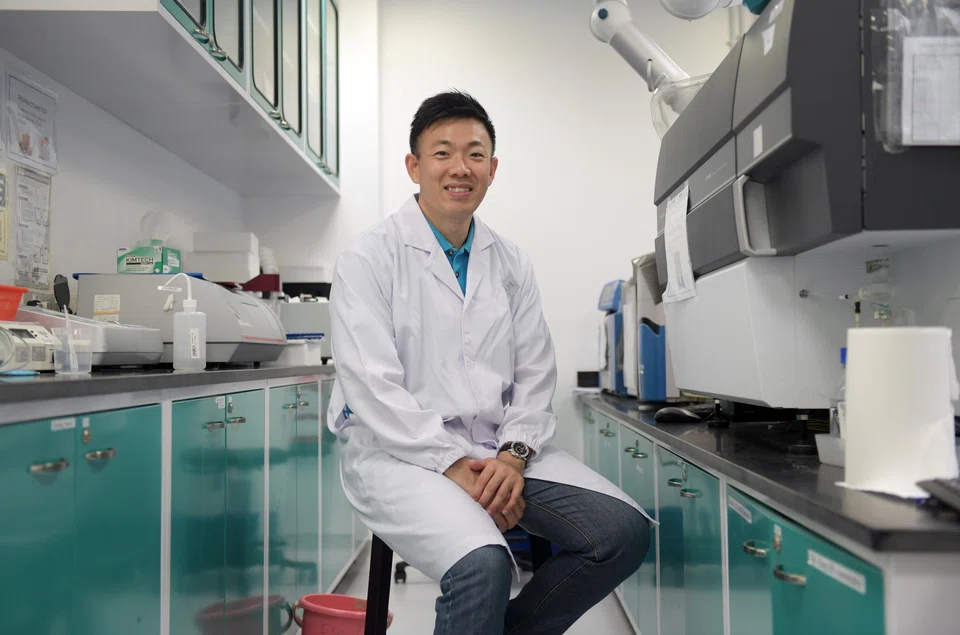
[SINGAPORE] Alternative proteins are often discussed in abstract terms – lab breakthroughs, climate targets and future food systems.
However, in the middle of a housing estate in Geylang, Life3 Biotech is building what it calls an “integrated hub” for sustainable protein production.
Built on a former community centre, the startup’s new solar-powered microalgae facility will place artificial intelligence (AI), bioreactors and food production side by side with residential life.
Slated for completion in the fourth quarter of 2026, the facility will house rows of five-metre-tall stainless steel bioreactors with a total capacity of about 5,000 litres of microalgae and other compounds.
Microalgae grown within the system will be harvested and processed into protein-rich powders and pastes.
The site will also include a processing zone, as well as a visitor centre where guests can learn about the technology and sample finished products.
It will be Singapore’s first such facility located within a residential area, and it required close engagement with regulators, said Life3’s founder and chief executive Ricky Lin in an interview with The Business Times.
“There was never a precedent set for growing microorganisms in a residential area,” he said. “This is the first of its kind.”
Lin added that the facility is intended to reflect Life3’s broader positioning beyond production, as well as its identity as a “social enterprise at heart”.

Betting on the upstream
While much of the alternative-protein industry has focused on consumer-facing products such as plant-based meat substitutes, Lin believes the real challenge lies upstream – in how protein is produced in the first place.
“The million-dollar question is not the downstream product,” he said. “It’s the protein source.”
Life3 cultivates freshwater microalgae such as chlorella in a controlled environment using its bioreactors, rather than on farmland or in marine environments.
The organisms naturally contain protein and omega-3 fatty acids, among other nutrients.
Currently, the company works with three strains – green, yellow and off-white – which are neutral in taste, allowing them to be incorporated into a range of food products without significantly altering the flavour or appearance.
By focusing on the upstream process, Life3 aims to supply a flexible protein base that can be processed into multiple downstream applications, rather than betting on a single product category.
Life3 positions itself as closer to an “Intel Inside” partner rather than a consumer brand, supplying ingredients and technology to manufacturers and food-service operators.
Its microalgae protein is already used in products such as Veego, a plant-based food line primarily made from legumes and microalgae, as well as a high-protein, high-fibre plant-based beverage distributed to canteens in polytechnics, Institute of Technical Education campuses, Nanyang Technological University and James Cook University.
The company is also preparing to launch a new product category aimed at manufacturers: high-protein, high-fibre noodles branded as Hipaf.
Unlike conventional noodles, which are largely carbohydrate-based, this product is designed to boost protein and fibre intake without altering the taste, Lin said.
“Noodles today – everyone will say that it’s all carbohydrates,” he added. “It’s never (made up of) protein, so that is where we want to make a change.”
Lin said Life3’s focus on protein and fibre is caused by dietary gaps he sees across age groups, particularly among older consumers who may reduce meat intake due to chewing or digestion difficulties.
Insufficient protein intake can contribute to sarcopenia, an age-related condition associated with the loss of muscle mass and strength.
“We are a strong advocate for protein and fibre, because that’s what our general population really needs,” he said.
He described the company’s microalgae proteins as “easier on everybody’s palate or stomach” due to the absence of cholesterol or fats.
That said, Lin stressed that plant-based proteins are not intended to replace meat entirely, but to complement existing diets.
“Plant-based protein should not be a replacement for meat,” he said. “It should be another option.”
AI as a force multiplier
At the heart of Life3’s operation is an in-house AI system dubbed Moris – short for Microorganism Real-time Intelligence System – developed during the Covid-19 pandemic and incorporated into operations from 2022.
As a platform technology provider, its proprietary AI software monitor key growth parameters such as temperature, nutrient levels and cell density, predicting optimal harvest times and flagging risks before bioreactors fail.
Lin compared Moris to an additional set of “eyes” in the team.
As part of the bio-monitoring process, it also analyses microscopic images to assess cell size and quality, automating a process that previously took biotechnologists hours to complete manually.
“We don’t have a whole army of PhD holders. I only have three of them, so for them to control so many different parameters, it takes a long time,” he noted.
With the incorporation of the AI system, they are able to shorten the harvesting and growth cycle of the cells.
He said that they saw the “potential of packaging Moris as a force multiplier” to boost productivity and efficient rates.
Since adopting the system, Life3 has shortened parts of its production cycle by about 30 per cent so far, with a longer-term target of cutting the cycle time by half. Tasks that once took more than an hour can now be completed in minutes, he added.
Beyond food
The facility will run entirely on solar energy, reinforcing Life3’s push towards low-carbon production.
Lin stressed that sustainability is not only about emissions, but also about scalability and cost.
“There is no point that I can grow something at scale, but if it’s so expensive – nobody can use it,” he said.
Lin does not come from a traditional research track, having previously worked in the military where he was exposed to issues surrounding stockpiling and supply resilience.
That experience shaped his interest in protein security, particularly for land-scarce Singapore.
Beyond food, Life3 is also exploring non-food applications for microalgae-derived biomaterials during sidestream processing, including construction-related uses such as concrete and asphalt, though these remain at the prototype stage.
Partnerships
As with many deep-tech startups, funding remains a persistent challenge, Lin said, given the capital-intensive nature of operating bioreactors and production facilities in Singapore.
“You live or die by cash flow,” he said. “To do this kind of technology and to operate a system and facility like this, you really need investors. But it’s not easy, because investors tend to put money into things they are already familiar with.”
Life3 has since secured funding from a group of angel investors.
While the company did not disclose the amount invested, Lin said the funding was directed largely towards building physical infrastructure to “kick-start” the new facility.
Beyond capital, investors have also taken on advisory roles, helping the company think beyond just the Singapore market as it plans for overseas expansion.
“We will not stay (only) in Singapore forever,” Lin said. “Some of these giants allow us to learn their perspectives on things and allow us to plan further ahead.”
Growing beyond Singapore
According to the company’s website, renowned American investor Jim Rogers joined Life3’s board of investors in 2021.
Life3 has current projects in markets such as the Middle East, China and Malaysia to license its technology or enter joint ventures overseas.
The new facility is expected to function not only as a production site, but also as a demonstration hub for potential partners and investors, as Life3 looks beyond Singapore in its future growth plans.
At home the company has also moved to formalise partnerships within the manufacturing ecosystems.
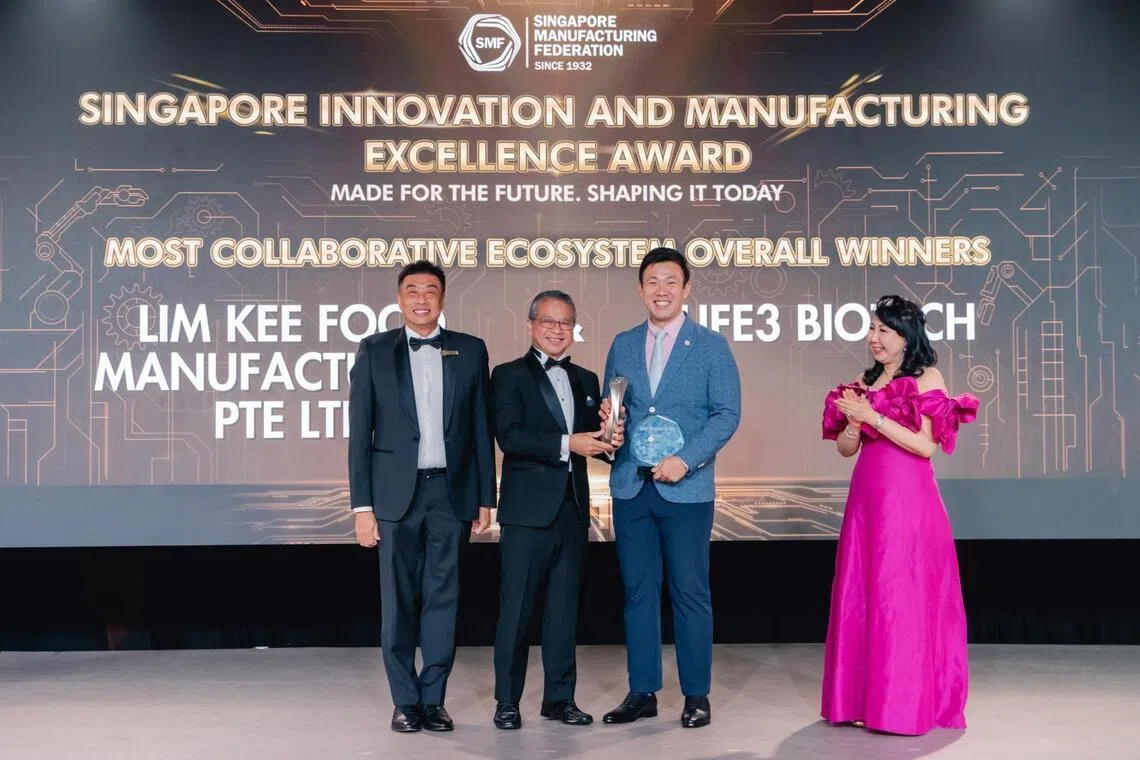
Life3 recently signed a memorandum of understanding with Singapore Manufacturing Federation, establishing its role as a strategic partner under the MNC-Local Enterprise alliance to support the development of sustainable and functional food ingredients and biomaterials.
Its efforts have also received industry recognition. Life3 was awarded the Ecosystem Excellence Award at the recent Singapore Innovation and Manufacturing Excellence Awards, which recognises companies that demonstrate outstanding collaborative strategies and ecosystem partnerships in the manufacturing sector.
Decoding Asia newsletter: your guide to navigating Asia in a new global order. Sign up here to get Decoding Asia newsletter. Delivered to your inbox. Free.
Share with us your feedback on BT's products and services
TRENDING NOW

GCash parent Mynt rises in market debut after South-east Asia’s top 2026 IPO

In the age of AI, what is a university education for?

Singapore to use ‘every legal and regulatory lever’ against companies linked to haze: Shanmugam

‘IPOs are not the only vehicle’: KKR heads for record exits even as firms stay private for longer

