Alibaba expands 11.11 Global Shopping Festival to help big brands and small retailers boost sales
Amid a pandemic-led online shopping boom, e-commerce giant turns its attention on Gen Z, a fast-growing group of shoppers on its marketplace
 Add BT as a preferred source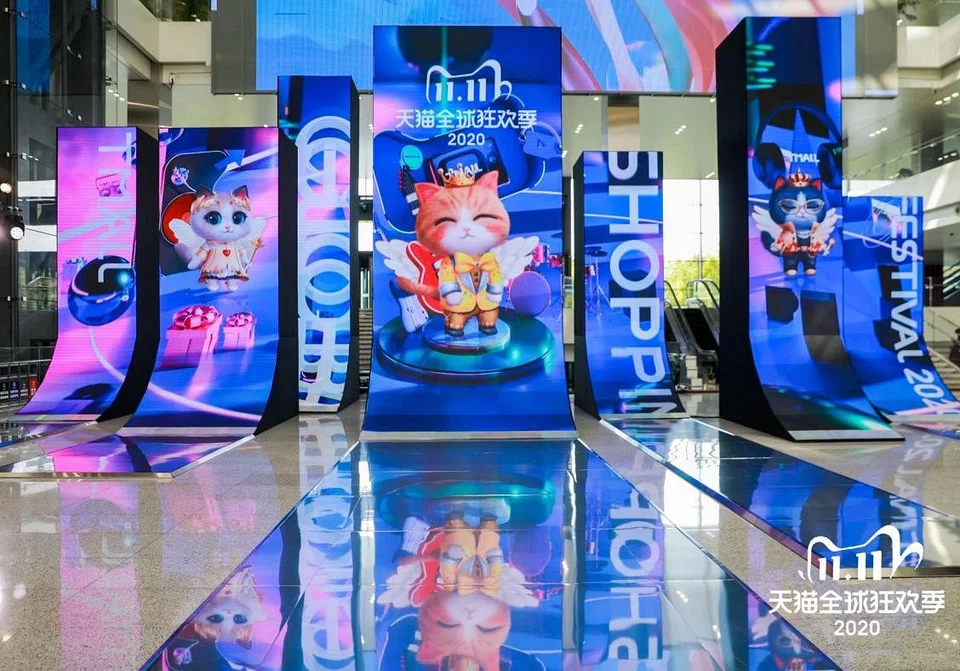
DeeperDive is a beta AI feature. Refer to full articles for the facts.
Covid-19 has dealt a heavy blow to retailers as customers shelter in place and cut down spending on non-essential items. But all is not lost as retailers pivot online and expand their reach to other markets, including China, the world's largest consumer market.
And Chinese e-commerce giant Alibaba is giving big brands as well as smaller retailers a boost with an expanded 11.11 Global Shopping Festival this year.
On top of the much-anticipated 24-hour shopping extravaganza that starts at the stroke of midnight on Nov 11 every year, Alibaba recently wrapped up an additional sales window of its shopping festival from Nov 1 to 3. Hundreds of millions of consumers flocked to Taobao and Tmall on the first day to place orders and check out the 14 million discounted items.
More than 250,000 merchants, including luxury brands such as Prada and Balenciaga, are participating in the festival, debuting more than two million new products - twice that of last year. About 800 million consumers are expected to take part in the sales, reaching approximately 300 million more consumers compared with last year.
Alibaba turned China's unofficial Singles' Day on Nov 11 into a shopping event in 2009, and the 24-hour online sales festival has become the world's biggest, chalking up a record RMB268 billion (S$52 billion) in total GMV settled through Alipay last year.
For the first time, Alibaba added a second shopping period from Nov 1 to 3 this year. Alibaba Group chief marketing officer Chris Tung said at an online press conference last Thursday (Oct 29) that this will "double the opportunities for brands and merchants to showcase their products".
Navigate Asia in
a new global order
Get the insights delivered to your inbox.
"Alibaba is more committed than ever to empowering our merchants for their digital transformation and to capture the growth of particularly the China market through 11.11," he added.
"This really gives 11.11 a different layer of meaning this year in light of the pandemic."
Focusing on younger consumers
With Generation Z being a major shopping group on Alibaba's Chinese online marketplaces, the e-commerce giant is targeting these twenty-somethings this year by focusing on goods that interest them, such as street fashion and technology.
It is also making livestreaming a key advertising channel, given its popularity among Gen Z not only in China but also around the world. Some 60 per cent of the Taobao Live live streams will be conducted by merchants, with 300 celebrities such as Kris Wu (former member of South Korean-Chinese boy band EXO) and Victoria Song (from South Korean group f(x)) joining the dedicated livestream sessions.
Further banking on the influence that pop culture celebrities have on this demographic, Alibaba-owned Lazada also unveiled South Korean actor and model Lee Min Ho as their first regional brand ambassador for 11.11.
Speeding up deliveries
To cope with the anticipated increase in volumes during the 11.11 sales, Alibaba's logistics arm Cainiao has been investing in cutting-edge logistics technology such as automated guided vehicles, automated parcel collection machines and smart lockers.
The smart logistics network processed more than 1.8 billion delivery orders during last 11.11. More than 50 per cent of this year's cross-border parcels are expected to be delivered twice as fast as its usual speed.
Using smart technologies and infrastructure such as bonded warehouses, Cainiao will be able to get parcels to customers in key European cities such as Madrid, Paris, Berlin and Warsaw in as short as three days, and imported goods to consumers in China in as short as half a day.
In Southeast Asia, Lazada estimates that the 11.11 festival will bring 20 times the volume of regular deliveries from domestic and cross-border sales, and has prepared over 40,000 warehouses and logistics staff to cope with the increase.
Tapping into China's demand for overseas goods
With the ongoing travel restrictions, China's middle class has increasingly turned to online shopping for imported products. President of Tmall Import and Export Alvin Liu noted that the demand from Chinese consumers for essential items for home and living, and healthcare products from abroad, continues even after the pandemic situation had stabilised in China.
Last year, the total value of consumer goods imported into China was more than RMB1.5 trillion (S$204 billion). However, online consumption penetration was only 6 per cent, representing a big potential for international brands aiming to make inroads in the world's largest consumer market, especially in cross-border e-commerce.
Tmall Global and Kaola, Alibaba's two major imported goods platforms, have a combined share of more than 60 per cent of the cross-border business-to-consumer market in China. During April to June this year, Tmall Global saw the sales of brands on its platform go up by over 40 per cent year on year.
"Before, brands always thought you needed to have a physical presence in China," said Mr Liu. "But we already have the logistics and payment infrastructure in place, meaning brands just need to focus on how to target their audience and work with Alibaba to deliver the right brand image to China when entering the market."
Italian footwear brand Golden Goose, which has 120 direct retail stores worldwide on top of online and wholesale distribution, teamed up with Tmall in August and already has more than 22,000 followers. It is taking part in 11.11 for the first time and will launch a sneaker range exclusive to Tmall.
"We feel that 11.11 is not about achieving targets but about using it as an opportunity to showcase our brand DNA," said Mr Mauro Maggioni, the brand's chief executive officer of Asia Pacific.
This is why Mr Tung said that the 11.11 sales is "more than just a big sale day". According to him, by using Alibaba's tools and solutions, brands can better understand their target customers, store customer insights on the platform's data bank and continue to engage with their buyers in the following year until the next 11.11.
"It becomes a positive spiral effect year on year with 11.11 being the big milestone to leverage all you've learnt with the tools all year round," he added. "We want 11.11 to really serve as the growth engine and digitalisation driver for our brand merchants."
Decoding Asia newsletter: your guide to navigating Asia in a new global order. Sign up here to get Decoding Asia newsletter. Delivered to your inbox. Free.
Share with us your feedback on BT's products and services